
Pantone Products for Accurate Colour Communication in Textile Quality Control
Pantone Products are standardised colour reference tools used to identify, communicate, and match colours consistently across textile mills, garment factories, and design studios. Instead of describing a colour in words — which different people interpret differently — a Pantone guide assigns each shade a specific code, so a mill in Tiruppur and a buying house in London can agree on the exact same colour without seeing the same physical sample side by side.
In the textile industry, colour accuracy affects far more than appearance. A shade that looks slightly off from the approved standard can lead to bulk order rejections, reprocessing costs, and delayed shipments. This is why textile mills, dyeing units, apparel export houses, and quality control laboratories rely on Pantone Products as a shared reference point throughout production — from fabric dyeing to final buyer approval.
Pantone Color Standards and Pantone Products:
Pantone Color Standards are followed worldwide every day by over 10 million designer and manufacturer to select, communicate and approve color in any design. Pantone Color Standards will come in around 2800 color options for easy identification and communication.

Pantone Color Standards provides a universal language of color that enables color- critical decisions through every stage of the workflow for brands and manufacturers. Pantone color standards provide customized color standards, brand identity, and product color consulting. Pantone color standards bring color and design together across apparel, home, and accessories.
Pantone transformed the printing industry with the colourful PANTONE COLORS STANDARDS MATCHING SYSTEM, an innovative tool allowing for the accurate selection, articulation and reproduction of consistent, accurate color anywhere in the world.
Pantone color standards have influenced product development and purchasing decisions in multiple industries, including fashion, home furnishings, and industrial design, as well as product, packaging, and graphic design.
Pantone color Standards for the fashion/garment industry comes in two material formats.
• TCX – Cotton edition – Material used for pantone color standards production is 100% cotton
• TPG – Paper edition- Material used for pantone color standards production is 100% paper
A Pantone color standards not only help in choosing the right color but also helps to keep color consistent.
PANTONE COLOR STANDARDS IMAGES
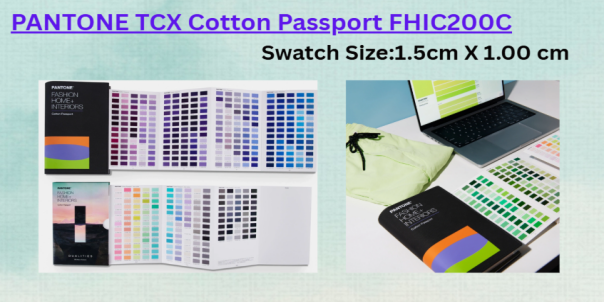
PANTONE TCX Cotton Passport FHIC200C
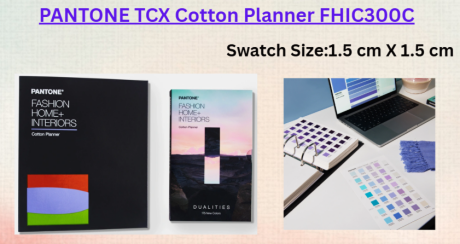
PANTONE TCX Cotton Planner FHIC300C
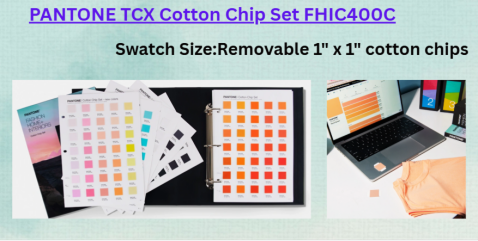
PANTONE TCX Cotton Chip Set FHIC400C
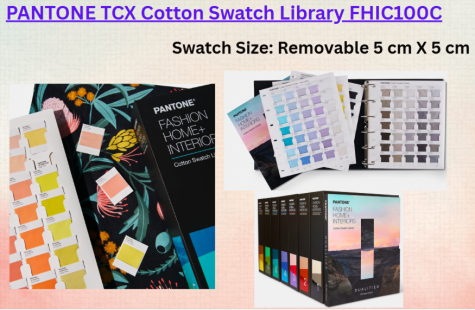
PANTONE TCX Swatch Library FHIC100C
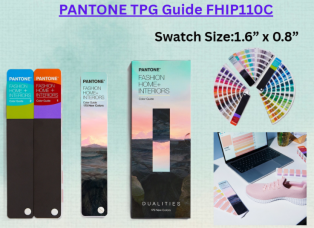
PANTONE TPG Guide FHIP110C
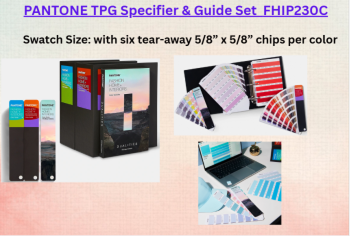
PANTONE TPG Specifier & Guide Set FHIP230C
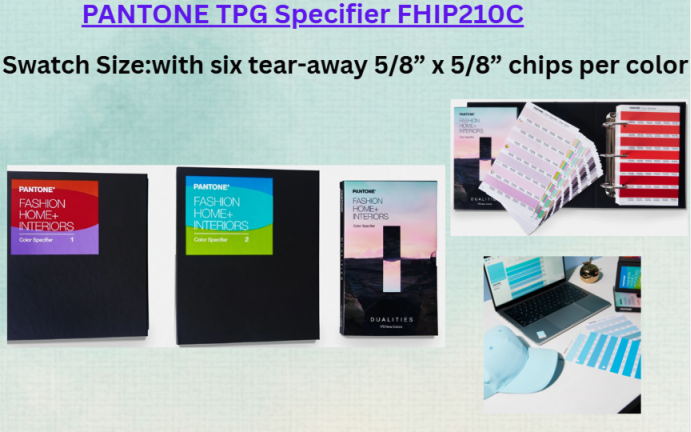
PANTONE TPG Specifier FHIP210C
Pantone Formula Guide Solid–Coated/Uncoated GP1601B
Frequently Asked Questions
Pantone Products are standardized colour reference tools that assign a unique code to every colour shade. They enable textile mills, garment manufacturers, designers, and quality teams to communicate colours accurately, ensuring the same shade can be reproduced consistently across different locations, production batches, and lighting conditions.
Pantone Products provide a fixed physical colour reference that dyeing and quality control teams can compare finished fabrics against. This reduces shade variation between dye batches and production runs, helping manufacturers consistently meet buyer-approved colour standards.
The Pantone Fashion, Home + Interiors (FHI) guides and the Pantone Cotton Swatch Library are widely used for textile applications. These guides display colours on cotton-based materials, providing a realistic representation of how colours will appear on finished fabrics.
Colour standardisation ensures consistent shade matching across multiple dye lots, manufacturing facilities, and international suppliers. It reduces costly colour variations, prevents buyer rejections, and helps maintain quality throughout the textile production process.
Pantone Products are commonly used by textile mills, garment manufacturers, dyeing units, printing companies, fashion designers, quality control laboratories, buying houses, export companies, and textile educational institutions for reliable colour communication and quality assurance.
Yes. Pantone Cotton Swatch Libraries are designed for textile colour matching, while Pantone Formula Guides and Color Bridge guides are intended for print applications. Together, they help maintain consistent colours across fabrics, labels, packaging, and printed marketing materials.
Physical Pantone guides should be replaced periodically because colours can fade with regular handling and prolonged light exposure. Using updated guides ensures accurate colour matching and reliable quality control during textile production.
The right Pantone Product depends on whether your work focuses on textile dyeing, printing, fashion design, or packaging. Consider your application, required portability, and colour reference format. Amith Garment Services can help you select the most suitable Pantone solution for your textile colour management and quality control requirements.