
Colour Fastness Testing Equipment for Textile Laboratories
Colour fastness testing is an important part of textile quality evaluation. It helps determine how well the colour of a fabric, garment or textile material withstands exposure to conditions such as washing, rubbing, perspiration, light and heat. These tests help textile manufacturers and quality control laboratories assess colour performance before products reach the market.
Amith Garment Services offers textile testing equipment for different colour fastness evaluation requirements. The equipment selected depends on the test method, textile material, applicable testing standard and laboratory requirements.
Whether you manufacture woven fabrics, knitted fabrics, dyed garments or finished textile products, selecting suitable colour fastness testing equipment helps support consistent quality control and testing procedures.
What Is Colour Fastness Testing?
Colour fastness testing evaluates the resistance of a textile material’s colour to specific external influences. During testing, a fabric or garment specimen is exposed to defined conditions, and the resulting colour change or transfer of colour is assessed using the applicable test method.
Depending on the purpose of the evaluation, tests may examine whether a fabric fades during washing, transfers colour through rubbing, changes colour after exposure to perspiration or shows colour deterioration under light exposure.
Colour fastness results can help manufacturers evaluate dye performance, investigate quality concerns and assess whether textile materials meet specified customer or product requirements.
Why Is Colour Fastness Testing Important?
Colour fastness testing supports textile quality control at different stages of manufacturing, including dyeing, finishing, garment production and final inspection.
Key reasons for conducting these tests include:
- Colour durability evaluation: Assess how textile colours respond to specific testing conditions.
- Quality control: Identify potential colour-related issues before finished products are dispatched.
- Customer specifications: Evaluate materials against agreed testing requirements.
- Process evaluation: Help investigate inconsistencies associated with dyeing, finishing or material selection.
- Product development: Compare fabric samples and assess colour performance during material development.
- Laboratory testing: Generate results for internal quality assessments and relevant compliance requirements.
The appropriate test depends on the intended use of the textile, the customer’s requirements and the relevant testing standard.
Types of Colour Fastness Testing
1. Colour Fastness to Washing
Colour fastness to washing evaluates how a textile material responds to washing under specified test conditions. The assessment may include colour change in the original specimen and staining of adjacent fabrics.
A washing fastness tester is used according to the applicable method. Testing conditions may include temperature, detergent, washing time, mechanical action and other specified parameters.
This test is relevant to garments, home textiles, uniforms, dyed fabrics and other products that undergo laundering.
2. Colour Fastness to Rubbing
Colour fastness to rubbing, also called rubbing fastness or crocking, assesses the transfer of colour from a textile surface to another material through friction.
A Crockmeter is commonly used to perform dry and wet rubbing tests. A test specimen is rubbed against a specified rubbing cloth under controlled conditions. The resulting transfer of colour is evaluated using the applicable assessment method.
This test is useful for evaluating dyed fabrics, denim, garments, upholstery materials and other textiles that may experience surface friction during handling or use.
3. Colour Fastness to Perspiration
Colour fastness to perspiration evaluates how textile colours respond to simulated perspiration under specified conditions. The assessment may include colour change and staining of adjacent fabrics.
A perspiration fastness tester is used with the required test solutions, specimen arrangement and controlled testing conditions. The procedure follows the applicable standard.
This test is particularly relevant to clothing and other textiles that come into contact with the human body.
4. Colour Fastness to Light
Colour fastness to light evaluates the resistance of textile colours to fading or colour change caused by light exposure.
A light fastness tester exposes textile specimens to a controlled light source under specified conditions. The resulting colour change is assessed using the appropriate reference materials and evaluation method.
This testing is relevant to garments, curtains, upholstery, outdoor fabrics and other textile products exposed to light during use.
5. Colour Fastness to Heat and Sublimation
Heat-related colour fastness testing evaluates changes in colour or colour transfer when textile materials are exposed to specified heat conditions.
Sublimation fastness testing is relevant to certain dyed synthetic materials, particularly where heat exposure may cause dyes to migrate or transfer. The test method and conditions depend on the textile material and intended application.
Suitable testing equipment helps laboratories conduct these evaluations according to the applicable procedure.
Colour Fastness Testing Equipment
Different colour fastness tests require different instruments. Selecting equipment according to the required test method helps laboratories carry out consistent and repeatable evaluations.
Crockmeter for Rubbing Fastness Testing
A Crockmeter is used to assess colour transfer caused by rubbing. Depending on the model and configuration, it may support dry and wet rubbing tests on textile specimens.
When selecting a Crockmeter, consider the applicable test method, rubbing mechanism, specimen holder, rubbing cloth requirements and result assessment procedure.
Washing Fastness Tester
A washing fastness tester is used to evaluate textile colour performance under specified washing conditions. Equipment selection should consider the required test standard, temperature range, test containers and laboratory workload.
Perspiration Fastness Tester
A perspiration fastness tester supports testing under specified simulated perspiration conditions. Depending on the equipment design, the testing arrangement may include specimen holders and loading components required by the applicable method.
Light Fastness Testing Equipment
Light fastness testing equipment is used to evaluate colour changes following controlled exposure to a specified light source. Important selection factors include the test method, exposure requirements, specimen capacity and monitoring arrangements.
Heat and Sublimation Testing Equipment
Equipment used for heat-related colour fastness testing should be selected according to the required temperature conditions, specimen arrangement and applicable testing procedure.
For all equipment categories, confirm the model-specific specifications, supplied accessories and supported standards before selecting an instrument.
Colour Fastness Testing Standards
Textile colour fastness tests may follow ISO, AATCC or other applicable testing standards, depending on customer specifications, product requirements and laboratory procedures.
Examples of relevant standards include:
- ISO 105-C06: Colour fastness to domestic and commercial laundering.
- ISO 105-X12: Colour fastness to rubbing.
- ISO 105-E04: Colour fastness to perspiration.
- ISO 105-B02: Colour fastness to artificial light using a xenon arc lamp.
- AATCC TM8: Colourfastness to crocking.
- AATCC TM61: Colourfastness to laundering.
The applicable edition and exact test procedure should be verified before testing. Not every instrument supports every standard, and compliance depends on the equipment configuration, accessories, operating procedure and laboratory requirements.
How to Choose Colour Fastness Testing Equipment
Before purchasing colour fastness testing equipment, consider the following factors:
- Required test methods: Identify whether your laboratory needs washing, rubbing, perspiration, light, heat or other colour fastness tests.
- Applicable standards: Check the test standards specified by your customers, quality system or testing laboratory.
- Textile materials: Consider the types of fabrics, garments, dyed materials and finished products you intend to evaluate.
- Equipment specifications: Review the temperature range, test capacity, operating mechanism, controls and other model-specific features relevant to the test.
- Accessories and consumables: Confirm the availability of required rubbing cloths, adjacent fabrics, test solutions, reference materials and specimen holders.
- Laboratory workflow: Consider sample volume, operator requirements, available space and maintenance needs.
- Documentation and support: Review the supplied operating instructions, technical documentation, service arrangements and any calibration or verification requirements relevant to your laboratory.
Selecting equipment based on the actual testing requirement helps avoid purchasing instruments that do not support the intended test procedure.
Applications of Colour Fastness Testing
Colour fastness testing is used across several textile-related industries, including:
- Garment and apparel manufacturing
- Textile dyeing and finishing
- Knitted and woven fabric production
- Denim manufacturing
- Home textiles and furnishings
- Upholstery and furnishing fabrics
- Textile export and quality inspection
- Textile testing and research laboratories
The specific tests required vary according to the material, end use, customer specifications and applicable standards.
Colour Fastness Testing Equipment from Amith Garment Services
Amith Garment Services provides textile testing equipment for garment and fabric quality evaluation requirements.
If you are looking for colour fastness testing equipment for a textile laboratory or manufacturing facility, identify the tests you need to perform and the standards your products must meet. This information can help determine the suitable equipment category and configuration.
Explore the available equipment and review the relevant product specifications before making a selection.
Contact Amith Garment Services to enquire about colour fastness testing equipment for your textile testing requirements. Share the required test method, applicable standard and intended application to help identify a suitable instrument.
Colour Fastness Testing on Fabrics can be done by 5 methods. They are
1. Colour Fastness due to rubbing
2. Colour Fastness due to washing / Dry-cleaning
3. Colour Fastness due to Perspiration and Sea Water
4. Colour Fastness due to sunlight
5. Colour Fastness due to hot pressing and Dry Heat
1. Testing colour Fastness due to Rubbing:
We use the following 3 instruments:
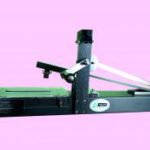
i. Manual Crockmeter:
Colour Fastness testing done by Dry Rub and Wet Rub tests. This tests are used for the determination of colour fastness against rubbing, either under dry or under wet conditions. In this test and moving brass finger of specified shape and size rubs against the test specimens under test and the amount of colour transferred to a piece of abradant fabric fixed over the base of the moving finger are graded with the help of standard grey scales to evaluate the colour fastness against rubbing.
TECHNICAL DETAILS
Technical Specification of Manual Crock Meter
| Rubbing Finger diameter | Ø 16 mm +/-0.2 with white cotton fixing ring |
| Force on the rubbing finger | 9 N ±0.2 N (917.43 gms) |
| Center to center Traverse of the Finger | 104 ± 3 mm |
| Counter | 0 – 9999, (Least Count : 1) |
| Dimension | 640 (L) X 95 (W) X 195 (H) mm |
| Over all Weight | 6.5 kg |
| Size of crock square | (5 x 5) Cms. |

ii. Digital Crockmeter:
Colour Fastness testing done by Dry Rub and Wet Rub tests. This tests are used for the determination of colour fastness against rubbing, either under dry or under wet conditions. In this test and moving brass finger of specified shape and size rubs against the test specimens under test and the amount of colour transferred to a piece of abradant fabric fixed over the base of the moving finger are graded with the help of standard grey scales to evaluate the colour fastness against rubbing.
TECHNICAL DETAILS
| Electrical Supply Consumption |
: 200-240 AC @ 50 Hz : 250 Watts Max. |
| Environmental Temperature Altitude |
: 20 – 50oC : 1000 meters above MSL |
| Technical Dia of the Finger Length of the Traverse of the finger Effective Load on the finger Size of Test specimen (fabric) Size of Crocking cloth Overall dimension of the unit |
: 16 mm. : 104 ± 3mm. : 9N ± 10 %. : 300mm X 150 mm. : 5cm X 5cm. : 13” x 29” x 13” (Inches). |

iii. Rotary Crockmeter
Colour Fastness testing done by Dry Rub and Wet Rub tests. This tests are used for the determination of colour fastness against rubbing, either under dry or under wet conditions. Rotary Crockmeters are used for testing printed fabrics. this test and moving brass finger of specified shape and size rubs against the test specimens under test and the amount of colour transferred to a piece of abradant fabric fixed over the base of the moving finger are graded with the help of standard grey scales to evaluate the colour fastness against rubbing.
For Grading, Greyscales are used:

For Grading, Greyscales are used:
2. Testing Colour Fastness due to washing / Dry-cleaning:

Digital Washing Fastness Tester:
Digital Washing Fastness Tester is used to determine the colour fastness of any type of dyed and printed textile material against washing. There are 3 models:
– ISO METHOD
– AATCC METHOD
– ISO/AATCC METHOD IN ONE
Technical Specifications: Power Supply: 220 V, Single Phase
Motor RPM: 40
Motor: ½ HP, Geared Motor
Timer & Temperature Control: Digital
Max Temperature: 99◦ C
Temperature Accuracy: 0.1◦ C
Max Timer: 999
Beakers:
| For ISO | : 8 beakers of 550 mL |
| For AATCC | : 8 beakers of 1100 mL |
| For ISO & AATCC in one | : 4 beakers of 550 mL & 4 beakers of 1100 mL |
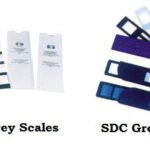
For Testing Colour Change Greyscales are used:
3. Colour Fastness due to Perspiration and Sea Water

Perspirometer: Perspiration Tester for testing the colour fastness of textiles due to perspiration and yellowing. There are 2 types of Perspirometer:
ISO METHOD
AATCC METHOD
Perspiration test chemicals supplied along with instrument.
– For AATCC 3.63 kg dead weight or for ISO 4.13 kg dead weight is provided.
– 2 plates of total 910 grams is provided for loading.
– Sodium chloride GR , Sodium di hydrogen ortho phosphate,sodium hydroxide flakes,di sodium hydrogen ortho phosphate,L-histidiene besides beakers/blotting paper/standard adjacent fabric supplied.
– Net weight :8.3 kg
– Net dimension :10”×3.5”×7.5”.
– 21 acrylic plates for sample holder is also provided each of 115mm*60mm*1.5mm thickness.(Option available to supply perspiration kit which contains all chemicals 7 accessories to conduct perspiration tests against ISO/AATCC standards).

4. Colour Fastness due to sunlight

MBTL Light Fastness tester:MBTL Light Fastness Tester is used to determine the Colour Fastness and degradation due to the effects of sunlight on Textiles.
Technical Details :
– Light Source :500W, MBTL Fading Lamp (Mercury Blinded Tungsten Lamp)
– Test Chamber Temperature:Ambient to 50OC
– Temperature Range Control:By Water Circulation in Type ‘A’ Rectangular Cells
– Type ‘A’ Rectangular Cells:03 Nos. supplied
– Maximum Number of Tupe:50 Nos.
– C’ Cylindrical Cells
– Specimen Thickness :Up to 15mm
– Specimen Size:100 X 50mm
– Maximum Number of Specimen:10 Nos.
– In the ‘A’ Rectangular Cells
– Working Life of Lamps:2000Hours
– Power:220Volts
– Power Consumption:Maximum 1KW
For Grading:

5. Colour Fastness due to hot pressing and Dry Heat:

Sublimation Tester:
Sublimation Fastness tester is a suitable instruments for dyestuff manufacturer as well as textile processor for checking effects of dry heat on dyestuff Sublimation and staining effect properties of individual dyes can be tested at various temperatures. In a single test, entire range of effective temperature can be tested. The heating pads are made up of Aluminium for even and quick distribution of heat. TECHNICAL
TECHNICAL DETAILS
| No. of Heating Pads | : 06 Nos |
| No. of Heating Stations | : 03 Nos |
| Temperature Range | : Up to 2100C |
| Power Read-out | : Digital Display for Each Pad |
| Timer Range | : 10 to 60 Seconds |
| Size of Each Pad | : 100 mm x 40 mm |
| Machine Dimension | : 400 mm x 350 mm x 280 mm |
| Net Weight | : 19 Kg |
| Supply Voltage | : 220 V AC |
Reach out to Amith Garment Services to discuss which colour fastness tester suits your lab’s requirements.
Frequently Asked Questions About Colour Fastness Testing
1. What is colour fastness testing?
Colour fastness testing evaluates how well the colour of a fabric or garment resists fading, colour change or transfer when exposed to conditions such as washing, rubbing, perspiration, light and heat. The test method depends on the textile material, intended application and applicable testing standard. These evaluations help manufacturers and textile laboratories assess colour performance during quality control.
2. What are the different types of colour fastness tests?
Common types of colour fastness testing include washing fastness, rubbing fastness, perspiration fastness, light fastness and heat-related fastness testing. Each method evaluates textile colour performance under specific conditions. The appropriate test depends on the fabric type, dyeing process, product application and customer requirements. Different tests require suitable instruments and procedures.
3. Which equipment is used for colour fastness testing?
Colour fastness testing equipment varies according to the required test method. A washing fastness tester evaluates colour performance during washing, while a Crockmeter is used for rubbing fastness tests. Perspiration fastness testers and light fastness testing equipment are used for their respective evaluations. Equipment should be selected according to the applicable standard and laboratory testing requirements.
4. Which instrument is used to test colour fastness to washing?
A washing fastness tester is used to evaluate textile colour performance under specified washing conditions. The test may assess colour change in the original specimen and staining of adjacent fabrics. Temperature, detergent, washing duration and other conditions depend on the applicable test method. Confirm that the selected instrument supports the required standard and testing procedure.
5. How does a Crockmeter test colour fastness?
A Crockmeter evaluates rubbing fastness by rubbing a specified test cloth against a textile specimen under controlled conditions. The test may be performed using dry or wet rubbing procedures, depending on the applicable method. Colour transfer to the rubbing cloth is assessed using an appropriate grey scale or specified evaluation method to determine the rubbing fastness result.
6. What is the difference between colour change and staining?
Colour change refers to a difference in the colour of the original textile specimen after testing. Staining refers to colour transferred from the specimen onto an adjacent fabric or another specified material. Both assessments are important in colour fastness testing because a textile may retain much of its original colour while still transferring dye to other materials under particular conditions.
7. Which standards are used for colour fastness testing?
Textile colour fastness testing may follow ISO 105 series standards or relevant AATCC test methods. Examples include ISO 105-C06 for washing, ISO 105-X12 for rubbing, ISO 105-E04 for perspiration and AATCC TM8 for crocking. The correct standard and edition depend on the required test, customer specifications and intended application.
8. Why is colour fastness testing important for textile manufacturers?
Colour fastness testing helps textile manufacturers evaluate colour durability and identify potential quality issues before products are supplied to customers. It supports quality control, product development and assessment against agreed specifications. Testing can also help investigate colour fading, staining or transfer concerns and provide information for reviewing dyeing, finishing and material selection processes.
9. How do I choose the right colour fastness testing equipment?
Choose colour fastness testing equipment based on the required test method, applicable standard, textile material and laboratory workload. Review the instrument's operating range, sample capacity, accessories and technical specifications. Confirm that the equipment supports your intended testing procedure and check the availability of required consumables, documentation, maintenance and technical support before purchasing.
10. How can I enquire about colour fastness testing equipment?
To enquire about colour fastness testing equipment from Amith Garment Services, identify the test you need to perform, the textile material you work with and the applicable testing standard. Sharing these details helps clarify your laboratory requirements and the equipment category to consider. Review the available product specifications and contact Amith Garment Services for further product information.