
Crease Recovery Tester for Textile Fabric Testing
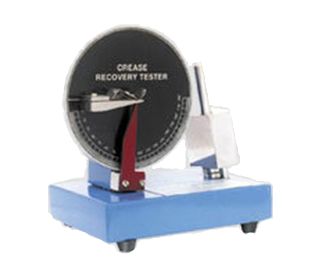
A Crease Recovery Tester is a textile testing instrument used to measure how effectively a fabric recovers after being folded or creased under a controlled load. The test produces a crease recovery angle, which helps laboratories assess the fabric’s resistance to permanent creasing and its ability to regain its original appearance.
The instrument is useful for evaluating woven and other textile fabrics during product development, finishing evaluation and quality control. It is particularly relevant when fabric appearance, easy-care performance and wrinkle resistance are important to the final product.
Textile mills, garment manufacturers, apparel export houses, textile testing laboratories, universities and research institutes can use crease recovery testing to compare fabrics, finishes and processing conditions. The results can support decisions related to fabric selection, finishing treatments and buyer specifications.
A suitable tester provides controlled specimen handling and repeatable measurement, helping reduce variations caused by manual assessment. It can be integrated into routine physical fabric testing alongside instruments for GSM, thickness, stiffness, tensile strength and other performance properties.
Amith Garment Services supplies quality textile testing equipment for laboratories and manufacturers across India. The company focuses on practical testing solutions supported by technical guidance, calibration and after-sales assistance. Contact Amith Garment Services to discuss your laboratory testing requirements.
Purpose
To determine the crease recovery angle of any textile materials.
Features
- Recovery properties against creasing of any textile material can be tested by using this simple instrument to produce accurate results
- Graduated dial in degree to evaluate accurate recovery angle.
- Provided with fully mild steel with chrome plated loading device, specimen tweezers, and template. (template size 40 mm x 15 mm and 50 mm x 25 mm).
- Loading device of 9.6N is provided.
Related Standards
- ISO 2313, AATCC 66, BS EN 22313, M & S P22;
Frequently Asked Questions
A Crease Recovery Tester measures the ability of a textile fabric to recover after a controlled creasing load is removed. The recovery is expressed as a crease recovery angle. This information helps textile manufacturers and laboratories evaluate fabric appearance, wrinkle resistance and the effect of finishing treatments.
A fabric specimen is folded and subjected to a specified load for a controlled period. After the load is removed, the specimen is allowed to recover under defined conditions. The resulting recovery angle is then measured. Larger recovery angles generally indicate better recovery from creasing under the test conditions.
Crease recovery testing is used by textile mills, garment manufacturers, apparel exporters, fabric testing laboratories, universities and research centres. It is useful when assessing woven fabrics, finishing treatments, easy-care properties and fabric appearance before production or during quality control.
A crease recovery test determines how well a fabric recovers after being folded and compressed. The recovery is evaluated by measuring the angle formed when the fabric returns toward its original position.
The tester applies a controlled creasing load to a fabric specimen. Once the load is removed, the specimen recovers and its recovery angle is measured. The result provides an objective indication of crease recovery under the specified test conditions.
Textile laboratories use it to obtain consistent measurements of fabric crease recovery. It helps compare materials, evaluate finishing processes and generate objective test data for quality control, research and product development.