
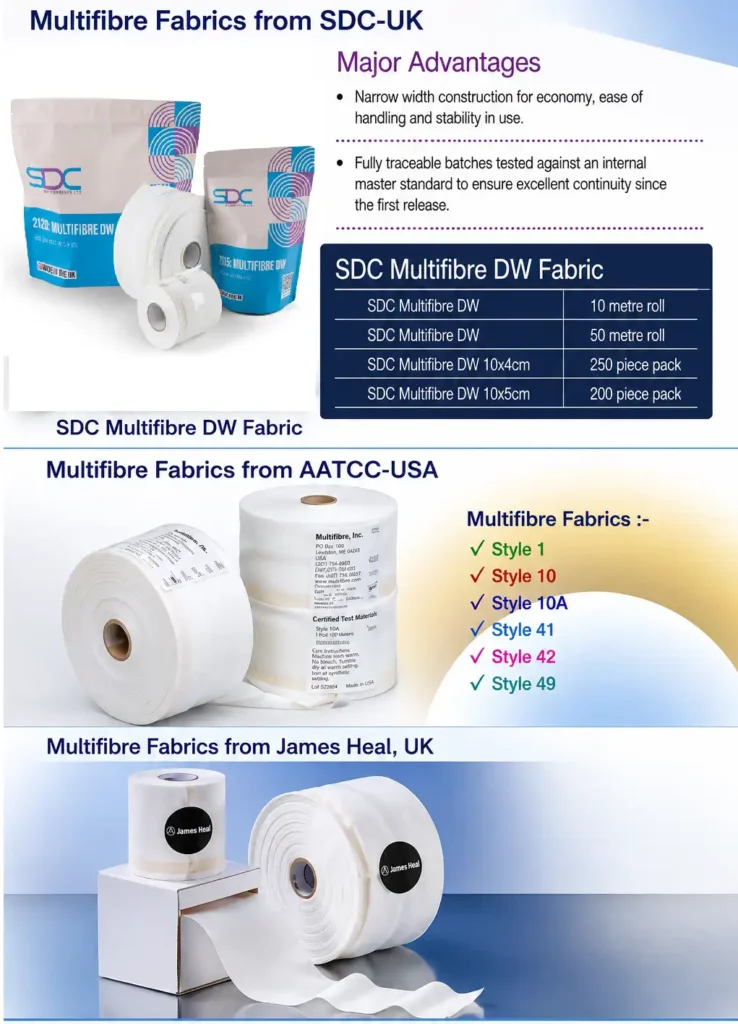
Multi Fibre Fabrics for Colour Fastness Testing
Multi Fibre Fabrics are woven test strips containing several different fibre types stitched side by side on a single fabric, used as a standardised adjacent fabric in colour fastness testing. Each strip typically combines fibres such as wool, acrylic, polyester, polyamide (nylon), cotton, and acetate or triacetate, allowing a lab to observe how dye transfers onto multiple fibre types at once during a single test.
Textile testing laboratories use Multi Fibre Fabrics in wash fastness, water fastness, perspiration fastness, and rubbing (crocking) fastness tests conducted under ISO 105 and AATCC methods. Instead of running separate single-fibre adjacent fabric tests, a lab can assess staining behaviour across fibre types in one pass, saving time and consumables.
Garment manufacturers, textile mills, apparel export houses, fabric testing centres, and university research labs rely on Multi Fibre Fabrics to generate buyer-compliant fastness reports. Genuine, standard-woven strips ensure consistent fibre composition and reliable, repeatable staining results batch after batch.
Amith Garment Services supplies authentic Multi Fibre Fabrics sourced from recognised consumable manufacturers including James Heal, backed by more than 25 years of experience supporting Indian textile testing laboratories with genuine, traceable consumables.
- Multi fibre Fabric can be used as an adjacent fabric in many of the ISO 105C Series and E Series of colour fastness tests and also meets many chain store fastness test specifications. It is produced with a narrow weave construction and contains the following components: secondary cellulose acetate, cotton, polyamide, polyester, acrylic and wool. It undergoes rigorous quality control procedures, in accordance with ISO 105 F10, conducted by independent UK Accreditation Service accredited laboratories. All tests are carried out against a set specification and against a retained master batch at yarn as well as fabric stage. This ensures consistency of staining behaviour rather than simple conformity.
- These items comes with confirmation certificates/MSDS wherever applicable.
-
SDCE Humidity Control Fabric
-
This is an azoic dyed cotton fabric with specified fading properties, which varies with the amount of relative humidity.
- It is used as a calibration tool for light fastness testing. When the humidity of the light fastness testing machine is correctly set it will fade at an identical rate to the light fastness standard Number 5. It is supplied with a printed instruction sheet for its use to determine the correct settings for the relevant ISO 105 B series test method.
Contact Amith Garment Services to check current stock and pricing.
Frequently Asked Questions:
What is Multi Fibre Fabric used for in textile testing?
Multi Fibre Fabric is used as a standard adjacent fabric during colour fastness tests such as washing, perspiration, water, and rubbing. It contains multiple fibre types stitched together, allowing laboratories to evaluate colour transfer onto different fibres in a single test, as required by ISO 105 and AATCC standards.
How many fibre types are included in a Multi Fibre Fabric strip?
A standard Multi Fibre Fabric strip typically contains six fibre types: wool, acrylic, polyester, polyamide (nylon), cotton, and acetate or triacetate, depending on the applicable testing standard. Each fibre section is individually assessed for staining using a Grey Scale.
Which standards specify Multi Fibre Fabric composition?
Multi Fibre Fabric composition and usage are specified by international standards such as ISO 105-F10 and various AATCC colour fastness test methods. These standards define the fibre composition, weave construction, and testing procedures to ensure consistent and comparable results across laboratories.
What is Multi Fibre Fabric?
Multi Fibre Fabric is a specially manufactured test fabric made from several different fibre types woven into one strip. It is used during colour fastness testing to determine how much dye transfers from the test sample onto each fibre under various testing conditions.
How does Multi Fibre Fabric help in colour fastness testing?
During colour fastness tests, the Multi Fibre Fabric is placed alongside the dyed specimen. After testing, technicians examine each fibre strip for staining and compare the results with a Grey Scale to evaluate colour transfer across multiple fibre types in a single test.
Why should laboratories use genuine Multi Fibre Fabric strips?
Genuine Multi Fibre Fabric strips are manufactured to meet ISO and AATCC specifications for fibre composition and weave quality. They provide accurate, repeatable, and internationally accepted test results, helping laboratories avoid inconsistent ratings, buyer disputes, and failed quality audits.