
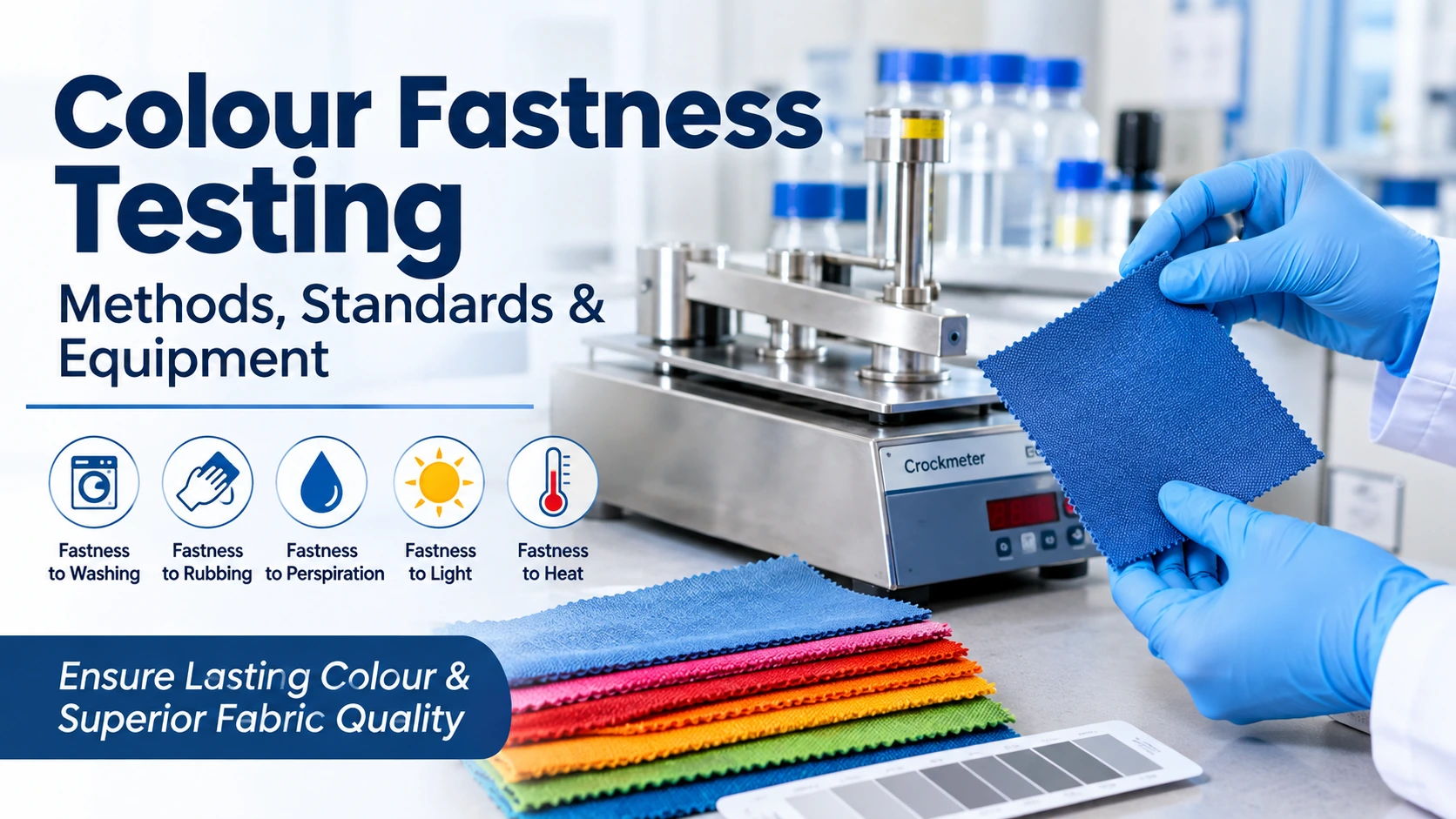
Colour is one of the most important factors influencing the appearance and quality of textile products. Whether it is clothing, upholstery, curtains, uniforms or home furnishings, customers expect fabrics to maintain their original colour during regular use. However, factors such as washing, rubbing, perspiration, sunlight and heat can cause colours to fade or transfer from one material to another.
This is why Colour Fastness Testing plays an important role in textile quality control. It helps manufacturers evaluate how well dyed and printed fabrics retain their colour when exposed to different environmental and usage conditions.
A proper Fabric Colour Fastness Test allows textile manufacturers, garment exporters and quality-control laboratories to identify potential colour-related issues before products reach the market. By using suitable testing instruments and following recognised ISO and AATCC standards, businesses can assess fabric performance and maintain consistent quality.
What Is Colour Fastness Testing?
Colour Fastness Testing is a textile testing process used to determine the resistance of dyed or printed fabrics to colour fading and colour transfer under specified conditions.
During textile manufacturing, different dyes, pigments and colouring techniques are used to achieve the required fabric appearance. However, not all colouring materials have the same resistance to external conditions.
For example, a fabric may retain its colour during washing but show colour transfer when rubbed against another material. Similarly, prolonged exposure to sunlight may cause certain fabrics to fade.
Textile Colour Fastness Testing evaluates these characteristics through controlled testing procedures. Results are assessed using appropriate grey scales or other specified evaluation methods, depending on the applicable standard.
Why Is Colour Fastness Testing Important in Textile Quality Control?
Colour fastness is an important quality parameter for textile manufacturers because it influences the appearance, usability and performance of finished products.
Some major reasons why manufacturers conduct colour fastness tests include:
1. Maintains Original Fabric Colour
Testing helps determine whether fabrics can retain their original colour during washing, rubbing and other conditions. This is particularly important for garments and home textile products.
2. Identifies Colour Fading and Staining
Certain dyes may lose colour or transfer onto other fabrics under specific conditions. Testing helps identify these issues during the quality-control process.
3. Supports Textile Export Requirements
International buyers and garment exporters may specify particular colour fastness requirements. Testing helps manufacturers evaluate whether their fabrics meet the relevant buyer specifications and testing standards.
4. Improves Manufacturing Quality Control
Regular testing helps manufacturers monitor colour performance across different production batches and identify possible inconsistencies.
5. Helps Evaluate Fabric Suitability
Different textile products have different usage requirements. For example, sportswear, denim, upholstery and curtains may require different colour fastness evaluations.
Different Types of Colour Fastness Testing Methods
There are several types of colour fastness tests, each designed to evaluate fabric performance under particular conditions.
1. Colour Fastness to Washing
Colour Fastness to Washing evaluates how well a fabric retains its colour during washing. It also measures the possibility of colour transferring from the tested fabric to adjacent fabrics.
This test is commonly performed on garments, cotton fabrics, polyester materials, towels, uniforms and home textiles.
The general testing process includes:
- Preparing the fabric specimen according to the selected test method.
- Attaching or combining the specimen with adjacent fabrics where required.
- Exposing the specimen to specified washing conditions.
- Rinsing and drying the material.
- Evaluating colour change and staining.
A Washing Fastness Tester is used to perform controlled washing tests according to the applicable testing procedure.
2. Colour Fastness to Rubbing
Colour Fastness to Rubbing evaluates how much colour transfers from the fabric surface when it comes into contact with another material through friction.
This test is also known as crocking.
There are two common testing conditions:
Dry Rubbing Test: A dry rubbing cloth is used to evaluate colour transfer from the fabric surface.
Wet Rubbing Test: A specified moist rubbing cloth is used to assess colour transfer under wet rubbing conditions.
A Crockmeter is commonly used for this procedure. It applies controlled rubbing movements to the fabric specimen and helps evaluate the amount of colour transferred to the rubbing cloth.
Crockmeter testing is particularly relevant for denim, printed fabrics, upholstery materials and coloured garments.
3. Colour Fastness to Perspiration
Colour Fastness to Perspiration determines how textile colours respond when exposed to artificial perspiration solutions.
Human sweat can affect certain dyes and cause colour changes or staining on adjacent materials. This test helps manufacturers evaluate fabric performance under specified perspiration conditions.
The procedure generally involves exposing fabric specimens and adjacent fabrics to acidic or alkaline artificial perspiration solutions under controlled conditions.
A Perspiration Tester is commonly used to maintain the required testing arrangement and pressure.
This test is especially relevant for sportswear, activewear, uniforms and everyday clothing.
4. Colour Fastness to Light
Colour Fastness to Light evaluates the resistance of textile colours to fading when exposed to light under specified conditions.
Prolonged exposure to sunlight or artificial light sources may cause certain dyes and pigments to lose their original appearance.
This test is particularly important for:
- Curtains and upholstery fabrics.
- Outdoor textile products.
- Automotive interior materials.
- Garments exposed to sunlight.
- Home furnishing fabrics.
Specialised light fastness testing equipment is used to evaluate colour stability under controlled exposure conditions.
5. Colour Fastness to Heat
Colour Fastness to Heat evaluates how textile colours respond to specified temperature conditions.
Heat exposure may occur during ironing, pressing, heat setting and other textile manufacturing processes. These conditions may cause colour changes or staining in certain fabrics.
Testing helps manufacturers assess the colour stability of materials under the temperature and contact conditions specified by the relevant test method.
International Standards for Colour Fastness Testing
International standards provide established procedures for conducting textile colour fastness tests. They help laboratories maintain consistency in specimen preparation, testing conditions and result evaluation.
Some commonly referenced standards include:
| Testing Standard | Application |
|---|---|
| ISO 105-C06 | Colour fastness to domestic and commercial laundering |
| ISO 105-X12 | Colour fastness to rubbing |
| ISO 105-E04 | Colour fastness to perspiration |
| ISO 105-B02 | Colour fastness to artificial light |
| AATCC TM61 | Colour fastness to laundering |
| AATCC TM8 | Colour fastness to crocking |
| AATCC TM15 | Colour fastness to perspiration |
The applicable standard depends on the fabric type, customer requirements and intended product application. Laboratories should always follow the current edition and relevant procedure of the selected standard.
What Equipment Is Used for Colour Fastness Testing?
Accurate textile testing requires suitable instruments that can maintain the conditions specified by the testing method.
Some commonly used Colour Fastness Testing Equipment includes:
Crockmeter
A Crockmeter is used to evaluate colour transfer during dry and wet rubbing tests. It is widely used for assessing the rubbing fastness of dyed and printed fabrics.
Washing Fastness Tester
A washing fastness tester is used to evaluate colour retention and staining after controlled washing conditions. It is useful for textile laboratories and garment manufacturing units.
Perspiration Tester
A perspiration tester helps evaluate how fabric colours respond to artificial acidic and alkaline perspiration solutions.
Light Fastness Tester
A light fastness tester evaluates the resistance of textile colours to fading under controlled artificial light exposure.
Selecting appropriate equipment helps laboratories conduct tests according to the required testing standards and application requirements.
How Are Colour Fastness Test Results Evaluated?
The results of a Fabric Colour Fastness Test are generally evaluated by examining colour change and staining.
Two important assessment parameters are:
Colour Change: This measures the difference between the original fabric colour and its appearance after testing.
Colour Staining: This evaluates the amount of colour transferred from the tested specimen to an adjacent fabric.
Grey scales are commonly used for visual assessment. Depending on the applicable test method, ratings generally range from Grade 1 to Grade 5.
- Grade 1 indicates significant colour change or staining.
- Grade 5 indicates no noticeable colour change or staining.
Higher ratings generally indicate better colour fastness. However, acceptable ratings depend on the product category, buyer requirements and applicable testing standard.
Factors That Affect Fabric Colour Fastness
Several factors can influence the colour retention performance of textile materials.
1. Dye Selection: Different dyes have different resistance properties depending on their chemical composition and application.
2. Fabric Composition: Cotton, polyester, nylon and blended fabrics may respond differently to colouring materials and testing conditions.
3. Dyeing Process: Inappropriate dyeing conditions or insufficient after-treatment may affect colour retention.
4. Washing Conditions: Detergents, temperature, washing time and mechanical action can influence colour stability.
5. Finishing Treatments: Chemical finishing and other textile processing operations may affect the final colour performance.
6. Environmental Exposure: Sunlight, temperature and humidity may influence the appearance and colour stability of certain fabrics.
Understanding these factors helps manufacturers identify possible reasons for colour-related quality issues.
How to Choose the Right Colour Fastness Testing Equipment?
Selecting suitable Colour Fastness Testing Equipment is important for textile manufacturers and testing laboratories.
Consider the following factors before purchasing testing instruments:
- Testing Application: Identify whether the requirement involves washing, rubbing, perspiration, light or heat fastness.
- Standard Compatibility: Check whether the instrument supports the applicable ISO or AATCC test method.
- Testing Capacity: Consider the number of specimens and the expected laboratory workload.
- Temperature Control: Ensure the equipment supports the temperature conditions required by the selected procedure.
- Operational Requirements: Evaluate ease of operation, maintenance and technical support.
- Calibration and Verification: Follow appropriate calibration and verification procedures to maintain reliable testing conditions.
The right equipment depends on the laboratory’s testing requirements, fabric applications and applicable standards.
Conclusion
Colour Fastness Testing is an essential part of textile quality control because it helps evaluate how fabrics retain their original colours during washing, rubbing, perspiration, light exposure and other conditions.
From Crockmeter Testing to washing and perspiration fastness evaluation, each testing method provides useful information about textile colour performance. Using appropriate testing instruments and following recognised ISO and AATCC standards helps manufacturers assess fabric quality and maintain consistency across production batches.
Amith Garment Services provides textile testing instruments for industrial and laboratory applications. Explore the available textile testing equipment to identify suitable instruments for your fabric testing and quality-control requirements.