
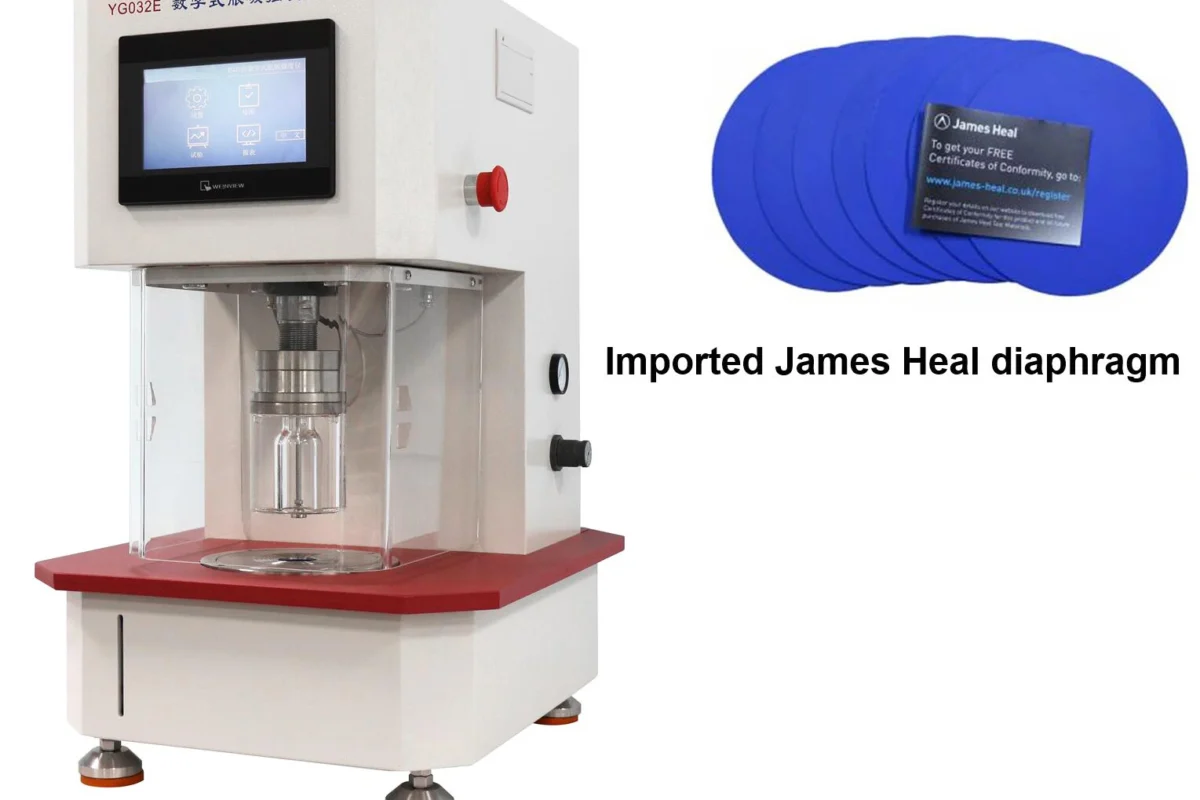
5 Common Bursting Strength Tester Uses in Textile Quality Control

If you work in a textile mill, garment export house, or testing lab, you already know that fabric strength can make or break a shipment. This is exactly where the different bursting strength tester uses come into play. A single weak batch of fabric can lead to customer complaints, failed audits, or rejected export consignments — problems that are entirely avoidable with the right testing routine.

A bursting strength tester measures how much pressure a fabric can withstand before it ruptures. It’s one of the most trusted instruments in textile quality control, used daily by knitwear manufacturers, technical textile producers, and QC teams who need dependable, repeatable results. Understanding where and how this instrument is used helps manufacturers reduce rejections, meet international standards, and deliver fabric that performs the way it’s supposed to.

In this guide, we’ll walk through what a bursting strength tester does, why it matters, and the five most common ways it’s used across the textile industry.

What is a Bursting Strength Tester?

A bursting strength tester is a laboratory instrument that measures the maximum pressure a fabric can bear before it tears or bursts.

The test works by clamping a fabric sample over a flexible diaphragm. Hydraulic or pneumatic pressure is then applied from beneath the sample until it ruptures. The tester records the exact pressure at the point of failure, giving QC teams a precise, repeatable measurement of fabric strength.

This method is especially useful for knitted fabrics, non-woven materials, and other fabrics that don’t have a clear straight-line direction — which makes conventional tensile testing less reliable for them. Instead of pulling the fabric in one direction, bursting strength testing applies pressure uniformly, mimicking real-world stress like stretching, pressing, or impact.

Modern digital bursting strength testers used in Indian textile labs typically include:

  • A pressure sensor and digital display
  • Interchangeable diaphragms for different fabric types
  • Software for data logging and report generation
  • Safety enclosures for operator protection

These instruments are used across spinning mills, weaving units, knitting factories, garment production lines, and independent testing laboratories that serve exporters and brands.

Why is Bursting Strength Important in Textile Quality Control?

Bursting strength testing matters because it directly predicts how a fabric will perform under real-world pressure — protecting both product quality and brand reputation.

Here’s why manufacturers and QC managers treat this test as non-negotiable:

  • Quality assurance: It confirms that fabric meets the strength specifications agreed upon with the buyer before it leaves the factory.
  • Customer satisfaction: Garments that don’t tear or rupture during normal use build trust and reduce returns.
  • International standards compliance: Buyers in the US, Europe, and Middle East often require test reports aligned with ISO or ASTM standards before accepting a shipment.
  • Fabric durability: Products like sportswear, hosiery, and medical textiles need to withstand repeated stretching and pressure without failing.
  • Product safety: For applications like medical dressings, seatbelts, or protective wear, fabric failure isn’t just inconvenient — it can be dangerous.

Skipping this test, or relying on inconsistent manual methods, often leads to inconsistent quality between batches — a problem that shows up only after the goods have reached the customer.

5 Common Uses of a Bursting Strength Tester in Textile QC

Below are the five most common and practical bursting strength tester uses found across textile manufacturing and testing facilities in India.

1. Testing Knitted Fabrics

Knitted fabrics — used in t-shirts, hosiery, innerwear, and sportswear — don’t have a straight warp and weft structure like woven fabric, which makes tensile testing less accurate for them. Bursting strength testing is the preferred method here because it applies even pressure across the entire fabric surface, closely simulating how the fabric stretches during actual wear.

For example, a hosiery manufacturer supplying t-shirts to a European buyer would run bursting strength tests on every fabric batch to confirm it meets the buyer’s minimum kPa requirement before cutting and stitching begins. This single test can prevent an entire production run from being rejected later.

2. Testing Woven Fabrics

While woven fabrics are commonly tested for tensile strength, bursting strength testing is still used for specific woven materials — particularly those used in technical or industrial applications, such as tarpaulins, filter fabrics, and coated textiles. These fabrics are exposed to multi-directional stress in real use, and bursting strength gives a more realistic picture of their true performance than a single-direction pull test.

3. Quality Control During Garment Manufacturing

On the production floor, bursting strength testers are used at multiple checkpoints — from incoming fabric inspection to pre-shipment quality audits. QC inspectors pull random samples from each fabric lot and test them before approving the lot for cutting. This step catches weak or defective fabric rolls early, saving the cost of wasted stitching, labeling, and packaging on garments that would otherwise fail later.

4. Technical Textile Testing

Technical textiles — including medical textiles, automotive interiors, geotextiles, and protective fabrics — often have strict performance requirements that go beyond appearance. Bursting strength testing helps manufacturers verify that these specialized fabrics can handle the pressure and stress specific to their end use, whether that’s a surgical drape or an airbag liner.

5. Research and Product Development

Textile R&D teams use bursting strength testers when developing new fabric blends, finishes, or constructions. By comparing bursting strength data across different yarn counts, knit structures, or finishing treatments, developers can fine-tune a fabric to hit a target strength before it goes into commercial production — reducing costly trial-and-error on the factory floor.

Industries That Use Bursting Strength Testers

Bursting strength testers are used well beyond a single sector. Common industries include:

Industry Typical Application
Garment industry T-shirts, innerwear, activewear fabric checks
Home textiles Bedsheets, upholstery, curtain fabrics
Medical textiles Surgical drapes, dressings, protective wear
Automotive textiles Seat covers, airbags, interior linings
Technical textiles Geotextiles, filter fabrics, industrial coatings
Export houses Pre-shipment fabric compliance testing
Textile laboratories Third-party testing and certification

Benefits of Using a Digital Bursting Strength Tester

A digital bursting strength tester improves accuracy, saves time, and reduces fabric rejections compared to older manual or analog machines.

Key benefits include:

  • Accuracy: Digital sensors reduce human reading errors common with dial-based machines.
  • Repeatability: Consistent results across operators and shifts.
  • Compliance: Easier alignment with ISO and ASTM test parameters.
  • Time-saving: Faster sample processing with automated pressure application.
  • Automation: Built-in software handles calculations and report generation.
  • Reduced rejection: Early detection of weak fabric prevents downstream losses.
  • Cost savings: Fewer returns, fewer disputes, and less wasted production.

Standards Followed

Bursting strength testing is guided by internationally recognized standards, which ensures test results are accepted by buyers and auditors worldwide.

  • ISO 13938 – Covers hydraulic and pneumatic bursting strength test methods for textiles.
  • ASTM D3786 – The widely used American standard for diaphragm bursting strength testing.
  • BS EN standards – Applied in several European buyer specifications.

Following these standards ensures test reports are recognized by international buyers, certification bodies, and export compliance teams.

How to Choose the Right Bursting Strength Tester

Choosing the right machine depends on your production volume, fabric type, and compliance needs. Consider the following factors:

  • Capacity: Choose a pressure range suitable for your heaviest fabric type.
  • Accuracy: Look for sensors with proven calibration consistency.
  • Digital display: Easier readability and fewer manual errors.
  • Software: Data logging and report export save time during audits.
  • Compliance: Confirm the machine supports ISO and ASTM test methods.
  • Maintenance: Simple diaphragm replacement and upkeep.
  • Calibration: Regular calibration support ensures long-term accuracy.
  • After-sales support: Reliable service reduces machine downtime.

Why Choose Amith Garment Services

Amith Garment Services supplies textile testing equipment, including bursting strength testers, to manufacturers, export houses, and testing laboratories across India. The team brings hands-on experience in textile QC equipment, helping buyers choose instruments suited to their fabric types and compliance requirements.

Beyond the equipment itself, Amith Garment Services offers technical guidance, calibration support, and after-sales service — the kind of support that matters when a testing lab can’t afford downtime during a shipment deadline.

Conclusion

Understanding the different bursting strength tester uses helps textile manufacturers, exporters, and QC teams catch fabric weaknesses before they become costly problems. From knitted fabric checks to technical textile development, this instrument plays a role at nearly every stage of textile production — protecting not just the fabric, but the reputation of everyone involved in getting it to the customer.

Whether you’re running a knitting unit, managing QC for a garment export house, or setting up a new textile testing lab, investing time in proper bursting strength testing pays off in fewer rejections, smoother audits, and stronger buyer relationships. It’s a small step in the production process that carries a real impact on the final product.

If you’re looking to upgrade your testing lab or need guidance choosing the right bursting strength tester for your fabric type, reach out to Amith Garment Services for expert support.

Frequently Asked Questions:

1. What is a bursting strength tester used for?

A bursting strength tester measures the pressure a fabric can withstand before it ruptures. It is widely used for knitted fabrics, technical textiles, nonwovens, and other materials where multi-directional strength evaluation is required. Textile mills, garment manufacturers, and testing laboratories use it to verify fabric quality before production or shipment.

2. Why is bursting strength testing important for knitted fabrics?

Knitted fabrics stretch in multiple directions, making conventional tensile testing less representative of actual performance. Bursting strength testing applies uniform pressure across the fabric surface, providing a realistic assessment of durability during wear, washing, and repeated stretching.

3. What standards apply to bursting strength testing?

The most widely recognized standards are ISO 13938 and ASTM D3786. These standards define the testing procedures for hydraulic and pneumatic bursting strength methods, ensuring reliable and internationally accepted test results.

4. What is the difference between hydraulic and pneumatic bursting strength testers?

Hydraulic bursting strength testers use liquid pressure and are generally preferred for heavier or industrial fabrics, while pneumatic bursting strength testers use compressed air and are commonly used for lighter fabrics. Both accurately measure bursting strength, with the choice depending on the material and testing requirements.

5. Which industries commonly use bursting strength testers?

These testers are widely used in the garment, textile, home furnishing, medical textile, automotive textile, technical textile, export, and quality testing laboratory sectors to evaluate fabric durability and ensure compliance with quality standards.

6. How often should fabric be tested for bursting strength?

Testing frequency depends on production requirements and buyer specifications. Most manufacturers test every incoming fabric lot, perform in-process quality checks, and conduct final inspections before shipment to minimize the risk of product rejection.

7. Can bursting strength testers be used for woven fabrics too?

Yes. Although primarily used for knitted fabrics, bursting strength testers are also suitable for woven materials such as tarpaulins, coated fabrics, filter fabrics, and other textiles subjected to multi-directional stress during use.

8. What should I look for when buying a bursting strength tester?

Consider factors such as pressure range, sensor accuracy, compliance with ISO and ASTM standards, digital display, software features, ease of maintenance, calibration support, and reliable after-sales service. Selecting the right model ensures accurate and consistent testing for your specific fabric types.
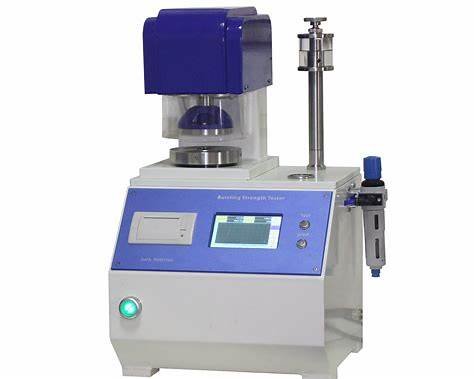
Bursting strength tester measuring fabric strength using rubber diaphragm and hydraulic pressure

Bursting Strength Tester: Working Principle Explained

What is the bursting strength tester principle?

A bursting strength tester works by clamping a fabric or paper sample over a rubber diaphragm, then applying increasing hydraulic or pneumatic pressure until the diaphragm expands and ruptures the material. The pressure at the point of rupture is recorded as the bursting strength, expressed in kPa or kgf/cm².

If you work in textile manufacturing, garment production, or quality control, you’ve likely come across the term “bursting strength” more than once. It’s one of the most fundamental indicators of how well a fabric or material can withstand pressure before it fails. But what actually happens inside the machine when a sample bursts? Understanding the bursting strength tester principle helps quality managers, lab technicians, and buyers make better decisions about testing accuracy and equipment selection. In this guide, we’ll break down exactly how these instruments work, step by step, covering both hydraulic and pneumatic systems, relevant international standards, and practical tips for getting reliable results. Whether you’re setting up a new testing lab or simply want to understand why your QA team relies on this test, this article walks through the mechanics in plain, practical language.

What is a Bursting Strength Tester?

A bursting strength tester is a laboratory instrument used to measure the maximum pressure a material can withstand before it ruptures. It’s widely used across textiles, paper, corrugated board, and packaging industries to evaluate the structural integrity of materials under multidirectional stress. Unlike tensile strength testing, which pulls a sample in one direction, bursting strength testing applies force outward in all directions simultaneously, closely simulating real-world stresses like stretching, impact, or pressure from handling and transport.

Why Bursting Strength Testing Matters

Bursting strength testing isn’t just a lab formality — it directly affects product performance and customer satisfaction. Here’s why manufacturers and exporters take it seriously:

  • It predicts how a fabric will behave under stretching, pulling, or impact during actual use.
  • It helps identify weak batches before they reach production or shipment.
  • It supports compliance with buyer specifications and international export requirements.
  • It reduces returns and complaints related to fabric or packaging failure.
  • It builds documented quality evidence for audits and certifications.

For garment exporters and packaging suppliers alike, a single failed shipment due to material weakness can be costlier than the testing equipment itself.

Bursting Strength Tester Principle

At its core, the bursting strength tester principle relies on hydrostatic or pneumatic pressure applied against a flexible rubber diaphragm. The test sample is clamped firmly over this diaphragm, and pressure is increased steadily using either hydraulic fluid or compressed air. As pressure builds, the diaphragm stretches upward and pushes against the sample until the material can no longer resist the force and ruptures.

The pressure reading at the exact moment of rupture is captured by a pressure gauge or digital sensor and recorded as the bursting strength value, typically expressed in kPa, kgf/cm², or psi depending on the standard being followed. This value reflects the combined resistance of the material’s fibers, weave, or structure to omnidirectional stress — making it a reliable indicator of overall fabric or board strength.

Working Principle Explained Step-by-Step

  1. Sample Preparation – A test specimen is cut to the required size and conditioned according to standard atmospheric conditions.
  2. Clamping – The sample is placed flat over the rubber diaphragm and secured tightly using a circular clamping ring to prevent slippage.
  3. Pressure Application – Hydraulic fluid or compressed air is introduced beneath the diaphragm at a controlled, steady rate.
  4. Diaphragm Expansion – As pressure increases, the diaphragm bulges upward, transferring force directly onto the clamped sample.
  5. Rupture Point – The sample stretches until it can no longer withstand the applied force and bursts.
  6. Reading Capture – The instrument records the peak pressure at rupture, which is displayed digitally or read from an analog gauge.
  7. Result Calculation – The bursting strength value is calculated, often alongside the bursting distension (how far the diaphragm stretched before failure).

Components of a Bursting Strength Tester

Every bursting strength tester, regardless of brand or type, shares a few essential components:

  • Rubber Diaphragm – The flexible membrane that transmits pressure to the sample.
  • Clamping Ring – Holds the specimen securely in place during testing.
  • Pressure Source – Hydraulic pump or pneumatic compressor that generates the testing force.
  • Pressure Gauge/Sensor – Measures and displays the bursting pressure.
  • Control Panel – Allows operators to set test parameters and view results.
  • Base Frame – Provides structural stability during high-pressure operation.

How Hydraulic Bursting Strength Testing Works

In hydraulic systems, pressurized fluid — usually glycerine or a similar hydraulic medium — is pumped beneath the rubber diaphragm. The incompressible nature of the fluid allows for very precise, gradual pressure buildup, which is particularly useful when testing thicker fabrics, laminated materials, or leather. Hydraulic testers are known for their high accuracy and are commonly specified in standards like ISO 13938-1 and ASTM D3786 for heavier textile applications.

How Pneumatic Bursting Strength Testing Works

Pneumatic testers use compressed air instead of fluid to expand the diaphragm. This method is generally faster and better suited to lighter fabrics, knitted materials, nonwovens, and paper products. Because air is compressible, pneumatic systems tend to have slightly less precision at very high pressures compared to hydraulic systems, but they offer faster cycle times and easier maintenance, making them popular in high-throughput labs.

Comparison Table: Hydraulic vs Pneumatic Bursting Strength Tester

Parameter Hydraulic Pneumatic
Accuracy Very high, ideal for precise readings Good, slightly less precise at high pressure
Speed Slower, gradual pressure buildup Faster test cycles
Maintenance Requires fluid checks and seal maintenance Lower maintenance, fewer fluid components
Best Application Heavy fabrics, laminates, leather Lightweight fabrics, nonwovens, paper
Cost Generally higher initial investment More budget-friendly for high-volume testing

Testing Standards (ISO 13938, ASTM D3786, BS 4768)

Standardization ensures that bursting strength results are comparable across labs and countries. The most commonly referenced standards include:

  • ISO 13938-1 / ISO 13938-2 – Hydraulic and pneumatic methods for determining bursting strength of textile fabrics.
  • ASTM D3786 – Standard test method for hydraulic bursting strength of textile fabrics, widely used in the US market.
  • BS 4768 – British standard for bursting strength testing, often referenced alongside ISO methods in the UK and Commonwealth markets.

Following the correct standard is essential for export documentation, buyer compliance, and third-party lab certification.

Industries That Use Bursting Strength Testing

Bursting strength testing extends well beyond apparel fabric. It’s a core quality parameter across several industries.

Applications in Textile Industry

In textiles, bursting strength testing is used to evaluate knitted fabrics, technical textiles, medical textiles, and industrial fabrics where multidirectional strength matters more than simple tensile pull. It’s especially important for stretch fabrics, activewear, and elastic materials.

Applications in Paper & Packaging Industry

For corrugated boxes, cartons, and paperboard, bursting strength testing determines how much internal or external pressure packaging can withstand during stacking, handling, and transport — a critical factor for logistics and supply chain reliability.

Comparison Table: Industry Applications

Industry Material Tested Purpose Recommended Standard
Apparel & Fashion Woven and knitted fabrics Ensure garment durability under stretch ISO 13938-1
Technical Textiles Nonwovens, laminates Verify structural integrity for specialized use ASTM D3786
Packaging & Corrugated Board Cardboard, corrugated fiberboard Assess resistance to handling and transport stress TAPPI T810 / ISO 2758
Leather & Upholstery Leather, coated fabrics Test resistance to puncture and stretch BS 4768

Factors Affecting Bursting Strength

Several variables can influence bursting strength results, and understanding them helps labs maintain consistency:

  • Fiber type and yarn construction
  • Fabric weave or knit density
  • Moisture content and conditioning
  • Sample thickness and layering
  • Rate of pressure application
  • Calibration accuracy of the diaphragm and gauge

Common Testing Errors

Even experienced technicians can introduce errors that skew results. Watch out for:

  • Improper clamping, causing sample slippage before rupture
  • Using an incorrectly sized or aged diaphragm
  • Inconsistent sample conditioning before testing
  • Applying pressure too quickly, affecting reading accuracy
  • Skipping regular calibration checks

Tips for Accurate Results

  • Always condition samples at standard temperature and humidity before testing.
  • Inspect the rubber diaphragm regularly for wear or micro-cracks.
  • Calibrate the pressure gauge periodically against a certified reference.
  • Maintain a consistent pressure application rate as specified by the chosen standard.
  • Test multiple specimens and average results to reduce variability.

How to Select the Right Bursting Strength Tester

Choosing between hydraulic and pneumatic systems — or between manual and digital models — depends on your material type, testing volume, and budget. Heavier textiles and laminates generally call for hydraulic precision, while high-volume labs testing lighter fabrics benefit from pneumatic speed. It’s also worth considering digital readout systems for better data logging and traceability, especially if your lab supports export documentation or third-party audits.

Maintenance Best Practices

Routine maintenance extends the life of a bursting strength tester and protects result accuracy:

  • Replace the rubber diaphragm at recommended intervals or at signs of wear.
  • Keep hydraulic fluid clean and free of air bubbles in hydraulic models.
  • Check pneumatic seals and compressor filters regularly.
  • Schedule periodic calibration with a certified service provider.
  • Store the instrument in a clean, dry environment away from direct sunlight.

Why Choose a Reliable Textile Testing Equipment Manufacturer

Precision testing depends as much on equipment quality as on operator skill. A well-built bursting strength tester, backed by proper calibration support and genuine spare parts like diaphragms and clamping rings, ensures consistent, standard-compliant results over years of use. Working with an established textile testing equipment manufacturer also means easier access to servicing, technical guidance, and equipment tailored to your specific material range — whether that’s apparel fabric, technical textiles, or packaging board.

Conclusion

Understanding the bursting strength tester principle — from diaphragm expansion to pressure recording — helps quality teams interpret results with confidence and choose the right equipment for their materials. Whether you opt for a hydraulic system for heavier fabrics or a pneumatic model for faster throughput on lighter materials, the underlying goal remains the same: reliable, standard-compliant strength data that protects product quality and brand reputation.

Frequently Asked Questions

Tensile strength measures how much force a material can withstand when pulled in one direction, whereas bursting strength measures resistance to multidirectional pressure applied across the entire sample. Bursting strength testing is particularly important for knitted, stretchable, and nonwoven fabrics because it closely represents real-world stress conditions.

ISO 13938-1 and ISO 13938-2 are the most widely accepted standards for textile testing. ASTM D3786 is commonly used in the United States, BS 4768 in the UK, while ISO 2758 and TAPPI T810 are followed for paper and packaging materials. Always confirm your buyer's testing requirements.

Yes. Many modern bursting strength testers can evaluate textiles, paper, and lightweight packaging materials provided they support the required pressure range and testing standards. Dedicated machines may provide higher accuracy for specialized applications.

The sample is clamped over a rubber diaphragm while hydraulic fluid or compressed air gradually increases pressure until the material bursts. The instrument automatically records the maximum pressure reached before failure.

Hydraulic testers use liquid pressure and are ideal for heavier fabrics requiring high accuracy. Pneumatic testers use compressed air, making them suitable for lightweight materials and faster production testing.

Common testing standards include ISO 13938-1, ISO 13938-2, ASTM D3786, BS 4768, ISO 2758, and TAPPI T810 depending on the product category and export market.

Bursting strength testing helps manufacturers evaluate material durability, maintain quality consistency, comply with buyer specifications, reduce product failures, and satisfy export quality requirements.

Textile mills, garment manufacturers, technical textile producers, hosiery units, paper and packaging industries, leather manufacturers, research institutes, universities, and quality control laboratories all use bursting strength testers.

Contact Now

Choosing the right bursting strength tester depends on your material type, testing volume, and compliance requirements — and getting it right matters for every batch that leaves your facility. Amith Garment Services offers hydraulic and pneumatic bursting strength testers along with calibration and after-sales support to help you maintain accurate, standard-compliant quality control. Contact Amith Garment Services today to discuss your testing requirements and find the right equipment for your lab.