
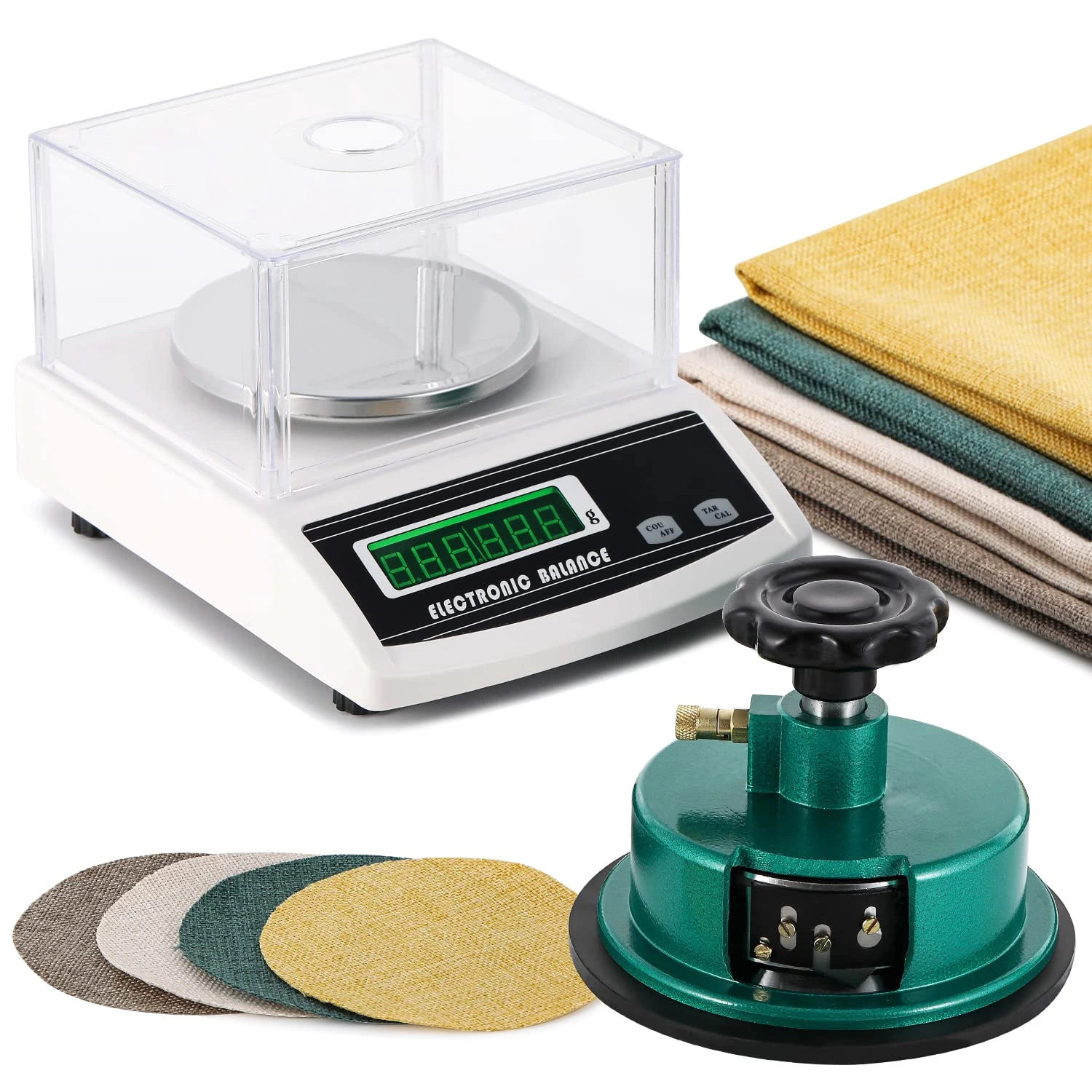
How to Measure Fabric GSM Using a GSM Scale: A Complete Step-by-Step Guide
If you have spent any time on a textile shop floor, you already know one thing. Fabric that feels “off” usually has a GSM problem. A GSM scale is the instrument that tells you exactly why, in seconds rather than guesswork.
This guide walks through the actual testing process, the equipment involved, and the small errors that quietly ruin lab results. It is written for the people who run these tests every day, not just for people buying equipment for the first time.
What is a GSM Scale?
A GSM scale is a laboratory device that weighs a fixed-area fabric sample and converts that weight directly into a Grams per Square Metre reading, giving an instant measure of fabric density.
A standard fabric GSM scale works with a matching round cutter, usually cutting a 100 cm² circle. That fixed area is the whole trick. Because the sample size never changes, the weight reading translates directly into a GSM value without extra math.
Older labs used to weigh samples on a general lab balance and calculate GSM by hand. A digital GSM scale removes that step. It displays GSM directly, often alongside grams and oz/yd² for export documentation.
Textile engineers in Tiruppur and other manufacturing hubs across India rely on this instrument daily. It is one of the simplest, yet most decisive, pieces of textile testing equipment on a lab bench.
Why is Fabric GSM Measurement Important?
GSM measurement confirms fabric weight consistency, which directly affects strength, drape, cost, and buyer compliance. Without it, manufacturers risk shipping fabric that fails quality checks or feels different from the approved sample.
Buyers approve garments based on a sample swatch. If bulk fabric later comes in heavier or lighter, the finished garment will not match. That mismatch often surfaces only after cutting, when it is expensive to fix.
Fabric GSM testing also protects raw material cost. Fabric that runs heavier than specified wastes yarn and money across a large order. Fabric that runs lighter may fail strength or opacity requirements.
For exporters working with international buying houses, GSM data supports compliance with textile testing standards, including references used alongside ISO and ASTM test methods. Consistent GSM reporting builds buyer trust over repeated orders.
Equipment Required for Fabric GSM Measurement
A proper GSM test needs more than just the scale itself. Here is what a typical lab setup includes.
- GSM Scale — the core instrument that weighs the sample and calculates the reading.
- GSM Cutter — a fixed-diameter round cutter, usually matched to the scale’s calibration.
- Fabric Sample — taken from multiple points on the roll, not just one edge.
- Testing Surface — a flat, stable table free from vibration or air disturbance.
- Laboratory Conditions — controlled temperature and humidity, since fabric can absorb moisture.
Skipping any one of these affects reliability. A worn cutter, for instance, produces samples that are slightly off in area, throwing off every reading afterward.
Many labs also keep a spare cutter blade on hand. This matters more than people expect, since a dull blade can crush fabric edges instead of cutting them cleanly.
How to Measure Fabric GSM Using a GSM Scale (Step-by-Step Guide)
Here is the practical process used across most textile testing laboratories.
- Condition the fabric. Let the sample sit in standard lab conditions for at least a few hours before testing.
- Select sampling points. Choose several spots across the fabric width, avoiding selvedges and creased areas.
- Cut the sample. Use the GSM cutter to cut a clean, fixed-area circle, typically 100 cm².
- Calibrate the scale. Confirm the digital GSM scale reads zero and check calibration with a reference weight.
- Place the sample. Lay the cut fabric flat and centred on the weighing platform.
- Read the value. Note the GSM reading directly from the display.
- Repeat for accuracy. Test at least three to five samples and average the results.
- Record the data. Log readings against the fabric batch and supplier reference.
For example, a denim mill testing 12 oz denim would expect GSM readings close to 400 g/m². A sudden drop to 370 g/m² across multiple samples signals a real production issue, not a one-off error.
How to Calculate Fabric GSM
GSM is calculated using the formula: GSM = (Sample Weight in grams ÷ Sample Area in cm²) × 10,000. A digital GSM scale performs this calculation automatically once the sample is weighed.
Manual calculation is still useful to understand, especially for students and quality trainees. Suppose a 100 cm² sample weighs 1.8 grams.
Applying the formula: (1.8 ÷ 100) × 10,000 = 180 GSM.
Manual calculation is mainly needed when using a general lab balance without direct GSM conversion, or when verifying a scale’s accuracy against a known reference sample.
Common Mistakes During Fabric GSM Measurement
Even experienced technicians run into avoidable errors. Being aware of them saves rework later.
- Improper sample cutting — an uneven or torn edge changes the actual sample area.
- Incorrect weighing — placing the sample off-centre can affect platform sensitivity.
- Poor calibration — skipping regular calibration checks introduces drift over time.
- Environmental factors — humidity and temperature changes affect fabric weight readings.
- Human errors — recording the wrong batch number or skipping repeat sampling.
Most of these mistakes are process issues, not equipment failures. A well-maintained GSM measuring scale still needs a disciplined operator behind it.
Benefits of Using a Digital GSM Scale
Compared to manual methods, a digital instrument changes daily lab workflow noticeably.
| Factor | Manual Weighing Method | Digital GSM Scale |
| Calculation | Done by hand, formula-based | Automatic, instant |
| Accuracy | Depends on operator skill | Consistent, high precision |
| Speed | Slower, multi-step | Faster, single reading |
| Repeatability | Variable across operators | Standardised results |
| Reporting | Manual logs | Easier digital record-keeping |
Higher accuracy comes from precise load cells rather than manual arithmetic. Time saving matters most in high-volume labs testing dozens of samples daily. Repeatability builds confidence when multiple shifts or technicians run tests. Quality assurance improves because deviations get caught earlier. And reduced manual errors means fewer disputes with suppliers over fabric specifications.
Applications of GSM Scale
A GSM scale is used well beyond a single department. Common settings include:
- Textile Mills — checking fabric consistency straight off the loom or knitting machine.
- Garment Manufacturing — verifying fabric before cutting to avoid finished-product mismatches.
- Quality Control Labs — running scheduled batch testing as part of routine QC procedures.
- Buying Houses — confirming supplier compliance during pre-shipment inspections.
- Research Institutes — developing new fabric constructions with specific weight targets.
- Educational Institutions — teaching students practical textile testing methods.
- Fabric Exporters — supporting documentation for international buyers and audits.
Across India’s textile hubs, including Tiruppur and Bangalore, this instrument is a standard fixture in almost every serious testing lab.
Choosing the Right GSM Scale
Buying decisions should be based on lab needs, not just price. Key factors include:
- Accuracy — look for readings precise to at least ±0.01 g.
- Capacity — match the weighing range to your typical fabric types.
- Calibration — confirm easy internal or external calibration options.
- Build Quality — a stainless steel platform holds up better under daily use.
- Digital Display — clear, backlit screens reduce reading errors.
- Warranty — check coverage length and what it actually includes.
- Service Support — confirm local support and calibration servicing availability.
A cheaper scale that drifts out of calibration quickly often costs more in the long run through inconsistent results.
Why Choose Amith Garment Services
Amith Garment Services works closely with textile mills, garment exporters, and testing labs across India, supplying a wide range of textile testing equipment built for daily production use.
Our team brings real industry experience, not just product listings. We offer technical guidance before purchase, helping you match a GSM scale to your actual testing volume and accuracy needs.
We back every order with reliable customer support, fast delivery, and after-sales service, including calibration assistance when needed. Pricing stays competitive without cutting corners on build quality or accuracy.
Conclusion
Accurate fabric GSM testing protects quality, cost, and buyer trust across every stage of textile production. A dependable GSM scale turns a routine lab check into a fast, repeatable, and reliable process.
If your lab or production unit needs the right GSM testing setup, reach out to Amith Garment Services for product guidance, pricing, and technical support tailored to your requirements.
Frequently Asked Questions
A GSM scale is a laboratory device that weighs a fixed-area fabric sample, usually 100 cm², and converts that weight into a Grams per Square Metre value. It works alongside a matching GSM cutter to ensure consistent sample size, giving instant and repeatable fabric weight readings for quality checks.
A digital GSM scale removes manual calculation, reducing human error and saving time. Manual methods require weighing on a general balance and calculating GSM separately, which is slower and more prone to mistakes, especially during high-volume testing in busy production labs.
Most fabric GSM scales use a standard 100 cm² circular sample, cut using a matching GSM cutter. This fixed area allows the scale to convert the sample's weight directly into an accurate GSM reading without additional manual calculation.
A quality digital GSM scale typically offers accuracy up to ±0.01 grams. This precision is important for consistent quality control, especially when comparing production batches against approved buyer samples or international testing standards.
Yes, using a general laboratory balance and applying the GSM formula manually. However, this method takes longer, requires trained calculation, and is more prone to human error compared to using a dedicated GSM scale with automatic conversion.
Fabric can absorb or lose moisture depending on environmental conditions, which slightly changes its weight. Textile testing laboratories maintain controlled temperature and humidity to ensure GSM readings remain accurate and comparable across different testing sessions.
Textile mills, garment manufacturers, quality control laboratories, buying houses, research institutes, and educational institutions all use GSM scales. It is a standard instrument wherever fabric weight consistency directly affects product quality or buyer compliance.
Consider accuracy, weighing capacity, calibration options, build quality, and warranty support. Laboratories with high daily testing volumes should also prioritise digital displays and reliable after-sales service for consistent long-term performance.
Cut a fixed-area fabric sample using a GSM cutter, place it on the scale, and read the GSM value directly from the digital display after calibration. This provides quick and accurate fabric weight measurements for quality control.
A GSM Scale measures fabric weight per square metre, helping textile laboratories and manufacturers verify fabric consistency, maintain quality standards, and ensure compliance with buyer specifications before production or shipment.
Most digital GSM scales offer accuracy up to ±0.01 grams, making them reliable for routine laboratory testing, production quality checks, and textile industry compliance audits.
The best GSM scale depends on your laboratory's testing volume and accuracy requirements. Choose a model with reliable calibration support, a durable construction, a clear digital display, and dependable after-sales service for long-term performance.