
Ask any quality manager on a mill floor what slows down inspection, and the conversation almost always circles back to machine speed. It’s a fair starting point, but it’s rarely the whole story. Fabric inspection machine speed is one piece of a larger equation that includes fabric behaviour, lighting, operator judgement, and how a facility handles roll changes and joins.
This article looks at what fabric inspection machine speed actually means, what pushes it up or down in real operating conditions, and why chasing a higher number on a spec sheet doesn’t always translate into better throughput on the floor.
Fabric inspection machine speed refers to how fast fabric moves through an inspection unit while being checked for defects, typically expressed in metres per minute. It differs from production throughput, which also accounts for stoppages, roll changes, and defect marking time.
What Is Fabric Inspection Machine Speed?
Fabric inspection machine speed describes the rate at which a fabric roll travels across the inspection table or frame while an operator or vision system examines it for faults. This is usually measured in metres per minute and is often listed on equipment as a maximum rated speed.
It’s worth separating this from a few related terms that get used loosely in the industry:
- Machine speed – the mechanical capability of the motor and drive system.
- Inspection speed – the speed at which fabric can actually be inspected accurately, which is often lower than machine speed.
- Actual operating speed – the speed used on a given day, adjusted for fabric type and inspection requirements.
- Effective inspection speed – average speed once stoppages, roll changes, and rework are factored in.
- Production throughput – total inspected fabric output over a shift or day.
The maximum rated machine speed is a mechanical ceiling, not a working recommendation. Most inspection teams run well below that ceiling because accuracy, not raw speed, is the actual goal of the process.
Why Does Fabric Inspection Machine Speed Matter?
Speed matters because it influences how many rolls a facility can move through quality control within a shift. For garment exporters and textile mills working against shipment deadlines, inspection capacity is often a bottleneck between production and dispatch.
That said, speed only matters when it’s paired with reliable defect detection. A fast fabric inspection machine that misses defects creates downstream problems: garments cut from unchecked fabric, rejected shipments, and rework costs that far outweigh any time saved during inspection.
A good fabric inspection machine speed is one that allows consistent, accurate defect detection for the fabric type being checked. There’s no universal number — the right speed depends on fabric construction, defect visibility, and the inspection standard being applied.
How Does a Fabric Inspection Machine Work?
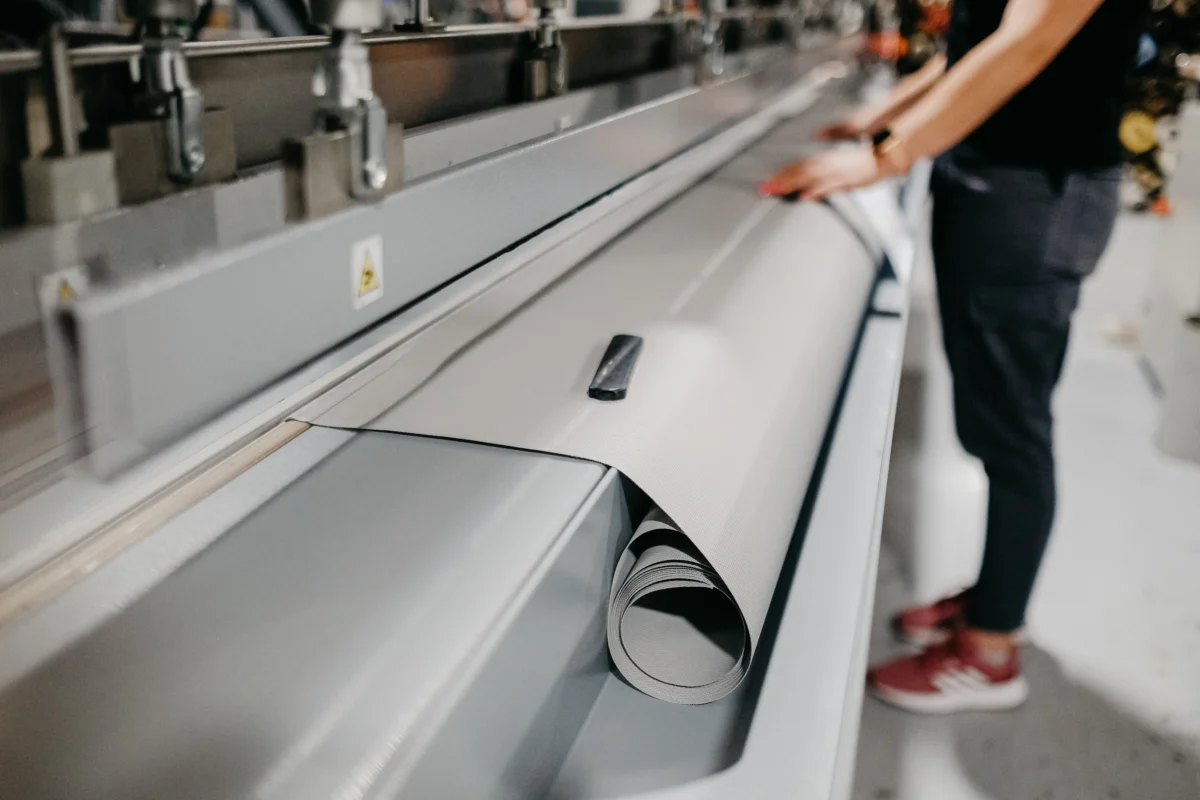
A typical fabric inspection machine unwinds fabric from a feed roller, passes it across an illuminated inspection zone, and rewinds it onto a take-up roller. Operators (or, in automated systems, vision sensors) observe the fabric surface as it moves, marking or logging defects as they appear.
The feeding mechanism, tension control, and take-up system all work together to keep the fabric flat and evenly tensioned. Any inconsistency here — sagging, excessive tension, or uneven winding — can distort how defects appear, which indirectly affects how fast the machine can safely run.
Some systems include defect-marking mechanisms, length counters, and grading displays that help operators log issues without stopping the machine completely, which supports better fabric inspection machine efficiency over a shift.
What Factors Affect Fabric Inspection Machine Speed?
Several variables interact to determine a workable inspection speed for any given fabric:
- Fabric construction and weight
- Fabric width
- Fabric colour and surface texture
- Fabric stretch or elasticity
- Roll diameter, length, and weight
- Fabric tension during feeding
- Lighting quality at the inspection zone
- Defect visibility and contrast
- Machine design and drive system
- Operator experience and fatigue
- Inspection standard being applied (e.g., 4-point system)
- Frequency of machine stoppages and roll changes
None of these operate in isolation. A heavy denim roll and a lightweight chiffon roll will rarely run at the same practical speed, even on identical equipment.
Fabric Type and Its Effect on Inspection Speed
Fabric type has a direct bearing on inspection speed. Woven fabrics with a stable structure generally allow more consistent tension and easier visual scanning. Knitted fabrics, particularly those with stretch, can distort under tension, which often means operators reduce speed to avoid misreading defects caused by fabric movement rather than actual faults.
Textured, printed, or dark-coloured fabrics also tend to require slower inspection speeds because defects are harder to spot against busy or low-contrast surfaces. Plain, light-coloured fabrics with a smooth surface are usually easier and faster to inspect.
Fabric Width, Roll Weight and Roll Length
Wider fabric rolls cover more surface area per metre travelled, which can mean more visual information for the operator to process at a given speed. Heavier rolls also demand more careful handling during loading, unwinding, and roll changes, which affects overall throughput even if the inspection speed itself stays constant.
Longer rolls reduce the frequency of roll changes, which generally supports better effective inspection speed over a shift, since fewer stoppages occur.
Lighting and Defect Detection Conditions
Lighting is one of the most underrated factors in fabric inspection machine throughput. Poor or inconsistent lighting forces operators to slow down, look more carefully, or double-check sections they’re unsure about. Good, even, glare-free lighting at the inspection zone allows more confident and faster scanning without compromising defect detection.
This is why lighting conditions in the inspection area deserve as much attention as the machine’s mechanical specifications.
Operator Skill and Inspection Accuracy
An experienced operator can often maintain a steady inspection pace while still catching subtle defects that a less experienced operator might miss even at a slower speed. Operator fatigue, shift length, and training standards all play into how consistently inspection speed can be maintained across a working day.
This is one reason facilities in India’s textile hubs, including manufacturing clusters around Bangalore and Tiruppur, invest in structured operator training alongside equipment upgrades — the two go hand in hand for reliable fabric quality inspection.
Machine Design and Fabric Inspection Technology
Machine design affects speed capability through the motor, drive system, tension control, and how smoothly fabric feeds and winds. Better-designed fabric inspection technology tends to reduce fabric slippage, tension inconsistency, and vibration, all of which can otherwise force operators to run slower to compensate.
Features like adjustable speed control, digital length counters, and defect-marking systems don’t necessarily increase maximum speed, but they often improve effective inspection speed by reducing manual interruptions.
Fabric Inspection Machine Speed vs Inspection Accuracy
There’s a natural trade-off between speed and accuracy. Running faster reduces the time available to notice small or low-contrast defects, which can increase the risk of missed faults. Running slower generally improves detection but reduces the number of rolls processed per shift.
| Machine Speed | Inspection Accuracy | Throughput |
| High | Can decrease if defects are harder to spot | May appear high but risks rework later |
| Moderate | Generally balanced | Often the most sustainable in practice |
| Low | Typically highest | Lower rolls-per-shift, but fewer downstream issues |
Important: A higher machine speed does not automatically mean better productivity. If missed defects lead to rejected shipments or rework, the apparent time saved during inspection is lost several times over later in the process.
How to Improve Fabric Inspection Machine Throughput
Improving throughput isn’t only about pushing the speed dial higher. Some practical levers include:
- Reducing unplanned stoppages through better machine maintenance
- Standardising fabric joining methods to speed up roll changes
- Improving lighting at the inspection zone
- Training operators on consistent defect classification
- Matching inspection speed to fabric type rather than using one fixed setting
- Keeping tension consistent to reduce fabric distortion
Machine Speed → Inspection Accuracy → Downtime → Throughput → Overall Productivity is the practical chain worth remembering. Improving any single link — especially reducing downtime from stoppages and roll changes — often does more for daily output than simply increasing raw machine speed.
How to Choose the Right Fabric Inspection Machine Speed
The right speed depends on the fabric range a facility typically handles, the inspection standard in use, and the acceptable balance between throughput and defect risk. A mill mainly running structured wovens will have different practical speed needs than one handling delicate knits or printed fabrics.
It helps to test actual fabric types on the machine rather than relying solely on the manufacturer’s maximum rated speed, since real-world performance always varies with fabric characteristics and operating conditions.
Industries That Use High-Speed Fabric Inspection
Fabric inspection equipment is used across woven and knit fabric mills, garment manufacturing units, buying house quality labs, and export-oriented textile facilities. In India’s textile and garment manufacturing environment — including clusters around Bangalore, Tiruppur, and other export hubs — consistent fabric inspection machine throughput supports on-time shipments and helps textile exporters meet buyer quality requirements.
Denim mills, shirting fabric producers, home textile manufacturers, and knit garment units all rely on fabric inspection systems, though their practical operating speeds differ based on fabric type and quality expectations.
Why Choose Amith Garment Services
Amith Garment Services supplies textile testing and inspection equipment to manufacturers, exporters, and quality control teams across India’s textile and garment industry. The focus is on equipment that supports practical, day-to-day inspection needs — helping teams choose machines suited to their actual fabric range and production requirements, rather than selling on speed figures alone.
Conclusion
Fabric inspection machine speed is an important factor in textile quality control, but it works alongside fabric type, lighting, operator skill, and machine design to determine real throughput. Facilities that treat inspection speed as one part of a larger system — rather than a single number to maximise — tend to get more consistent, reliable results from their fabric inspection machine over time.
Frequently Asked Questions
Fabric inspection machine speed refers to how quickly fabric moves through an inspection unit while being checked for defects, usually measured in metres per minute. It is often listed as a maximum rated speed, but the actual working speed is typically lower because operators need enough time to detect defects accurately.
Throughput depends on fabric type, width, weight, and tension, as well as lighting conditions, operator experience, inspection standards, machine design, roll length, roll changes, and stoppages. Effective throughput is the combined result of machine capability and how efficiently the inspection process operates.
Not automatically. Higher speeds can reduce the time available to identify subtle or low-contrast defects, increasing the risk of missed faults. If those defects result in rework or rejected shipments, the initial time saving may be lost. Consistent accuracy and reduced downtime are often more important than maximum machine speed.
The appropriate speed depends on the fabric types you inspect, the quality standard being followed, and the required balance between throughput and defect detection. Testing your actual fabric range on the machine is recommended because real-world performance can vary according to fabric construction, width, weight, and surface characteristics.
Fabric inspection machine speed is the rate at which fabric travels through the machine while it is being inspected for defects. It is generally measured in metres per minute, and the practical working speed is often lower than the machine's maximum rated speed.
The operating speed depends on the fabric type, machine design, inspection method, and required defect detection accuracy. There is no single fixed speed for every application, so facilities generally adjust the machine speed according to each fabric batch.
Fabric type, lighting quality, operator skill, machine design, fabric tension, roll changes, and unexpected stoppages can all affect throughput. Improving lighting, reducing interruptions, and maintaining consistent operating conditions can often increase effective throughput without compromising inspection quality.
You can improve effective inspection speed by using suitable lighting, training operators properly, maintaining consistent fabric tension, reducing unnecessary stoppages, and making roll changes more efficient. The goal should be to increase productive inspection time while maintaining reliable defect detection.