
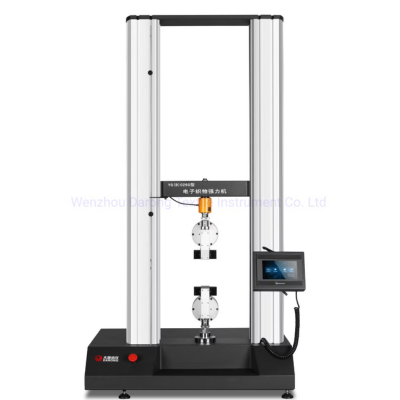
Every piece of fabric that leaves a textile mill or garment factory carries an invisible promise: it will hold up under everyday stress, washing, stitching, and wear. Whether it is a pair of denim jeans, a hospital gown, or a seatbelt webbing, fabric strength is not something manufacturers can guess at. It has to be measured, verified, and documented. That is exactly why a tensile test universal testing machine has become one of the most essential instruments inside a modern textile quality control lab.
A tensile test universal testing machine applies a controlled pulling force to a fabric sample until it stretches, deforms, and eventually breaks, recording every data point along the way. The results tell manufacturers, exporters, and quality managers whether a fabric batch meets the strength standards required by buyers, regulators, and international markets. Poor tensile performance can mean rejected shipments, unhappy customers, and costly rework, while consistent testing builds trust with global buyers and protects brand reputation.
In this guide, we will walk through what a universal testing machine is, how textile tensile testing works step by step, which parameters matter most, and why this equipment has become non-negotiable for textile manufacturers, laboratories, and exporters who want to compete on quality.
What is a Universal Testing Machine?
A Universal Testing Machine, often called a UTM, is a piece of laboratory equipment designed to apply tension, compression, bending, or shear forces to a material sample and measure how that material responds. In the textile industry, a universal testing machine for textiles is primarily used to measure tensile strength, elongation, and breaking force in fabrics, yarns, and stitched seams.
The word “universal” refers to the machine’s versatility. With the right fixtures and grips, the same base machine can test fabrics, yarns, zippers, buttons, seams, and even packaging materials. This makes it a valuable investment for any textile testing machine setup, since one instrument can serve multiple testing needs across a lab.
Core Components of a Universal Testing Machine
• Load Cell: A precision sensor that measures the force applied to the specimen in real time, usually in Newtons or kilogram-force.
• Grips or Jaws: These hold the fabric specimen firmly in place so the applied force is transmitted accurately without slippage.
• Crosshead: The moving part of the machine that travels at a controlled, programmable speed to stretch the specimen.
• Load Frame: The rigid structural body that houses the crosshead and resists the reaction forces during testing.
• Software and Display: Modern computerized universal testing machines come with software that plots load-extension curves, calculates results automatically, and generates test reports.
• Extensometer : An additional device that measures elongation more precisely, especially useful for elastic or stretch fabrics.
Together, these components allow a digital universal testing machine to apply a precise, repeatable pulling force and capture accurate data on how a textile sample behaves under stress, from the very first stretch to the final breaking point.
What is a Textile Tensile Test?
A textile tensile strength test measures how much pulling force a fabric can withstand before it tears or breaks. It also records how much the fabric stretches, or elongates, before failure. These two measurements together give quality engineers a complete picture of fabric performance under stress.
• Tensile Strength: The maximum force a fabric can bear before it breaks, usually expressed in Newtons (N) or pounds-force (lbf).
• Elongation: The percentage increase in fabric length at the point of breaking, compared to its original length.
• Breaking Force: The exact load recorded at the moment the fabric specimen ruptures.
• Load: The force being applied by the machine at any given moment during the test.
• Fabric Performance: The overall behavior of the material, including how it stretches, recovers, and eventually fails under tension.
Fabric tensile testing is typically performed in two directions: along the warp (lengthwise yarns) and the weft (widthwise yarns), since fabric strength often differs between the two. This is commonly referred to as warp and weft strength testing, and it gives a fuller understanding of how a fabric will behave in real garment use.
Why Tensile Testing is Important in the Textile Industry
Textile quality testing is not just a lab formality, it is a business necessity. Here is why tensile testing matters at every stage of production:
• Quality Assurance: Confirms that every fabric batch meets the strength specifications agreed upon with buyers.
• Product Durability: Ensures garments and technical textiles can withstand daily use, washing, and handling without premature failure.
• Customer Satisfaction: Reduces complaints, returns, and warranty claims caused by fabric tearing or seam failure.
• International Standards Compliance: Helps manufacturers meet ASTM, ISO, and other buyer-specific testing requirements.
• Export Readiness: Many international buyers require documented tensile test reports before accepting shipments.
• Reduced Returns: Catching weak fabric batches early prevents costly recalls and rejected consignments.
• Cost Savings: Identifying quality issues at the raw material or in-process stage is far cheaper than discovering them after garments are finished and shipped.
In short, a reliable textile testing machine protects both the manufacturer’s reputation and the buyer’s trust, which is why tensile testing has become a standard part of textile quality assurance programs across the industry.
How a Universal Testing Machine Performs Tensile Tests on Textiles
The actual process of running a tensile test universal testing machine follows a structured, repeatable sequence. Here is how it works, step by step:
1. Sample Preparation: Fabric specimens are cut to standard dimensions, usually as strips, following the relevant ASTM or ISO method. Both warp-direction and weft-direction samples are typically prepared.
2. Machine Setup: The operator selects the correct load cell capacity, grip type, and test speed based on the fabric type and applicable standard.
3. Gripping the Specimen: The fabric strip is clamped securely between the upper and lower grips, with the gauge length set according to the test method.
4. Applying the Load: The crosshead begins moving at a controlled speed, gradually stretching the fabric while the load cell continuously records the force being applied.
5. Data Collection: The software logs load and extension values in real time, plotting a load-extension curve on the display.
6. Reaching the Breaking Point: The test continues until the fabric specimen tears or ruptures completely, at which point the machine records the peak load and final elongation.
7. Report Generation: The computerized universal testing machine automatically calculates tensile strength, elongation percentage, and other parameters, compiling them into a test report.
8. Interpretation: Quality engineers compare the results against the required specification or standard to determine pass or fail status for the fabric batch.
This entire tensile testing procedure, from sample preparation to final report, is designed to be repeatable so that results can be trusted across different batches, operators, and testing sessions.
Important Parameters Measured
A universal testing machine for textiles captures far more than a single strength number. The key parameters recorded during a test include:
• Breaking Strength: The force at which the fabric specimen fully ruptures.
• Peak Load: The highest force recorded at any point during the test.
• Maximum Force: Often used interchangeably with peak load, representing the greatest stress the fabric withstood.
• Young’s Modulus: A measure of fabric stiffness, showing how much the material resists deformation under initial load.
• Extension: The absolute increase in length of the specimen during testing.
• Elongation: Extension expressed as a percentage of the original specimen length.
• Stress: Force divided by the cross-sectional area of the fabric, useful for comparing materials of different thicknesses.
• Strain: The deformation of the fabric relative to its original dimensions.
• Load vs Extension Curve: A graph that visually represents the entire testing process, helping engineers understand fabric behavior beyond just the final breaking number.
Together, these parameters give a complete engineering picture of how a fabric will perform, not just whether it survives one moment of stress, but how it behaves throughout the entire loading process.
ASTM and ISO Standards for Textile Tensile Testing
Standardization is what makes tensile test results meaningful and comparable across labs, countries, and buyers. Some of the most widely referenced standards include:
• ASTM D5034: Standard test method for breaking strength and elongation of textile fabrics using the grab test method.
• ASTM D5035: Standard test method for breaking force and elongation using the strip test method.
• ISO 13934-1: Determination of maximum force and elongation at maximum force using the strip method.
• ISO 13934-2: Determination of maximum force using the grab method.
Following a recognized ASTM tensile test or ISO textile testing standard ensures that results are accepted by buyers, auditors, and certification bodies worldwide. It also removes ambiguity, since every lab following the same method will test samples the same way, making results directly comparable regardless of where the testing takes place.
Applications Across Industries
Tensile testing with a universal testing machine is not limited to standard clothing. It plays a role across a wide range of textile applications, including:
• Garments: Ensuring everyday clothing withstands stitching stress, washing, and regular wear.
• Technical Textiles: Verifying performance in specialized industrial and engineering fabrics.
• Medical Textiles: Confirming strength and reliability in surgical gowns, bandages, and hospital fabrics.
• Sportswear: Testing stretch and recovery performance in activewear and athletic fabrics.
• Protective Clothing: Verifying that safety garments can withstand the stresses they are designed to resist.
• Automotive Textiles: Checking seat fabrics, airbags, and seatbelt webbing for strength and reliability.
• Home Furnishings: Testing upholstery, curtains, and bedding fabrics for durability.
• Industrial Fabrics: Assessing heavy-duty textiles used in filtration, packaging, and construction.
Common Mistakes During Tensile Testing
Even with reliable equipment, testing errors can lead to inaccurate or inconsistent results. Some common mistakes include:
• Improper sample cutting, leading to uneven or frayed edges that weaken the specimen unnaturally.
• Incorrect gauge length or grip alignment, causing the fabric to slip or tear at the grip point instead of the true test area.
• Testing at the wrong crosshead speed, which can produce results that do not match the specified standard.
• Skipping conditioning of samples, since humidity and temperature can significantly affect fabric strength readings.
• Not testing both warp and weft directions, resulting in an incomplete understanding of fabric performance.
• Failing to calibrate the load cell regularly, which compromises the accuracy of every test performed afterward.
Avoiding these mistakes requires trained operators, well-maintained equipment, and strict adherence to the chosen tensile testing procedure.
Benefits of Using a Computerized Universal Testing Machine
Modern labs increasingly rely on a computerized universal testing machine rather than manual, dial-based equipment. The advantages are significant:
• Automation: Reduces manual calculation errors and speeds up the entire testing process.
• Accuracy: Digital load cells and sensors provide more precise readings than analog systems.
• Repeatability: Standardized software settings ensure every test follows the exact same procedure.
• Data Logging: All test results are automatically stored, making it easy to track trends across batches over time.
• Graphs: Real-time load-extension curves help engineers visually interpret fabric behavior.
• Reports: Instant, professional test reports can be generated and shared with buyers or auditors.
• Quality Control: Continuous monitoring across production batches helps catch quality drift before it becomes a larger problem.
Why Choose Amith Garment Services?
Selecting the right textile testing equipment supplier matters just as much as selecting the right machine. Amith Garment Services brings years of hands-on industry expertise in textile testing equipment, helping manufacturers, laboratories, and exporters choose machines that match their specific testing requirements.
• Reliable, accurately calibrated testing machines built for consistent, dependable performance.
• Technical support to help labs set up and maintain their universal testing machines correctly.
• Installation assistance so equipment is set up correctly from day one.
• Operator training to ensure test results remain accurate and standard-compliant.
• Competitive, transparent pricing suited to labs of different sizes and budgets.
• Ongoing after-sales service and support for long-term equipment reliability.
Rather than simply selling equipment, Amith Garment Services works with clients to understand their testing needs, whether that involves fabric, yarn, or seam testing, and recommends the right configuration for accurate, standards-compliant results.
Conclusion
A tensile test universal testing machine is far more than a piece of lab equipment, it is a safeguard for product quality, customer trust, and export compliance. From measuring breaking strength and elongation to generating standards-compliant reports, this equipment gives textile manufacturers the data they need to make confident quality decisions at every stage of production.
Whether you are setting up a new quality control lab or upgrading outdated equipment, choosing the right universal testing machine for textiles is a decision worth getting right. If you would like expert guidance on selecting a machine suited to your testing needs, reach out to Amith Garment Services. Our team can help you find reliable, accurate testing equipment backed by real technical support.
Frequently Asked Questions:
What is a Tensile Test Universal Testing Machine used for in textiles?
A Tensile Test Universal Testing Machine measures the strength and stretch behavior of fabrics before they break. It applies a controlled pulling force while recording load and elongation throughout the test. The results help textile manufacturers verify that fabrics meet quality specifications for garments, technical textiles, and industrial applications while generating reports required by international buyers.
How is tensile strength measured in fabric testing?
Tensile strength is measured by clamping a fabric specimen into a universal testing machine and applying a steadily increasing pulling force until the fabric ruptures. The load cell records the maximum force before failure, which is reported as the breaking strength. Tests are usually performed in both warp and weft directions according to ASTM or ISO standards.
What is the difference between ASTM D5034 and ISO 13934-1?
ASTM D5034 follows the grab test method, where only part of the specimen width is gripped during testing. ISO 13934-1 uses the strip method, where the full specimen width is clamped. Both standards measure breaking strength and elongation but differ in specimen preparation and gripping techniques, producing slightly different results.
Why do fabrics need to be tested in both warp and weft directions?
Warp and weft yarns often have different strength characteristics due to yarn type, weave construction, and manufacturing conditions. Testing both directions provides a complete assessment of fabric performance and helps identify the weaker direction, ensuring reliable quality evaluation before production or shipment.
How often should a Universal Testing Machine be calibrated?
Most textile laboratories calibrate their Universal Testing Machine at least once every year. High-volume testing facilities may perform calibration every six months or after maintenance, relocation, or unexpected test inconsistencies to ensure accurate and reliable tensile testing results.
How does a Universal Testing Machine test fabric?
The machine securely clamps a fabric sample and pulls it apart at a controlled speed while a precision load cell continuously measures the applied force until the specimen breaks. The instrument records both tensile strength and elongation automatically.
What is tensile strength in textiles?
Tensile strength is the maximum pulling force a fabric can withstand before tearing or breaking. It is commonly measured in Newtons (N) using a Universal Testing Machine and is one of the most important indicators of fabric durability.
Why is tensile testing important?
Tensile testing verifies fabric durability, ensures compliance with buyer and international quality standards, reduces the risk of product failure, minimizes customer complaints, and helps manufacturers avoid shipping weak or defective textile batches.
Which standards are used for textile tensile testing?
Commonly used standards include ASTM D5034, ASTM D5035, ISO 13934-1, and ISO 13934-2. These standards define specimen preparation, testing procedures, and reporting methods to ensure consistent and internationally accepted tensile test results.