
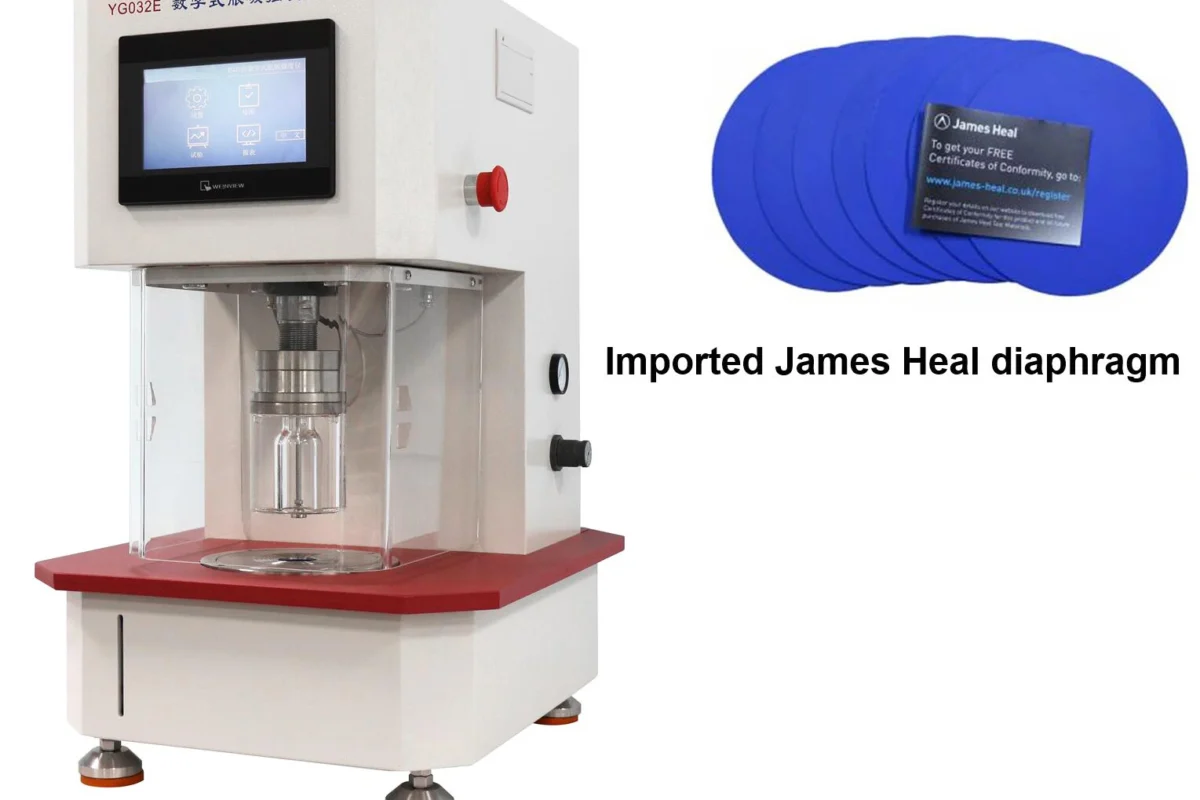
If you work in a textile mill, garment export house, or testing lab, you already know that fabric strength can make or break a shipment. This is exactly where the different bursting strength tester uses come into play. A single weak batch of fabric can lead to customer complaints, failed audits, or rejected export consignments — problems that are entirely avoidable with the right testing routine.
A bursting strength tester measures how much pressure a fabric can withstand before it ruptures. It’s one of the most trusted instruments in textile quality control, used daily by knitwear manufacturers, technical textile producers, and QC teams who need dependable, repeatable results. Understanding where and how this instrument is used helps manufacturers reduce rejections, meet international standards, and deliver fabric that performs the way it’s supposed to.
In this guide, we’ll walk through what a bursting strength tester does, why it matters, and the five most common ways it’s used across the textile industry.
What is a Bursting Strength Tester?
A bursting strength tester is a laboratory instrument that measures the maximum pressure a fabric can bear before it tears or bursts.
The test works by clamping a fabric sample over a flexible diaphragm. Hydraulic or pneumatic pressure is then applied from beneath the sample until it ruptures. The tester records the exact pressure at the point of failure, giving QC teams a precise, repeatable measurement of fabric strength.
This method is especially useful for knitted fabrics, non-woven materials, and other fabrics that don’t have a clear straight-line direction — which makes conventional tensile testing less reliable for them. Instead of pulling the fabric in one direction, bursting strength testing applies pressure uniformly, mimicking real-world stress like stretching, pressing, or impact.
Modern digital bursting strength testers used in Indian textile labs typically include:
- A pressure sensor and digital display
- Interchangeable diaphragms for different fabric types
- Software for data logging and report generation
- Safety enclosures for operator protection
These instruments are used across spinning mills, weaving units, knitting factories, garment production lines, and independent testing laboratories that serve exporters and brands.
Why is Bursting Strength Important in Textile Quality Control?
Bursting strength testing matters because it directly predicts how a fabric will perform under real-world pressure — protecting both product quality and brand reputation.
Here’s why manufacturers and QC managers treat this test as non-negotiable:
- Quality assurance: It confirms that fabric meets the strength specifications agreed upon with the buyer before it leaves the factory.
- Customer satisfaction: Garments that don’t tear or rupture during normal use build trust and reduce returns.
- International standards compliance: Buyers in the US, Europe, and Middle East often require test reports aligned with ISO or ASTM standards before accepting a shipment.
- Fabric durability: Products like sportswear, hosiery, and medical textiles need to withstand repeated stretching and pressure without failing.
- Product safety: For applications like medical dressings, seatbelts, or protective wear, fabric failure isn’t just inconvenient — it can be dangerous.
Skipping this test, or relying on inconsistent manual methods, often leads to inconsistent quality between batches — a problem that shows up only after the goods have reached the customer.
5 Common Uses of a Bursting Strength Tester in Textile QC
Below are the five most common and practical bursting strength tester uses found across textile manufacturing and testing facilities in India.
1. Testing Knitted Fabrics
Knitted fabrics — used in t-shirts, hosiery, innerwear, and sportswear — don’t have a straight warp and weft structure like woven fabric, which makes tensile testing less accurate for them. Bursting strength testing is the preferred method here because it applies even pressure across the entire fabric surface, closely simulating how the fabric stretches during actual wear.
For example, a hosiery manufacturer supplying t-shirts to a European buyer would run bursting strength tests on every fabric batch to confirm it meets the buyer’s minimum kPa requirement before cutting and stitching begins. This single test can prevent an entire production run from being rejected later.
2. Testing Woven Fabrics
While woven fabrics are commonly tested for tensile strength, bursting strength testing is still used for specific woven materials — particularly those used in technical or industrial applications, such as tarpaulins, filter fabrics, and coated textiles. These fabrics are exposed to multi-directional stress in real use, and bursting strength gives a more realistic picture of their true performance than a single-direction pull test.
3. Quality Control During Garment Manufacturing
On the production floor, bursting strength testers are used at multiple checkpoints — from incoming fabric inspection to pre-shipment quality audits. QC inspectors pull random samples from each fabric lot and test them before approving the lot for cutting. This step catches weak or defective fabric rolls early, saving the cost of wasted stitching, labeling, and packaging on garments that would otherwise fail later.
4. Technical Textile Testing
Technical textiles — including medical textiles, automotive interiors, geotextiles, and protective fabrics — often have strict performance requirements that go beyond appearance. Bursting strength testing helps manufacturers verify that these specialized fabrics can handle the pressure and stress specific to their end use, whether that’s a surgical drape or an airbag liner.
5. Research and Product Development
Textile R&D teams use bursting strength testers when developing new fabric blends, finishes, or constructions. By comparing bursting strength data across different yarn counts, knit structures, or finishing treatments, developers can fine-tune a fabric to hit a target strength before it goes into commercial production — reducing costly trial-and-error on the factory floor.
Industries That Use Bursting Strength Testers
Bursting strength testers are used well beyond a single sector. Common industries include:
| Industry | Typical Application |
| Garment industry | T-shirts, innerwear, activewear fabric checks |
| Home textiles | Bedsheets, upholstery, curtain fabrics |
| Medical textiles | Surgical drapes, dressings, protective wear |
| Automotive textiles | Seat covers, airbags, interior linings |
| Technical textiles | Geotextiles, filter fabrics, industrial coatings |
| Export houses | Pre-shipment fabric compliance testing |
| Textile laboratories | Third-party testing and certification |
Benefits of Using a Digital Bursting Strength Tester
A digital bursting strength tester improves accuracy, saves time, and reduces fabric rejections compared to older manual or analog machines.
Key benefits include:
- Accuracy: Digital sensors reduce human reading errors common with dial-based machines.
- Repeatability: Consistent results across operators and shifts.
- Compliance: Easier alignment with ISO and ASTM test parameters.
- Time-saving: Faster sample processing with automated pressure application.
- Automation: Built-in software handles calculations and report generation.
- Reduced rejection: Early detection of weak fabric prevents downstream losses.
- Cost savings: Fewer returns, fewer disputes, and less wasted production.
Standards Followed
Bursting strength testing is guided by internationally recognized standards, which ensures test results are accepted by buyers and auditors worldwide.
- ISO 13938 – Covers hydraulic and pneumatic bursting strength test methods for textiles.
- ASTM D3786 – The widely used American standard for diaphragm bursting strength testing.
- BS EN standards – Applied in several European buyer specifications.
Following these standards ensures test reports are recognized by international buyers, certification bodies, and export compliance teams.
How to Choose the Right Bursting Strength Tester
Choosing the right machine depends on your production volume, fabric type, and compliance needs. Consider the following factors:
- Capacity: Choose a pressure range suitable for your heaviest fabric type.
- Accuracy: Look for sensors with proven calibration consistency.
- Digital display: Easier readability and fewer manual errors.
- Software: Data logging and report export save time during audits.
- Compliance: Confirm the machine supports ISO and ASTM test methods.
- Maintenance: Simple diaphragm replacement and upkeep.
- Calibration: Regular calibration support ensures long-term accuracy.
- After-sales support: Reliable service reduces machine downtime.
Why Choose Amith Garment Services
Amith Garment Services supplies textile testing equipment, including bursting strength testers, to manufacturers, export houses, and testing laboratories across India. The team brings hands-on experience in textile QC equipment, helping buyers choose instruments suited to their fabric types and compliance requirements.
Beyond the equipment itself, Amith Garment Services offers technical guidance, calibration support, and after-sales service — the kind of support that matters when a testing lab can’t afford downtime during a shipment deadline.
Conclusion
Understanding the different bursting strength tester uses helps textile manufacturers, exporters, and QC teams catch fabric weaknesses before they become costly problems. From knitted fabric checks to technical textile development, this instrument plays a role at nearly every stage of textile production — protecting not just the fabric, but the reputation of everyone involved in getting it to the customer.
Whether you’re running a knitting unit, managing QC for a garment export house, or setting up a new textile testing lab, investing time in proper bursting strength testing pays off in fewer rejections, smoother audits, and stronger buyer relationships. It’s a small step in the production process that carries a real impact on the final product.
If you’re looking to upgrade your testing lab or need guidance choosing the right bursting strength tester for your fabric type, reach out to Amith Garment Services for expert support.
Frequently Asked Questions:
1. What is a bursting strength tester used for?
A bursting strength tester measures the pressure a fabric can withstand before it ruptures. It is widely used for knitted fabrics, technical textiles, nonwovens, and other materials where multi-directional strength evaluation is required. Textile mills, garment manufacturers, and testing laboratories use it to verify fabric quality before production or shipment.
2. Why is bursting strength testing important for knitted fabrics?
Knitted fabrics stretch in multiple directions, making conventional tensile testing less representative of actual performance. Bursting strength testing applies uniform pressure across the fabric surface, providing a realistic assessment of durability during wear, washing, and repeated stretching.
3. What standards apply to bursting strength testing?
The most widely recognized standards are ISO 13938 and ASTM D3786. These standards define the testing procedures for hydraulic and pneumatic bursting strength methods, ensuring reliable and internationally accepted test results.
4. What is the difference between hydraulic and pneumatic bursting strength testers?
Hydraulic bursting strength testers use liquid pressure and are generally preferred for heavier or industrial fabrics, while pneumatic bursting strength testers use compressed air and are commonly used for lighter fabrics. Both accurately measure bursting strength, with the choice depending on the material and testing requirements.
5. Which industries commonly use bursting strength testers?
These testers are widely used in the garment, textile, home furnishing, medical textile, automotive textile, technical textile, export, and quality testing laboratory sectors to evaluate fabric durability and ensure compliance with quality standards.
6. How often should fabric be tested for bursting strength?
Testing frequency depends on production requirements and buyer specifications. Most manufacturers test every incoming fabric lot, perform in-process quality checks, and conduct final inspections before shipment to minimize the risk of product rejection.
7. Can bursting strength testers be used for woven fabrics too?
Yes. Although primarily used for knitted fabrics, bursting strength testers are also suitable for woven materials such as tarpaulins, coated fabrics, filter fabrics, and other textiles subjected to multi-directional stress during use.
8. What should I look for when buying a bursting strength tester?
Consider factors such as pressure range, sensor accuracy, compliance with ISO and ASTM standards, digital display, software features, ease of maintenance, calibration support, and reliable after-sales service. Selecting the right model ensures accurate and consistent testing for your specific fabric types.