
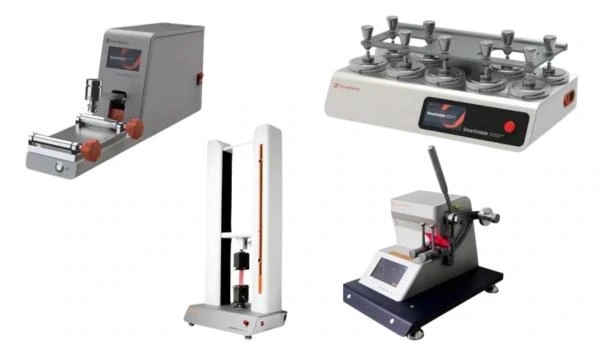
Fabric quality problems rarely show up on the cutting table — they surface weeks later, when a buyer’s audit team flags a shrinkage failure or a seam that tears under normal wear. For garment exporters and manufacturers across India, that kind of setback is expensive and avoidable. This is exactly why Q-Test Textile Testing Machines have become a standard fixture in textile labs from Bangalore to Tiruppur. Built for the day-to-day realities of garment manufacturing, Q-Test Instruments help quality teams catch fabric defects, tensile weaknesses, and colour fastness issues before bulk production begins. Whether you run a small in-house lab or a full-scale testing facility serving multiple buying houses, understanding which Q-Test Textile Testing Machines matter most can make the difference between a smooth shipment and a costly rejection.
|
What are Q-Test Textile Testing Machines? Q-Test Textile Testing Machines are a range of fabric and garment testing instruments used to measure tensile strength, tear resistance, colour fastness, GSM, thickness, and other quality parameters. They help textile labs and garment factories verify that fabric batches meet ISO, ASTM, and AATCC testing requirements before production. |
Why Every Garment Factory Needs Q-Test Textile Testing Machines
Garment manufacturing runs on tight buyer deadlines, and a single batch of fabric that fails a strength or colour fastness check can delay an entire shipment. Q-Test Textile Testing Machines give quality managers a reliable way to test incoming fabric, in-process goods, and finished garments against recognised international standards. Instead of relying on visual inspection alone, testing teams use tensile strength testers, crock meters, and GSM testing machines to generate measurable data that buying houses and export bodies actually accept. For factories supplying apparel brands in the US, Europe, and the Middle East, this data becomes part of the compliance paperwork attached to every shipment. In short, Q-Test Instruments turn quality control from a subjective judgement call into a documented, repeatable process.
|
Why are Q-Test Instruments important? Q-Test Instruments are important because they replace guesswork with measurable data. Garment factories use them to confirm that fabric meets buyer specifications for strength, colour fastness, and weight, reducing rejection rates and helping exporters maintain consistent quality across large production runs. |
What Makes Q-Test Instruments Different?
Not every testing machine on the market is built for the pace of garment manufacturing. Q-Test Instruments are designed with production-floor durability in mind — sturdy frames, calibrated components, and straightforward operation that lab technicians can learn quickly. Each machine is supplied with a calibration certificate and detailed user manual, so labs can trace results back to a known standard rather than guessing at accuracy. Amith Garment Services, which has supplied textile testing equipment across India since 1999, sources and services these instruments with an eye toward long-term reliability rather than short-term cost savings — a distinction that matters once a machine has been running several shifts a day for years.
Top 10 Essential Q-Test Textile Testing Machines
Every textile testing lab has its own priorities depending on fabric type and buyer requirements, but these ten Q-Test Textile Testing Machines cover the core parameters that most garment factories are asked to verify.
|
Which textile testing machine is most important in garment manufacturing? No single machine covers every requirement, but the Tensile Strength Tester is generally considered the most essential, since fabric strength is a baseline requirement across almost every buyer specification and international standard, including ASTM D5034 and ISO 13934. |
Q-Test Tensile Strength Tester
The Q-Test Tensile Strength Tester measures how much force a fabric or seam can withstand before breaking, using a calibrated grip-and-pull mechanism that records load and elongation. It’s used across woven and knit fabric testing, seam strength verification, and yarn testing labs. Benefits include repeatable, buyer-ready data and support for standards like ASTM D5034 and ISO 13934. Applications range from raw fabric approval to finished garment seam checks, making it one of the most frequently used machines in any textile testing laboratory.
|
What is the purpose of a Tensile Strength Tester? A Tensile Strength Tester measures the maximum force a fabric or stitched seam can bear before it tears or breaks. This helps manufacturers confirm that a fabric will hold up during garment construction, washing, and everyday wear. |
Q-Test Fabric Tear Strength Tester
This machine measures how easily a fabric tears once a small cut or weak point develops, simulating real-world wear conditions. The Fabric Tear Strength Tester is widely used for woven fabrics destined for workwear, outerwear, and technical textiles, where tear resistance is often a specific buyer requirement. It supports standards such as ASTM D1424 (Elmendorf method) and helps quality teams identify fabrics prone to snagging or splitting, catching a potential complaint long before the garment reaches a retail floor.
Q-Test Crock Meter
A Crock Meter tests colour fastness to rubbing — how much dye transfers from a fabric’s surface onto a white test cloth under dry or wet friction. It’s essential for denim, printed fabrics, and dyed garments, where colour bleeding onto skin or other clothing is a common buyer complaint. The Q-Test Crock Meter follows AATCC 8 and ISO 105-X12 testing methods, giving labs a standardised way to grade colour transfer and flag batches that need re-dyeing or finishing adjustments.
|
What does a Crock Meter test? A Crock Meter tests a fabric’s colour fastness to rubbing, checking how much dye transfers onto a white cloth under both dry and wet conditions. It’s a standard test for dyed and printed fabrics before they go into bulk garment production. |
Q-Test GSM Testing Machine
GSM, or grams per square metre, tells a factory exactly how heavy or light a fabric is — a critical spec for costing, feel, and buyer approval. The Q-Test GSM Testing Machine uses a circular cutter and precision balance to take a consistent sample and weigh it accurately. It’s used across knitting, weaving, and finishing stages to confirm that fabric weight stays within the tolerance range agreed with the buyer, preventing costly disputes over fabric that feels “too thin” or “too heavy” compared to the approved swatch.
|
Why is GSM Testing Machine important? A GSM Testing Machine is important because fabric weight directly affects feel, cost, and buyer approval. It lets quality teams confirm that every batch matches the agreed fabric weight before cutting begins, avoiding disputes and rework later in production. |
Q-Test Fabric Thickness Tester
Fabric thickness affects everything from drape to insulation, and even small variations can change how a finished garment performs. The Q-Test Fabric Thickness Tester uses a calibrated pressure foot to measure thickness under a standard load, giving consistent readings across different fabric types. It’s commonly used for denim, technical textiles, and non-wovens, where thickness tolerances are part of the buyer’s technical specification sheet. Labs typically reference ASTM D1777 or ISO 5084 when reporting results.
|
How does a Fabric Thickness Tester work? A Fabric Thickness Tester works by placing a fabric sample between a flat base and a pressure foot that applies a fixed load. A dial or digital gauge then reads the thickness in millimetres, giving a consistent, repeatable measurement across samples. |
Q-Test Bursting Strength Tester
Knit fabrics don’t tear the way wovens do — they burst under pressure, which is why the Bursting Strength Tester exists as a separate category of testing equipment. The Q-Test Bursting Strength Tester applies increasing pressure to a fabric sample until it ruptures, recording the pressure at failure. It’s the standard test for hosiery, knitwear, and stretch fabrics, following methods like ASTM D3786, and is a routine check for factories producing t-shirts, innerwear, and athleisure garments.
Q-Test Washing Fastness Tester
Buyers expect garments to survive repeated home laundering without significant colour loss or shrinkage, and the Washing Fastness Tester is how labs verify that before shipment. The Q-Test Washing Fastness Tester simulates multiple wash cycles under controlled temperature and agitation, following AATCC 61 or ISO 105-C06 methods. It’s especially important for dyed and printed garments, denim, and children’s wear, where colour fastness after washing is often a mandatory buyer checkpoint.
Q-Test Colour Matching Cabinet
Colour disputes between a factory and a buyer are almost always a lighting problem, not a dyeing one — the same fabric can look different under sunlight, fluorescent light, and store lighting. The Q-Test Colour Matching Cabinet uses standardised light sources, including D65 and TL84, to let quality teams and merchandisers evaluate colour consistency under the same conditions the buyer will use. It’s a core tool for approving lab dips, bulk fabric, and trims before cutting begins.
Q-Test Light Booth
Closely related to the colour matching cabinet, the Q-Test Light Booth is used for side-by-side shade comparison between a fabric sample and an approved standard, again under multiple controlled light sources. It’s a routine part of daily quality checks in dyeing units, garment finishing lines, and buying house labs, helping teams catch shade variation between dye lots before it becomes a bulk production problem.
Q-Test Fabric Inspection Machine
Before fabric ever reaches the cutting table, it needs to be inspected for weaving defects, holes, stains, and shade bands. The Q-Test Fabric Inspection Machine unwinds fabric rolls over a lit, tensioned table so inspectors can spot and mark defects using a four-point or ten-point grading system. It’s used across weaving mills, garment factories, and buying house labs to grade incoming fabric rolls and decide whether a roll is fit for cutting or needs to be downgraded or rejected.
Comparison Table: Q-Test Textile Testing Machines at a Glance
| Machine | Key Parameter Tested | Common Standard(s) |
| Tensile Strength Tester | Breaking force & elongation | ASTM D5034, ISO 13934 |
| Fabric Tear Strength Tester | Tear resistance | ASTM D1424 |
| Crock Meter | Colour fastness to rubbing | AATCC 8, ISO 105-X12 |
| GSM Testing Machine | Fabric weight (g/m²) | ASTM D3776, ISO 3801 |
| Fabric Thickness Tester | Thickness under load | ASTM D1777, ISO 5084 |
| Bursting Strength Tester | Rupture pressure (knits) | ASTM D3786 |
| Washing Fastness Tester | Colour fastness to washing | AATCC 61, ISO 105-C06 |
| Colour Matching Cabinet | Shade consistency under light | ISO 105-A02 (visual) |
| Light Booth | Shade comparison | ISO 105-A02 (visual) |
| Fabric Inspection Machine | Visual defect grading | 4-point / 10-point system |
How Q-Test Textile Testing Machines Improve Textile Quality Control
Used together, these machines turn quality control into a documented process rather than a visual judgement call. A typical textile testing laboratory workflow might involve inspecting incoming fabric rolls, pulling GSM and thickness samples, running tensile and tear strength checks on a representative batch, then verifying colour fastness before approving the lot for cutting. Because Q-Test Textile Testing Machines are calibrated and standards-referenced, the resulting data holds up during buyer audits and third-party lab verification — which matters enormously for garment exporters shipping to international apparel brands.
Benefits of Investing in Modern Textile Testing Equipment
Investing in reliable textile testing equipment pays for itself well before the first rejected shipment is avoided. For manufacturers and exporters working with global apparel brands, in-house testing capability shortens the approval cycle, catches defects while they’re still cheap to fix, and gives quality managers hard data to bring to a difficult conversation with a buyer’s auditor.
- Fewer rejections and returns from overseas buyers
- Faster approval cycles for fabric and garment lots
- Stronger negotiating position with buying houses and auditors
- Reduced rework and material waste on the production floor
- Better long-term brand reputation with export clients
How to Choose the Right Q-Test Instruments for Your Factory
The right starting point depends on your fabric type and buyer base. A knitwear exporter will lean more heavily on a bursting strength tester and GSM testing machine, while a denim or workwear manufacturer will prioritise tear strength and washing fastness testing. Factories supplying multiple buyers often need the full range, since different apparel brands specify different standards — some reference ASTM, others ISO or AATCC. It’s worth talking to a supplier who can walk through your buyer’s technical specification sheet and recommend Q-Test Instruments that match, rather than buying machines based on a generic checklist.
Why Choose Amith Garment Services
Amith Garment Services has supplied fabric and garment testing equipment to manufacturers, exporters, and testing laboratories across India since 1999, working out of Bangalore with clients extending to Tiruppur and other textile hubs. Every Q-Test Textile Testing Machine supplied comes with a calibration certificate, detailed user manual, and access to installation, operator training, and after-sales calibration support. Rather than simply shipping a machine and moving on, the team offers consultation on which instruments actually fit a factory’s buyer requirements, along with genuine AATCC, SDC, James Heal, and Test Fabrics consumables to keep testing accurate over the long run.
Conclusion
Reliable fabric testing isn’t a back-office formality — it’s what stands between a garment factory and a costly buyer rejection. Q-Test Textile Testing Machines give quality teams the tools to check tensile strength, colour fastness, GSM, and more, using methods that buyers and international standards bodies actually recognise. Whether you’re setting up a new textile testing lab or upgrading an existing one, choosing the right combination of Q-Test Instruments — and a supplier who supports them long after installation — is one of the more practical investments a garment factory can make.
Frequently Asked Questions:
What is the average cost of setting up a basic textile testing lab with Q-Test Textile Testing Machines?
The cost depends on which Q-Test Textile Testing Machines a factory chooses to start with. A basic lab covering GSM testing, tensile strength, and colour fastness typically costs less than a fully equipped lab that also includes bursting strength testers, washing fastness testers, and fabric inspection equipment. Many factories begin with the core machines that match their most common buyer requirements and expand the lab over time as new testing needs arise.
Are Q-Test Textile Testing Machines suitable for small and mid-sized garment units?
Yes. Q-Test Textile Testing Machines are available in configurations suitable for both small in-house labs and large testing facilities. Many garment units start with a GSM testing machine, tensile strength tester, and crock meter, then add more Q-Test Instruments as buyer requirements grow.
Which international standards do Q-Test Instruments support?
Q-Test Instruments support internationally recognised testing methods, including ISO, ASTM, and AATCC standards. These are widely accepted by buying houses, third-party testing agencies, and export compliance teams when the correct test procedure and calibration are followed.
How long does it take to install and start using Q-Test Textile Testing Machines?
Most Q-Test Textile Testing Machines can be installed, calibrated, and ready for use within a few days of delivery. Installation support and operator training are typically provided, allowing laboratories to begin testing quickly and accurately.
What are Q-Test Textile Testing Machines?
They are a range of textile testing instruments used to measure fabric strength, GSM, colour fastness, and other quality parameters. These machines help manufacturers verify that fabrics meet buyer specifications before production and shipment.
Which Q-Test machine is best for garment factories?
The Tensile Strength Tester is often considered the most essential because fabric strength is checked in most buyer specifications. However, many factories also require GSM testing machines, crock meters, and other Q-Test Instruments for complete quality control.
Why is a Crock Meter important?
A Crock Meter checks whether dye transfers from a fabric onto another surface during rubbing. It is especially important for denim, dyed fabrics, and printed garments where colour transfer is a common quality concern.
What does a GSM Testing Machine measure?
A GSM Testing Machine measures fabric weight in grams per square metre (GSM), ensuring the fabric matches the approved specification before cutting and garment production begins.
How much does a textile testing lab setup cost for a small garment factory?
Costs vary depending on the machines selected. A basic setup covering GSM, tensile strength, and colour fastness testing is far more affordable than a complete laboratory equipped with bursting strength, washing fastness, and inspection equipment.
Can one machine test both fabric and garments?
Some Q-Test Instruments, such as tensile strength testers, can test both fabric and garment seams. However, most textile testing machines are designed for a specific quality parameter, so a complete testing laboratory typically includes several specialised instruments.
What standards do buying houses usually require?
Most international buyers require testing according to ISO, ASTM, or AATCC standards, along with any additional buyer-specific testing protocols. Equipment should support these recognised standards for globally accepted results.
How often should textile testing instruments be calibrated?
Most laboratories calibrate tensile, GSM, thickness, and other testing instruments annually, while high-volume labs may perform calibration more frequently to maintain accuracy and meet buyer audit requirements.
Do these machines require specialised training to operate?
Basic operation is straightforward, but training on sample preparation, standard selection, machine settings, and result interpretation greatly improves testing accuracy. Most suppliers provide operator training during installation.