
Fabric quality is determined by several important parameters, and GSM (Grams per Square Metre) is one of the most commonly measured properties in textile manufacturing and quality control. GSM indicates the weight of fabric per square metre and helps manufacturers maintain consistency in fabric production, garment quality, and material specifications.
A GSM Testing Machine is used to determine the weight of textile materials accurately and efficiently. It is commonly used by textile manufacturers, garment industries, fabric suppliers, quality-control laboratories, and testing facilities.
Accurate GSM testing is important because even a small variation in fabric weight can affect the feel, thickness, appearance, durability, and overall performance of the finished product.
This guide explains how a GSM testing machine works, how to test fabric GSM step-by-step, common testing errors, GSM calculation, testing methods, and how to choose suitable GSM testing equipment for textile applications.
What Is GSM Testing in Textiles?
GSM stands for Grams per Square Metre. It represents the weight of a fabric in grams for an area of one square metre.
For example, if a fabric has a GSM of 180, it means that one square metre of the fabric weighs approximately 180 grams.
GSM testing is performed to:
- Check fabric weight
- Maintain production consistency
- Compare fabrics with required specifications
- Control fabric quality
- Verify customer requirements
- Identify variations between production batches
- Support textile quality-control procedures
GSM can vary depending on the type of fabric, yarn, construction, finishing process, and manufacturing method.
What Is a GSM Testing Machine?
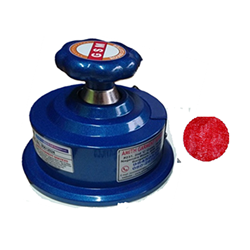
A GSM Testing Machine is textile testing equipment designed to determine the weight of fabric or other sheet materials in grams per square metre.
A typical GSM testing setup may include a GSM sample cutter and a precision weighing balance.
The cutter is used to obtain a sample with a known area, while the weighing balance measures the sample’s weight. The measured weight can then be used to determine the GSM.
GSM testing equipment can be used for various textile materials, including:
- Woven fabrics
- Knitted fabrics
- Non-woven materials
- Garment fabrics
- Textile samples
- Paper and similar sheet materials, depending on equipment specifications
How Does a GSM Testing Machine Work?
The basic principle behind GSM testing is relatively simple.
First, a fabric sample of a known area is cut using a GSM cutter. The sample is then weighed using a precision balance.
The weight of the sample is used to calculate the fabric’s GSM.
For a standard sample area, the calculation can be simplified because the sample size is already known.
The basic principle is:
GSM = Weight of fabric sample ÷ Area of fabric sample × 10,000
When a standard 100 cm² GSM cutter is used, the calculation becomes:
GSM = Sample weight in grams × 100
For example, if a 100 cm² fabric sample weighs 1.8 grams:
GSM = 1.8 × 100 = 180 GSM
This makes GSM testing quick and convenient for textile quality-control applications.
How to Test Fabric GSM Step-by-Step
Accurate testing requires proper sample preparation and correct handling of the equipment.
Step 1: Select a Representative Fabric Sample
Select a representative portion of the fabric that accurately reflects the material being tested.
Avoid areas that are damaged, heavily creased, contaminated, or otherwise unsuitable for testing.
For production quality control, samples may be taken from different areas or batches according to the company’s testing procedure.
Step 2: Condition the Fabric if Required
Depending on the applicable testing method and laboratory procedure, the fabric may need to be conditioned under controlled atmospheric conditions before testing.
Conditioning can help minimize variations caused by moisture content.
Step 3: Place the Fabric on a Cutting Surface
Lay the fabric flat on a suitable cutting surface.
The material should be positioned without unnecessary folds or distortion.
Step 4: Cut the Sample Using a GSM Cutter
Place the GSM cutter on the fabric and cut the required sample.
A GSM cutter helps produce a sample with a predetermined area, improving consistency during testing.
Care should be taken to ensure that the cutter passes completely through the fabric.
Step 5: Weigh the Fabric Sample
Place the cut sample on a calibrated precision weighing balance.
Record the weight accurately.
The weighing balance should be placed on a stable surface and protected from conditions that could affect the measurement.
Step 6: Calculate the GSM
Use the appropriate formula based on the sample area.
For a 100 cm² sample:
GSM = Sample weight × 100
For example:
- Sample weight = 2.2 grams
- Sample area = 100 cm²
- GSM = 2.2 × 100
- GSM = 220
Therefore, the tested fabric has a GSM of approximately 220 g/m².
Step 7: Record and Compare the Result
Record the test result and compare it with the required fabric specification.
If the measured GSM falls outside the acceptable tolerance, further investigation may be required.
What Is a GSM Cutter?
A GSM Cutter is a precision cutting device used to cut fabric samples of a predetermined area for GSM testing.
Instead of manually measuring and cutting a fabric sample, a GSM cutter helps create a consistent sample size.
This improves testing efficiency and reduces errors associated with irregular sample dimensions.
A GSM cutter is commonly used together with a precision weighing balance as part of a fabric GSM testing setup.
GSM Testing Machine vs GSM Cutter: What’s the Difference?
These terms are sometimes used interchangeably, but they can refer to different components of the testing process.
| GSM Testing Equipment | Main Function |
|---|---|
| GSM Cutter | Cuts a sample of predetermined area |
| Precision Balance | Measures the weight of the sample |
| GSM Testing Setup | Combines sample preparation and weighing for GSM determination |
| Digital GSM Balance | Provides digital measurement of sample weight |
A GSM cutter alone does not determine the GSM. The cut sample must also be accurately weighed and the result calculated.
Common GSM Testing Errors and How to Avoid Them
Accurate equipment alone does not guarantee accurate results. Testing technique is equally important.
1. Using an Incorrect Sample Size
An incorrectly sized sample can produce an incorrect GSM calculation.
Solution: Use a properly maintained GSM cutter and verify the sample dimensions where required.
2. Cutting Through an Uneven Area
Fabric can have variations in construction or finish.
Solution: Follow a consistent sampling procedure and test representative samples.
3. Weighing an Unconditioned Sample
Moisture can influence the weight of textile materials.
Solution: Follow the applicable conditioning requirements for the testing method.
4. Using an Uncalibrated Balance
An inaccurate balance can directly affect the final GSM result.
Solution: Regularly check and calibrate the weighing equipment according to the manufacturer’s recommendations and laboratory procedures.
5. Allowing Fabric Folds During Cutting
Wrinkles or folds can affect sample cutting.
Solution: Place the fabric flat and avoid unnecessary stretching or compression.
6. Ignoring Equipment Maintenance
Dust, damaged cutting blades, and other equipment issues can affect testing consistency.
Solution: Inspect, clean, and maintain the equipment regularly.
7. Testing Only One Sample
A single measurement may not always represent the entire fabric lot.
Solution: Where required, test multiple representative samples and evaluate the results according to the applicable testing procedure.
Why Accurate GSM Testing Matters in Textile Manufacturing
Fabric GSM can influence several characteristics of textile products.
Fabric Quality
Consistent GSM helps maintain uniformity across production batches.
Garment Appearance
Changes in fabric weight can affect drape, thickness, and appearance.
Production Control
Manufacturers can identify variations during production and take corrective action.
Customer Specifications
Many textile products are manufactured according to specified GSM ranges.
Material Cost
Fabric weight can influence material consumption and production costs.
Product Performance
Depending on the textile application, GSM can influence characteristics such as thickness, durability, comfort, and handling.
GSM Testing for Different Types of Fabrics
The GSM testing process may be applied to different textile structures, including:
Woven Fabric
Woven fabrics are produced by interlacing warp and weft yarns. GSM testing helps manufacturers monitor fabric weight and production consistency.
Knitted Fabric
Knitted fabrics are formed using loops of yarn. Their structure can make sample handling and conditioning particularly important.
Non-Woven Fabric
Non-woven materials are produced through processes other than traditional weaving or knitting. GSM can be an important quality parameter for many non-woven applications.
The exact testing procedure should always follow the relevant standard or specification for the material being tested.
GSM Testing Standards
Textile laboratories and manufacturers may follow recognized testing standards when determining fabric mass per unit area.
Depending on the material and testing requirement, standards may include ASTM and ISO methods, among others.
For example, ASTM D3776/D3776M is associated with mass per unit area of fabric, while ISO 3801 addresses determination of mass per unit length and mass per unit area of fabrics.
The applicable standard should be selected based on the material, customer requirements, laboratory procedure, and intended application.
How to Choose the Right GSM Testing Machine
When selecting GSM testing equipment, consider the following factors:
1. Type of Material
Determine whether the equipment will be used for woven, knitted, non-woven, or other materials.
2. Required Accuracy
Select equipment appropriate for the precision required by your testing application.
3. Sample Size
Check the cutter’s sample area and ensure that it suits your testing procedure.
4. Weighing Capacity
The balance should be suitable for the expected sample weights.
5. Ease of Operation
Simple and user-friendly equipment can improve testing efficiency.
6. Durability
For industrial environments, equipment should be robust enough for regular use.
7. Calibration and Maintenance
Consider the availability of calibration, maintenance, and technical support.
8. Compliance Requirements
If testing is performed according to a specific standard, ensure that the equipment and procedure are appropriate for that standard.
Applications of GSM Testing Equipment
GSM testing equipment is commonly used in:
- Textile manufacturing
- Garment manufacturing
- Fabric inspection
- Textile quality-control laboratories
- Research and development
- Non-woven manufacturing
- Fabric suppliers
- Textile testing laboratories
- Production quality assurance
It can help organizations maintain consistency and verify that materials meet their required specifications.
GSM Testing Machine for Textile Quality Control
A reliable GSM testing setup can become an important part of a textile quality-control process.
By regularly measuring fabric GSM, manufacturers can identify variations before materials move further into production.
For example, if a fabric specification requires a particular GSM range, testing can help determine whether the produced material remains within the required tolerance.
This can reduce quality issues and help manufacturers maintain consistency between batches.
Frequently Asked Questions
A GSM Testing Machine is equipment used to determine the mass per square metre of fabric or other suitable sheet materials.
A representative fabric sample is cut to a known area using a GSM cutter, weighed using a precision balance, and the GSM is calculated from the sample weight and area.
A GSM testing setup generally uses a GSM cutter and precision weighing balance. Digital GSM testing equipment may combine or simplify these functions depending on the design.
GSM represents fabric weight per square metre, while thickness measures the physical thickness of the material. They are different properties and should not be treated as interchangeable.
No. A GSM cutter is used to obtain a sample of a known area. The sample must also be accurately weighed to determine GSM.
GSM helps manufacturers monitor fabric weight, consistency, quality, material specifications, and production requirements.
Calibration requirements depend on the equipment, testing procedure, laboratory requirements, and manufacturer's recommendations. Regular verification and calibration help maintain measurement reliability.
Yes, GSM testing can be applied to many types of textile materials, provided the appropriate sampling and testing procedure is followed.
Conclusion
GSM testing is an essential quality-control process in textile and garment manufacturing. A suitable GSM testing machine, GSM cutter, and precision weighing balance can help manufacturers accurately determine fabric weight and maintain consistency throughout production.
Correct sample preparation, accurate weighing, proper conditioning, equipment maintenance, and adherence to the applicable testing procedure are all important for reliable results.
For textile manufacturers and quality-control laboratories, investing in suitable GSM testing equipment can help improve testing efficiency and support consistent product quality.
If you are looking for reliable textile testing equipment, Amith Garment Services provides a range of textile testing solutions for fabric and garment quality-control applications. Explore the GSM testing equipment range and select the setup appropriate for your testing requirements.