
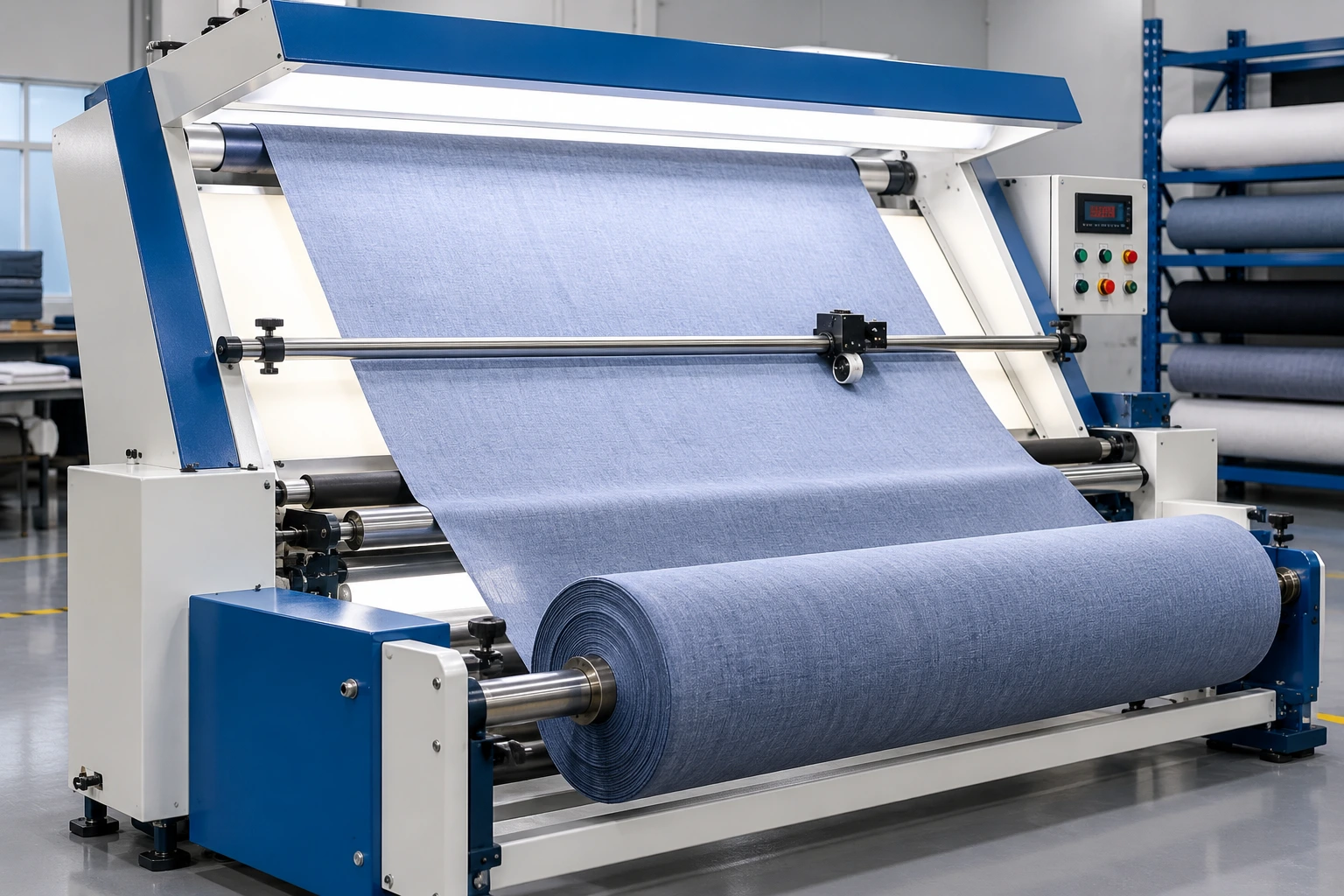
Every garment starts with fabric, and every fabric roll carries some risk. One hidden flaw can ruin dozens of cut panels. That is why a fabric inspection machine sits at the centre of fabric quality control in mills, garment factories and buying-house labs across India, from Tiruppur to Bangalore.
This guide explains what the equipment does, how inspection works, which defects matter, and how to choose the right setup.
What Is a Fabric Inspection Machine?
A fabric inspection machine is textile equipment that moves a fabric roll across an illuminated inspection surface so operators can spot, measure and record defects such as holes, stains, slubs and shade variation. It lets quality teams check fabric before cutting, stitching or finishing.
You may also hear it called a textile inspection machine, fabric roll inspection machine or fabric quality checking machine. A simple fabric inspection table serves the same purpose on a smaller scale.
Most machines are operator-assisted. The machine feeds, rewinds and measures the fabric, while a trained inspector judges what is a defect. Camera-based fabric defect detection systems also exist, but they are a separate category.
Why Is a Fabric Inspection Machine Important?
Fabric inspection matters because defects found before cutting cost far less than defects found in finished garments. It helps mills, exporters and buying houses grade fabric consistently, meet buyer specifications, and reduce avoidable rework, rejections and disputes over fabric quality.
Think of a garment exporter in Tiruppur who cuts 5,000 pieces from a lot with an unnoticed shade band. The problem surfaces only after stitching, and by then the fabric has been consumed. Textile quality control at the fabric stage prevents that.
Fabric manufacturers and textile mills also use inspection before dispatch. Documented results give both sides a shared reference if a claim arises.
How Does a Fabric Inspection Machine Work?
Operators load the roll, pass fabric over a lit inspection surface at a controlled speed, watch for flaws, and mark each one while the machine measures length. The roll is rewound with defect locations noted, so the team can grade it against a chosen standard.
The fabric moves through the machine under light tension. When the inspector sees a defect, they stop the roll, record its type and position, and often tag the selvage or the fabric itself.
Four factors decide how much you actually see:
- Lighting: poor or uneven light hides faults, especially in dark or pale shades.
- Tension: too tight and the fabric stretches, too loose and it wrinkles.
- Speed: fast running lets defects slip past.
- Operator training: consistent judgement matters as much as the equipment.
Key Features of a Fabric Inspection Machine
Configuration varies by model and application. No single machine has every item below, but these are the parts you will commonly find:
- Inspection table or surface with a tilted or vertical viewing area
- Fabric roll holder and spreading or feeding mechanism
- Lighting system matched to the fabric and buyer requirements
- Speed control for the fabric
- Fabric tension control to keep the surface flat
- Length measurement system for metre or yard counting
- Defect marking and operator controls
- Roll winding mechanism to rewind after inspection
Types of Fabric Defects Detected During Inspection
Inspection can reveal holes, stains, slubs, missing yarns, colour variation, bowing, skewing, creases, needle lines, oil marks, and printing, dyeing or selvage faults. Visibility depends on lighting, tension, speed and inspector training, since most machines assist the operator rather than detect automatically.
| Fabric Defect | What It Means | Possible Cause | Why It Matters |
| Hole | Open break in the fabric | Broken yarns, sharp objects, mishandling | Panel becomes unusable |
| Stain / oil mark | Foreign mark on the surface | Machine oil, handling, storage | May not wash out; visible on garment |
| Slub | Thick, uneven yarn section | Yarn spinning irregularity | Affects appearance and hand feel |
| Missing yarn | Gap in warp or weft | Yarn breakage during weaving | Creates lines or weak areas |
| Colour variation | Shade difference within or between rolls | Dyeing inconsistency | Mismatched garment parts |
| Bowing | Curved weft lines | Uneven stress in finishing | Distorted patterns and seams |
| Skewing | Angled weft or course lines | Finishing or handling issues | Twisting in finished garments |
| Crease | Permanent fold marks | Poor rolling or storage | Hard to remove; visible flaws |
| Needle line | Vertical line in knits | Damaged needle in knitting machine | Repeats along the roll length |
| Selvage defect | Uneven or damaged edge | Weaving or finishing faults | Reduces usable fabric width |
| Print / dyeing defect | Misregistration, patches, streaks | Process control problems | Affects appearance and acceptance |
Fabric Inspection Process Step by Step
- Record roll details: lot, roll number, width, stated length.
- Check the environment: lighting and cleanliness of the surface.
- Mount the roll and thread fabric with correct tension.
- Set inspection speed suited to the fabric.
- Inspect and mark defects as the fabric passes.
- Measure length and width during the run.
- Grade and record results for each roll, then rewind.
Fabric roll inspection is the examination of an entire roll, metre by metre, to find defects, measure length and assign a quality grade. It is usually done before cutting, and results are recorded per roll so lots can be accepted, rejected or negotiated.
Fabric Inspection Standards and Quality Control
Many buyers grade fabric using a point system. ASTM D5430 covers visual inspection and grading of fabrics, and the four-point system is widely used in the garment trade. Some buyers specify their own or other systems, and ISO and ASTM textile testing standards may apply to related tests.
The right procedure depends on fabric type, buyer requirements, end use and applicable quality specifications. No single standard fits every fabric or every inspection system. Always confirm what your buyer requires.
Industries That Use Fabric Inspection Machines
Fabric inspection is common across the textile value chain:
- Textile mills and fabric manufacturers
- Garment factories and garment exporters
- Buying houses and third-party inspection teams
- Fabric testing labs
- Processing units before printing, dyeing or finishing
- Importers checking incoming lots
Factors to Consider When Choosing a Fabric Inspection Machine
Consider fabric width and roll diameter, lighting quality, speed control, tension handling, length measurement, defect marking, build quality, operator comfort, after-sales support and total cost. Match the specification to your fabric types and buyer inspection requirements rather than to price alone.
Ask a fabric inspection machine manufacturer about roll capacity, whether the unit handles woven and knitted fabric, and what calibration and service support is available.
Fabric inspection machine price varies with size, features, measurement systems and build. Compare specifications and support, not just the quoted figure.
How a Fabric Inspection Machine Improves Textile Quality
Inspection improves garment quality by keeping flawed fabric out of cutting and sewing. Teams can mark, cut around or reject defective sections, segregate lots by shade, and give suppliers documented feedback, so fewer faults reach stitched garments.
It does not make fabric defect-free. It gives you information early, when you can still act on it. Combined with other fabric testing equipment such as GSM, colour and strength testers, it supports complete garment quality testing.
Fabric Inspection Machine vs Manual Fabric Inspection
Manual inspection relies on a table or hand-held fabric with more handling and less measurement. A machine feeds and rewinds the roll under controlled lighting and speed, adding length measurement and easier record keeping. Machines suit routine production checks; simple tables suit small samples.
| Parameter | Manual Inspection | Fabric Inspection Machine |
| Inspection speed | Depends on operator, often slower | More controlled and steady |
| Operator effort | Higher physical handling | Lower; feeding assisted |
| Fabric handling | More manual pulling | Guided feeding and rewinding |
| Defect visibility | Varies with room lighting | Dedicated lighting on surface |
| Measurement | Manual tape or estimate | Built-in length measurement (model dependent) |
| Record keeping | Handwritten | Easier to standardise |
| Consistency | Varies between operators | Better process consistency |
| Production suitability | Samples, small lots | Routine roll inspection |
| QC applications | Spot checks | Full roll grading |
Why Choose Amith Garment Services
Amith Garment Services supplies textile testing equipment and garment testing instruments for mills, labs and exporters. Fabric inspection is one part of a wider quality-control setup, so you can pair it with tools such as a crock meter, light booth or GSM cutter under one roof.
Talk through your fabric types, roll sizes and buyer requirements, and choose equipment that fits your actual workflow.
Conclusion
A fabric inspection machine gives textile and garment businesses a reliable way to find fabric problems before they become expensive. It cannot guarantee flawless fabric, but with proper lighting, tension, speed and trained inspectors, it makes fabric quality inspection more consistent and better documented.
Choose based on your fabric, buyer standards and workflow, and treat inspection as one step in a wider textile quality control system.
Frequently Asked Questions
A fabric inspection machine is textile equipment that passes fabric rolls over an illuminated surface so trained operators can identify, mark and record defects. Depending on the model, it also measures fabric length and rewinds the roll after checking. Mills, garment exporters and quality labs use it to assess fabric before cutting, stitching, printing or finishing.
Fabric defects that go unnoticed become garment defects. Finding a hole, stain or shade variation before cutting lets teams mark, avoid or reject the affected section instead of wasting cutting, stitching and finishing effort. Inspection also gives exporters and buying houses documented evidence to support fabric acceptance decisions and conversations with suppliers.
A fabric inspection machine helps operators see holes, stains, oil marks, slubs, missing yarns, colour variation, bowing, skewing, creases, needle lines, and printing, dyeing or selvage defects. Most machines are operator-assisted, so what gets identified depends on lighting, fabric tension, running speed and the inspector's training and experience.
Start with your fabric: type, width, roll diameter and whether it is woven or knitted. Then compare lighting, speed control, tension handling, length measurement, defect marking and build quality. Check your buyer's inspection requirements, ask the manufacturer about service and calibration support, and consider total cost rather than price alone.
It's used to check fabric rolls for defects like holes, stains and colour differences before cutting. It also measures length and helps teams record and grade fabric quality.
It moves the fabric over a lit surface at a steady speed. An operator watches for flaws, marks them, and the machine measures length while rewinding the roll.
It finds problems early, before the fabric is cut. That helps you avoid wasted material, sort fabric by quality, and share clear records with suppliers and buyers.
Common ones include holes, stains, slubs, missing yarns, shade variation, bowing, skewing, creases, needle lines, and printing or dyeing faults.