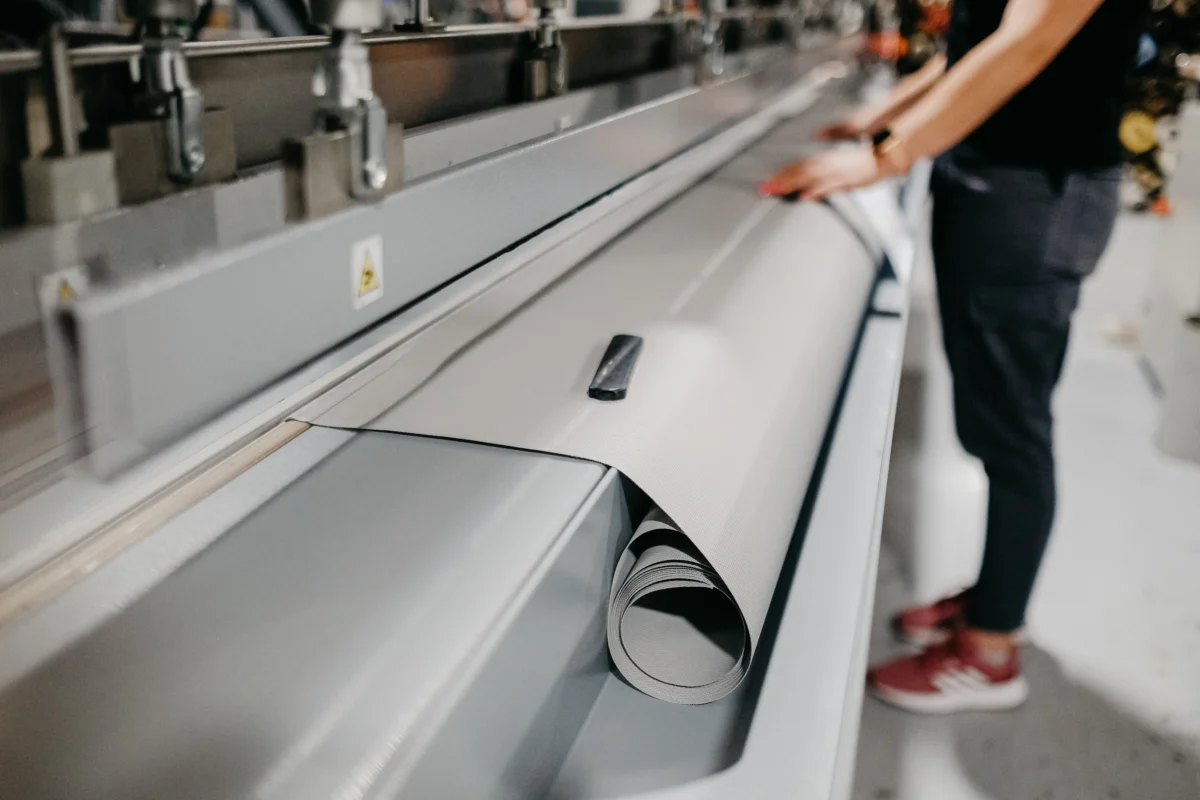
Fabric inspection machine speed being monitored during roll inspection

Fabric Inspection Machine Speed: What Affects Throughput?

Ask any quality manager on a mill floor what slows down inspection, and the conversation almost always circles back to machine speed. It’s a fair starting point, but it’s rarely the whole story. Fabric inspection machine speed is one piece of a larger equation that includes fabric behaviour, lighting, operator judgement, and how a facility handles roll changes and joins.

This article looks at what fabric inspection machine speed actually means, what pushes it up or down in real operating conditions, and why chasing a higher number on a spec sheet doesn’t always translate into better throughput on the floor.

Fabric inspection machine speed refers to how fast fabric moves through an inspection unit while being checked for defects, typically expressed in metres per minute. It differs from production throughput, which also accounts for stoppages, roll changes, and defect marking time.

What Is Fabric Inspection Machine Speed?

Fabric inspection machine speed describes the rate at which a fabric roll travels across the inspection table or frame while an operator or vision system examines it for faults. This is usually measured in metres per minute and is often listed on equipment as a maximum rated speed.

It’s worth separating this from a few related terms that get used loosely in the industry:

  • Machine speed – the mechanical capability of the motor and drive system.
  • Inspection speed – the speed at which fabric can actually be inspected accurately, which is often lower than machine speed.
  • Actual operating speed – the speed used on a given day, adjusted for fabric type and inspection requirements.
  • Effective inspection speed – average speed once stoppages, roll changes, and rework are factored in.
  • Production throughput – total inspected fabric output over a shift or day.

The maximum rated machine speed is a mechanical ceiling, not a working recommendation. Most inspection teams run well below that ceiling because accuracy, not raw speed, is the actual goal of the process.

Why Does Fabric Inspection Machine Speed Matter?

Speed matters because it influences how many rolls a facility can move through quality control within a shift. For garment exporters and textile mills working against shipment deadlines, inspection capacity is often a bottleneck between production and dispatch.

That said, speed only matters when it’s paired with reliable defect detection. A fast fabric inspection machine that misses defects creates downstream problems: garments cut from unchecked fabric, rejected shipments, and rework costs that far outweigh any time saved during inspection.

 A good fabric inspection machine speed is one that allows consistent, accurate defect detection for the fabric type being checked. There’s no universal number — the right speed depends on fabric construction, defect visibility, and the inspection standard being applied.

How Does a Fabric Inspection Machine Work?

A typical fabric inspection machine unwinds fabric from a feed roller, passes it across an illuminated inspection zone, and rewinds it onto a take-up roller. Operators (or, in automated systems, vision sensors) observe the fabric surface as it moves, marking or logging defects as they appear.

The feeding mechanism, tension control, and take-up system all work together to keep the fabric flat and evenly tensioned. Any inconsistency here — sagging, excessive tension, or uneven winding — can distort how defects appear, which indirectly affects how fast the machine can safely run.

Some systems include defect-marking mechanisms, length counters, and grading displays that help operators log issues without stopping the machine completely, which supports better fabric inspection machine efficiency over a shift.

What Factors Affect Fabric Inspection Machine Speed?

Several variables interact to determine a workable inspection speed for any given fabric:

  • Fabric construction and weight
  • Fabric width
  • Fabric colour and surface texture
  • Fabric stretch or elasticity
  • Roll diameter, length, and weight
  • Fabric tension during feeding
  • Lighting quality at the inspection zone
  • Defect visibility and contrast
  • Machine design and drive system
  • Operator experience and fatigue
  • Inspection standard being applied (e.g., 4-point system)
  • Frequency of machine stoppages and roll changes

None of these operate in isolation. A heavy denim roll and a lightweight chiffon roll will rarely run at the same practical speed, even on identical equipment.

Fabric Type and Its Effect on Inspection Speed

Fabric type has a direct bearing on inspection speed. Woven fabrics with a stable structure generally allow more consistent tension and easier visual scanning. Knitted fabrics, particularly those with stretch, can distort under tension, which often means operators reduce speed to avoid misreading defects caused by fabric movement rather than actual faults.

Textured, printed, or dark-coloured fabrics also tend to require slower inspection speeds because defects are harder to spot against busy or low-contrast surfaces. Plain, light-coloured fabrics with a smooth surface are usually easier and faster to inspect.

Fabric Width, Roll Weight and Roll Length

Wider fabric rolls cover more surface area per metre travelled, which can mean more visual information for the operator to process at a given speed. Heavier rolls also demand more careful handling during loading, unwinding, and roll changes, which affects overall throughput even if the inspection speed itself stays constant.

Longer rolls reduce the frequency of roll changes, which generally supports better effective inspection speed over a shift, since fewer stoppages occur.

Lighting and Defect Detection Conditions

Lighting is one of the most underrated factors in fabric inspection machine throughput. Poor or inconsistent lighting forces operators to slow down, look more carefully, or double-check sections they’re unsure about. Good, even, glare-free lighting at the inspection zone allows more confident and faster scanning without compromising defect detection.

This is why lighting conditions in the inspection area deserve as much attention as the machine’s mechanical specifications.

Operator Skill and Inspection Accuracy

An experienced operator can often maintain a steady inspection pace while still catching subtle defects that a less experienced operator might miss even at a slower speed. Operator fatigue, shift length, and training standards all play into how consistently inspection speed can be maintained across a working day.

This is one reason facilities in India’s textile hubs, including manufacturing clusters around Bangalore and Tiruppur, invest in structured operator training alongside equipment upgrades — the two go hand in hand for reliable fabric quality inspection.

Machine Design and Fabric Inspection Technology

Machine design affects speed capability through the motor, drive system, tension control, and how smoothly fabric feeds and winds. Better-designed fabric inspection technology tends to reduce fabric slippage, tension inconsistency, and vibration, all of which can otherwise force operators to run slower to compensate.

Features like adjustable speed control, digital length counters, and defect-marking systems don’t necessarily increase maximum speed, but they often improve effective inspection speed by reducing manual interruptions.

Fabric Inspection Machine Speed vs Inspection Accuracy

There’s a natural trade-off between speed and accuracy. Running faster reduces the time available to notice small or low-contrast defects, which can increase the risk of missed faults. Running slower generally improves detection but reduces the number of rolls processed per shift.

Machine Speed Inspection Accuracy Throughput
High Can decrease if defects are harder to spot May appear high but risks rework later
Moderate Generally balanced Often the most sustainable in practice
Low Typically highest Lower rolls-per-shift, but fewer downstream issues

Important: A higher machine speed does not automatically mean better productivity. If missed defects lead to rejected shipments or rework, the apparent time saved during inspection is lost several times over later in the process.

How to Improve Fabric Inspection Machine Throughput

Improving throughput isn’t only about pushing the speed dial higher. Some practical levers include:

  • Reducing unplanned stoppages through better machine maintenance
  • Standardising fabric joining methods to speed up roll changes
  • Improving lighting at the inspection zone
  • Training operators on consistent defect classification
  • Matching inspection speed to fabric type rather than using one fixed setting
  • Keeping tension consistent to reduce fabric distortion

Machine Speed → Inspection Accuracy → Downtime → Throughput → Overall Productivity is the practical chain worth remembering. Improving any single link — especially reducing downtime from stoppages and roll changes — often does more for daily output than simply increasing raw machine speed.

How to Choose the Right Fabric Inspection Machine Speed

The right speed depends on the fabric range a facility typically handles, the inspection standard in use, and the acceptable balance between throughput and defect risk. A mill mainly running structured wovens will have different practical speed needs than one handling delicate knits or printed fabrics.

It helps to test actual fabric types on the machine rather than relying solely on the manufacturer’s maximum rated speed, since real-world performance always varies with fabric characteristics and operating conditions.

Industries That Use High-Speed Fabric Inspection

Fabric inspection equipment is used across woven and knit fabric mills, garment manufacturing units, buying house quality labs, and export-oriented textile facilities. In India’s textile and garment manufacturing environment — including clusters around Bangalore, Tiruppur, and other export hubs — consistent fabric inspection machine throughput supports on-time shipments and helps textile exporters meet buyer quality requirements.

Denim mills, shirting fabric producers, home textile manufacturers, and knit garment units all rely on fabric inspection systems, though their practical operating speeds differ based on fabric type and quality expectations.

Why Choose Amith Garment Services

Amith Garment Services supplies textile testing and inspection equipment to manufacturers, exporters, and quality control teams across India’s textile and garment industry. The focus is on equipment that supports practical, day-to-day inspection needs — helping teams choose machines suited to their actual fabric range and production requirements, rather than selling on speed figures alone.

Conclusion

Fabric inspection machine speed is an important factor in textile quality control, but it works alongside fabric type, lighting, operator skill, and machine design to determine real throughput. Facilities that treat inspection speed as one part of a larger system — rather than a single number to maximise — tend to get more consistent, reliable results from their fabric inspection machine over time.

Frequently Asked Questions

Fabric inspection machine speed refers to how quickly fabric moves through an inspection unit while being checked for defects, usually measured in metres per minute. It is often listed as a maximum rated speed, but the actual working speed is typically lower because operators need enough time to detect defects accurately.

Throughput depends on fabric type, width, weight, and tension, as well as lighting conditions, operator experience, inspection standards, machine design, roll length, roll changes, and stoppages. Effective throughput is the combined result of machine capability and how efficiently the inspection process operates.

Not automatically. Higher speeds can reduce the time available to identify subtle or low-contrast defects, increasing the risk of missed faults. If those defects result in rework or rejected shipments, the initial time saving may be lost. Consistent accuracy and reduced downtime are often more important than maximum machine speed.

The appropriate speed depends on the fabric types you inspect, the quality standard being followed, and the required balance between throughput and defect detection. Testing your actual fabric range on the machine is recommended because real-world performance can vary according to fabric construction, width, weight, and surface characteristics.

Fabric inspection machine speed is the rate at which fabric travels through the machine while it is being inspected for defects. It is generally measured in metres per minute, and the practical working speed is often lower than the machine's maximum rated speed.

The operating speed depends on the fabric type, machine design, inspection method, and required defect detection accuracy. There is no single fixed speed for every application, so facilities generally adjust the machine speed according to each fabric batch.

Fabric type, lighting quality, operator skill, machine design, fabric tension, roll changes, and unexpected stoppages can all affect throughput. Improving lighting, reducing interruptions, and maintaining consistent operating conditions can often increase effective throughput without compromising inspection quality.

You can improve effective inspection speed by using suitable lighting, training operators properly, maintaining consistent fabric tension, reducing unnecessary stoppages, and making roll changes more efficient. The goal should be to increase productive inspection time while maintaining reliable defect detection.
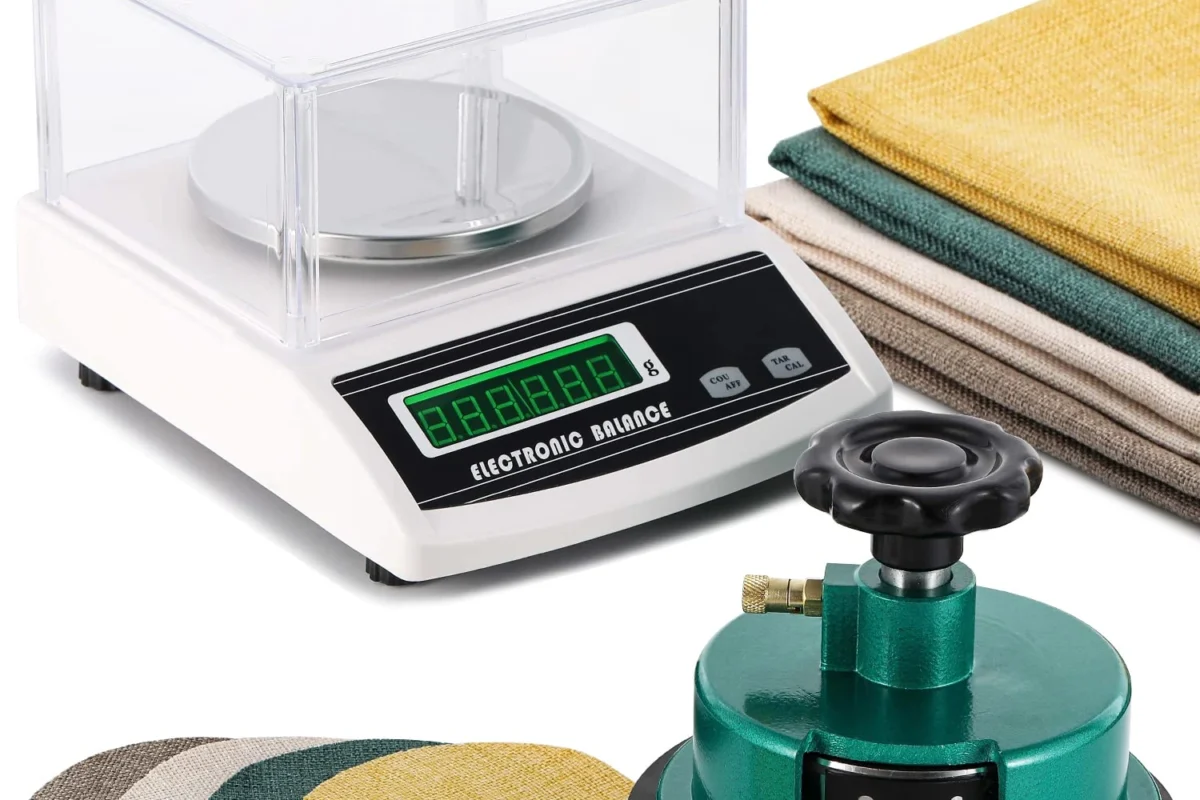
GSM Scale and GSM Cutter used for fabric GSM testing

How to Measure Fabric GSM Using a GSM Scale: A Complete Step-by-Step Guide

How to Measure Fabric GSM Using a GSM Scale: A Complete Step-by-Step Guide

If you have spent any time on a textile shop floor, you already know one thing. Fabric that feels “off” usually has a GSM problem. A GSM scale is the instrument that tells you exactly why, in seconds rather than guesswork.

This guide walks through the actual testing process, the equipment involved, and the small errors that quietly ruin lab results. It is written for the people who run these tests every day, not just for people buying equipment for the first time.

What is a GSM Scale?

A GSM scale is a laboratory device that weighs a fixed-area fabric sample and converts that weight directly into a Grams per Square Metre reading, giving an instant measure of fabric density.

A standard fabric GSM scale works with a matching round cutter, usually cutting a 100 cm² circle. That fixed area is the whole trick. Because the sample size never changes, the weight reading translates directly into a GSM value without extra math.

Older labs used to weigh samples on a general lab balance and calculate GSM by hand. A digital GSM scale removes that step. It displays GSM directly, often alongside grams and oz/yd² for export documentation.

Textile engineers in Tiruppur and other manufacturing hubs across India rely on this instrument daily. It is one of the simplest, yet most decisive, pieces of textile testing equipment on a lab bench.

Why is Fabric GSM Measurement Important?

GSM measurement confirms fabric weight consistency, which directly affects strength, drape, cost, and buyer compliance. Without it, manufacturers risk shipping fabric that fails quality checks or feels different from the approved sample.

Buyers approve garments based on a sample swatch. If bulk fabric later comes in heavier or lighter, the finished garment will not match. That mismatch often surfaces only after cutting, when it is expensive to fix.

Fabric GSM testing also protects raw material cost. Fabric that runs heavier than specified wastes yarn and money across a large order. Fabric that runs lighter may fail strength or opacity requirements.

For exporters working with international buying houses, GSM data supports compliance with textile testing standards, including references used alongside ISO and ASTM test methods. Consistent GSM reporting builds buyer trust over repeated orders.

Equipment Required for Fabric GSM Measurement

A proper GSM test needs more than just the scale itself. Here is what a typical lab setup includes.

  • GSM Scale — the core instrument that weighs the sample and calculates the reading.
  • GSM Cutter — a fixed-diameter round cutter, usually matched to the scale’s calibration.
  • Fabric Sample — taken from multiple points on the roll, not just one edge.
  • Testing Surface — a flat, stable table free from vibration or air disturbance.
  • Laboratory Conditions — controlled temperature and humidity, since fabric can absorb moisture.

Skipping any one of these affects reliability. A worn cutter, for instance, produces samples that are slightly off in area, throwing off every reading afterward.

Many labs also keep a spare cutter blade on hand. This matters more than people expect, since a dull blade can crush fabric edges instead of cutting them cleanly.

How to Measure Fabric GSM Using a GSM Scale (Step-by-Step Guide)

Here is the practical process used across most textile testing laboratories.

  1. Condition the fabric. Let the sample sit in standard lab conditions for at least a few hours before testing.
  2. Select sampling points. Choose several spots across the fabric width, avoiding selvedges and creased areas.
  3. Cut the sample. Use the GSM cutter to cut a clean, fixed-area circle, typically 100 cm².
  4. Calibrate the scale. Confirm the digital GSM scale reads zero and check calibration with a reference weight.
  5. Place the sample. Lay the cut fabric flat and centred on the weighing platform.
  6. Read the value. Note the GSM reading directly from the display.
  7. Repeat for accuracy. Test at least three to five samples and average the results.
  8. Record the data. Log readings against the fabric batch and supplier reference.

For example, a denim mill testing 12 oz denim would expect GSM readings close to 400 g/m². A sudden drop to 370 g/m² across multiple samples signals a real production issue, not a one-off error.

How to Calculate Fabric GSM

GSM is calculated using the formula: GSM = (Sample Weight in grams ÷ Sample Area in cm²) × 10,000. A digital GSM scale performs this calculation automatically once the sample is weighed.

Manual calculation is still useful to understand, especially for students and quality trainees. Suppose a 100 cm² sample weighs 1.8 grams.

Applying the formula: (1.8 ÷ 100) × 10,000 = 180 GSM.

Manual calculation is mainly needed when using a general lab balance without direct GSM conversion, or when verifying a scale’s accuracy against a known reference sample.

Common Mistakes During Fabric GSM Measurement

Even experienced technicians run into avoidable errors. Being aware of them saves rework later.

  • Improper sample cutting — an uneven or torn edge changes the actual sample area.
  • Incorrect weighing — placing the sample off-centre can affect platform sensitivity.
  • Poor calibration — skipping regular calibration checks introduces drift over time.
  • Environmental factors — humidity and temperature changes affect fabric weight readings.
  • Human errors — recording the wrong batch number or skipping repeat sampling.

Most of these mistakes are process issues, not equipment failures. A well-maintained GSM measuring scale still needs a disciplined operator behind it.

Benefits of Using a Digital GSM Scale

Compared to manual methods, a digital instrument changes daily lab workflow noticeably.

Factor Manual Weighing Method Digital GSM Scale
Calculation Done by hand, formula-based Automatic, instant
Accuracy Depends on operator skill Consistent, high precision
Speed Slower, multi-step Faster, single reading
Repeatability Variable across operators Standardised results
Reporting Manual logs Easier digital record-keeping

Higher accuracy comes from precise load cells rather than manual arithmetic. Time saving matters most in high-volume labs testing dozens of samples daily. Repeatability builds confidence when multiple shifts or technicians run tests. Quality assurance improves because deviations get caught earlier. And reduced manual errors means fewer disputes with suppliers over fabric specifications.

Applications of GSM Scale

A GSM scale is used well beyond a single department. Common settings include:

  • Textile Mills — checking fabric consistency straight off the loom or knitting machine.
  • Garment Manufacturing — verifying fabric before cutting to avoid finished-product mismatches.
  • Quality Control Labs — running scheduled batch testing as part of routine QC procedures.
  • Buying Houses — confirming supplier compliance during pre-shipment inspections.
  • Research Institutes — developing new fabric constructions with specific weight targets.
  • Educational Institutions — teaching students practical textile testing methods.
  • Fabric Exporters — supporting documentation for international buyers and audits.

Across India’s textile hubs, including Tiruppur and Bangalore, this instrument is a standard fixture in almost every serious testing lab.

Choosing the Right GSM Scale

Buying decisions should be based on lab needs, not just price. Key factors include:

  • Accuracy — look for readings precise to at least ±0.01 g.
  • Capacity — match the weighing range to your typical fabric types.
  • Calibration — confirm easy internal or external calibration options.
  • Build Quality — a stainless steel platform holds up better under daily use.
  • Digital Display — clear, backlit screens reduce reading errors.
  • Warranty — check coverage length and what it actually includes.
  • Service Support — confirm local support and calibration servicing availability.

A cheaper scale that drifts out of calibration quickly often costs more in the long run through inconsistent results.

Why Choose Amith Garment Services

Amith Garment Services works closely with textile mills, garment exporters, and testing labs across India, supplying a wide range of textile testing equipment built for daily production use.

Our team brings real industry experience, not just product listings. We offer technical guidance before purchase, helping you match a GSM scale to your actual testing volume and accuracy needs.

We back every order with reliable customer support, fast delivery, and after-sales service, including calibration assistance when needed. Pricing stays competitive without cutting corners on build quality or accuracy.

Conclusion

Accurate fabric GSM testing protects quality, cost, and buyer trust across every stage of textile production. A dependable GSM scale turns a routine lab check into a fast, repeatable, and reliable process.

If your lab or production unit needs the right GSM testing setup, reach out to Amith Garment Services for product guidance, pricing, and technical support tailored to your requirements.

Frequently Asked Questions

A GSM scale is a laboratory device that weighs a fixed-area fabric sample, usually 100 cm², and converts that weight into a Grams per Square Metre value. It works alongside a matching GSM cutter to ensure consistent sample size, giving instant and repeatable fabric weight readings for quality checks.

A digital GSM scale removes manual calculation, reducing human error and saving time. Manual methods require weighing on a general balance and calculating GSM separately, which is slower and more prone to mistakes, especially during high-volume testing in busy production labs.

Most fabric GSM scales use a standard 100 cm² circular sample, cut using a matching GSM cutter. This fixed area allows the scale to convert the sample's weight directly into an accurate GSM reading without additional manual calculation.

A quality digital GSM scale typically offers accuracy up to ±0.01 grams. This precision is important for consistent quality control, especially when comparing production batches against approved buyer samples or international testing standards.

Yes, using a general laboratory balance and applying the GSM formula manually. However, this method takes longer, requires trained calculation, and is more prone to human error compared to using a dedicated GSM scale with automatic conversion.

Fabric can absorb or lose moisture depending on environmental conditions, which slightly changes its weight. Textile testing laboratories maintain controlled temperature and humidity to ensure GSM readings remain accurate and comparable across different testing sessions.

Textile mills, garment manufacturers, quality control laboratories, buying houses, research institutes, and educational institutions all use GSM scales. It is a standard instrument wherever fabric weight consistency directly affects product quality or buyer compliance.

Consider accuracy, weighing capacity, calibration options, build quality, and warranty support. Laboratories with high daily testing volumes should also prioritise digital displays and reliable after-sales service for consistent long-term performance.

Cut a fixed-area fabric sample using a GSM cutter, place it on the scale, and read the GSM value directly from the digital display after calibration. This provides quick and accurate fabric weight measurements for quality control.

A GSM Scale measures fabric weight per square metre, helping textile laboratories and manufacturers verify fabric consistency, maintain quality standards, and ensure compliance with buyer specifications before production or shipment.

Most digital GSM scales offer accuracy up to ±0.01 grams, making them reliable for routine laboratory testing, production quality checks, and textile industry compliance audits.

The best GSM scale depends on your laboratory's testing volume and accuracy requirements. Choose a model with reliable calibration support, a durable construction, a clear digital display, and dependable after-sales service for long-term performance.

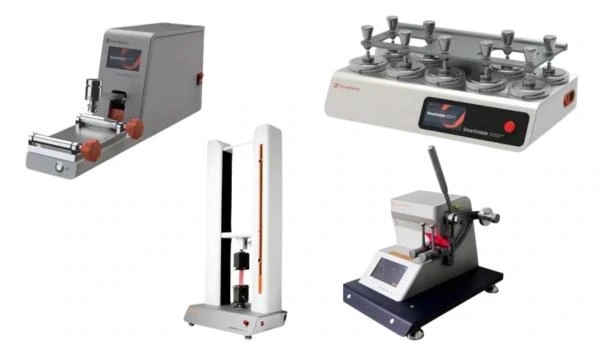
Q-Test Textile Testing Machines lineup for garment quality control

Top 10 Essential Q-Test Textile Testing Machines Every Garment Factory Needs for Accurate Quality Control

Fabric quality problems rarely show up on the cutting table — they surface weeks later, when a buyer’s audit team flags a shrinkage failure or a seam that tears under normal wear. For garment exporters and manufacturers across India, that kind of setback is expensive and avoidable. This is exactly why Q-Test Textile Testing Machines have become a standard fixture in textile labs from Bangalore to Tiruppur. Built for the day-to-day realities of garment manufacturing, Q-Test Instruments help quality teams catch fabric defects, tensile weaknesses, and colour fastness issues before bulk production begins. Whether you run a small in-house lab or a full-scale testing facility serving multiple buying houses, understanding which Q-Test Textile Testing Machines matter most can make the difference between a smooth shipment and a costly rejection.

What are Q-Test Textile Testing Machines?

Q-Test Textile Testing Machines are a range of fabric and garment testing instruments used to measure tensile strength, tear resistance, colour fastness, GSM, thickness, and other quality parameters. They help textile labs and garment factories verify that fabric batches meet ISO, ASTM, and AATCC testing requirements before production.


Why Every Garment Factory Needs Q-Test Textile Testing Machines

Garment manufacturing runs on tight buyer deadlines, and a single batch of fabric that fails a strength or colour fastness check can delay an entire shipment. Q-Test Textile Testing Machines give quality managers a reliable way to test incoming fabric, in-process goods, and finished garments against recognised international standards. Instead of relying on visual inspection alone, testing teams use tensile strength testers, crock meters, and GSM testing machines to generate measurable data that buying houses and export bodies actually accept. For factories supplying apparel brands in the US, Europe, and the Middle East, this data becomes part of the compliance paperwork attached to every shipment. In short, Q-Test Instruments turn quality control from a subjective judgement call into a documented, repeatable process.

Why are Q-Test Instruments important?

Q-Test Instruments are important because they replace guesswork with measurable data. Garment factories use them to confirm that fabric meets buyer specifications for strength, colour fastness, and weight, reducing rejection rates and helping exporters maintain consistent quality across large production runs.


What Makes Q-Test Instruments Different?

Not every testing machine on the market is built for the pace of garment manufacturing. Q-Test Instruments are designed with production-floor durability in mind — sturdy frames, calibrated components, and straightforward operation that lab technicians can learn quickly. Each machine is supplied with a calibration certificate and detailed user manual, so labs can trace results back to a known standard rather than guessing at accuracy. Amith Garment Services, which has supplied textile testing equipment across India since 1999, sources and services these instruments with an eye toward long-term reliability rather than short-term cost savings — a distinction that matters once a machine has been running several shifts a day for years.

Top 10 Essential Q-Test Textile Testing Machines

Every textile testing lab has its own priorities depending on fabric type and buyer requirements, but these ten Q-Test Textile Testing Machines cover the core parameters that most garment factories are asked to verify.

Which textile testing machine is most important in garment manufacturing?

No single machine covers every requirement, but the Tensile Strength Tester is generally considered the most essential, since fabric strength is a baseline requirement across almost every buyer specification and international standard, including ASTM D5034 and ISO 13934.


Q-Test Tensile Strength Tester

The Q-Test Tensile Strength Tester measures how much force a fabric or seam can withstand before breaking, using a calibrated grip-and-pull mechanism that records load and elongation. It’s used across woven and knit fabric testing, seam strength verification, and yarn testing labs. Benefits include repeatable, buyer-ready data and support for standards like ASTM D5034 and ISO 13934. Applications range from raw fabric approval to finished garment seam checks, making it one of the most frequently used machines in any textile testing laboratory.

What is the purpose of a Tensile Strength Tester?

A Tensile Strength Tester measures the maximum force a fabric or stitched seam can bear before it tears or breaks. This helps manufacturers confirm that a fabric will hold up during garment construction, washing, and everyday wear.


Q-Test Fabric Tear Strength Tester

This machine measures how easily a fabric tears once a small cut or weak point develops, simulating real-world wear conditions. The Fabric Tear Strength Tester is widely used for woven fabrics destined for workwear, outerwear, and technical textiles, where tear resistance is often a specific buyer requirement. It supports standards such as ASTM D1424 (Elmendorf method) and helps quality teams identify fabrics prone to snagging or splitting, catching a potential complaint long before the garment reaches a retail floor.

Q-Test Crock Meter

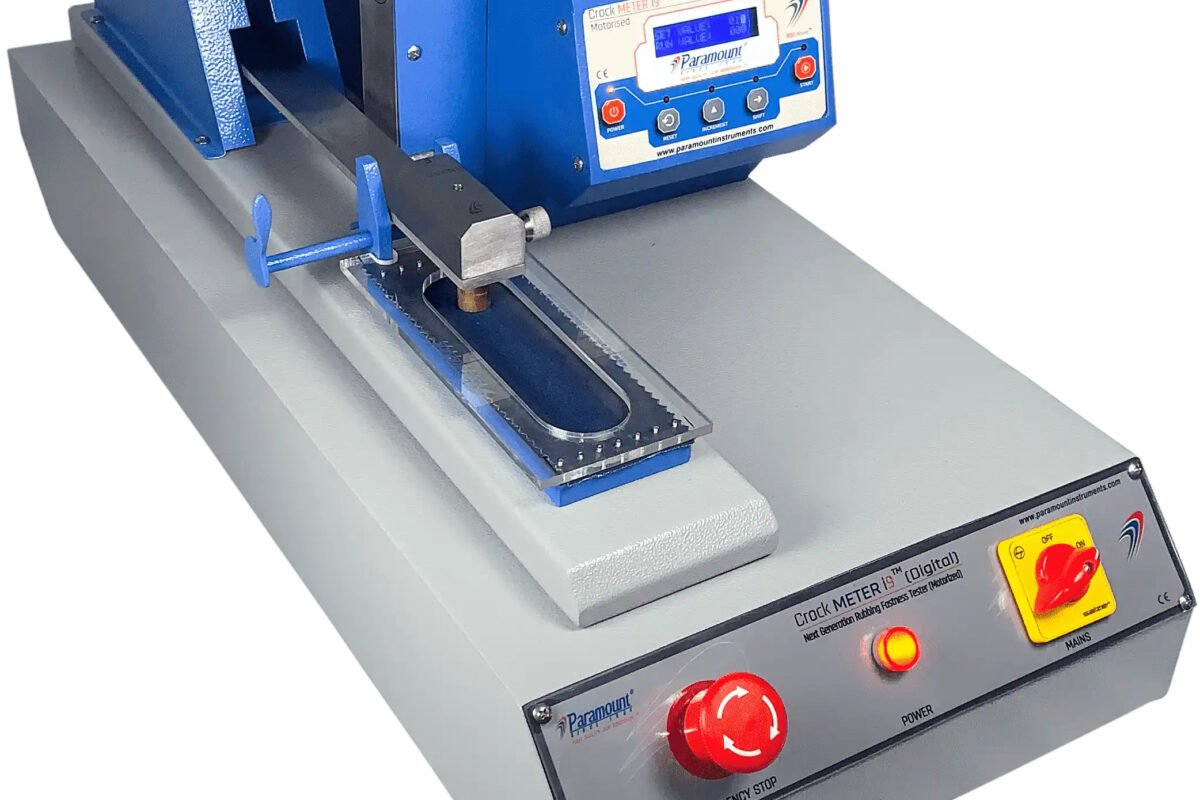
A Crock Meter tests colour fastness to rubbing — how much dye transfers from a fabric’s surface onto a white test cloth under dry or wet friction. It’s essential for denim, printed fabrics, and dyed garments, where colour bleeding onto skin or other clothing is a common buyer complaint. The Q-Test Crock Meter follows AATCC 8 and ISO 105-X12 testing methods, giving labs a standardised way to grade colour transfer and flag batches that need re-dyeing or finishing adjustments.

What does a Crock Meter test?

A Crock Meter tests a fabric’s colour fastness to rubbing, checking how much dye transfers onto a white cloth under both dry and wet conditions. It’s a standard test for dyed and printed fabrics before they go into bulk garment production.


Q-Test GSM Testing Machine

GSM, or grams per square metre, tells a factory exactly how heavy or light a fabric is — a critical spec for costing, feel, and buyer approval. The Q-Test GSM Testing Machine uses a circular cutter and precision balance to take a consistent sample and weigh it accurately. It’s used across knitting, weaving, and finishing stages to confirm that fabric weight stays within the tolerance range agreed with the buyer, preventing costly disputes over fabric that feels “too thin” or “too heavy” compared to the approved swatch.

Why is GSM Testing Machine important?

A GSM Testing Machine is important because fabric weight directly affects feel, cost, and buyer approval. It lets quality teams confirm that every batch matches the agreed fabric weight before cutting begins, avoiding disputes and rework later in production.


Q-Test Fabric Thickness Tester

Fabric thickness affects everything from drape to insulation, and even small variations can change how a finished garment performs. The Q-Test Fabric Thickness Tester uses a calibrated pressure foot to measure thickness under a standard load, giving consistent readings across different fabric types. It’s commonly used for denim, technical textiles, and non-wovens, where thickness tolerances are part of the buyer’s technical specification sheet. Labs typically reference ASTM D1777 or ISO 5084 when reporting results.

How does a Fabric Thickness Tester work?

A Fabric Thickness Tester works by placing a fabric sample between a flat base and a pressure foot that applies a fixed load. A dial or digital gauge then reads the thickness in millimetres, giving a consistent, repeatable measurement across samples.


Q-Test Bursting Strength Tester

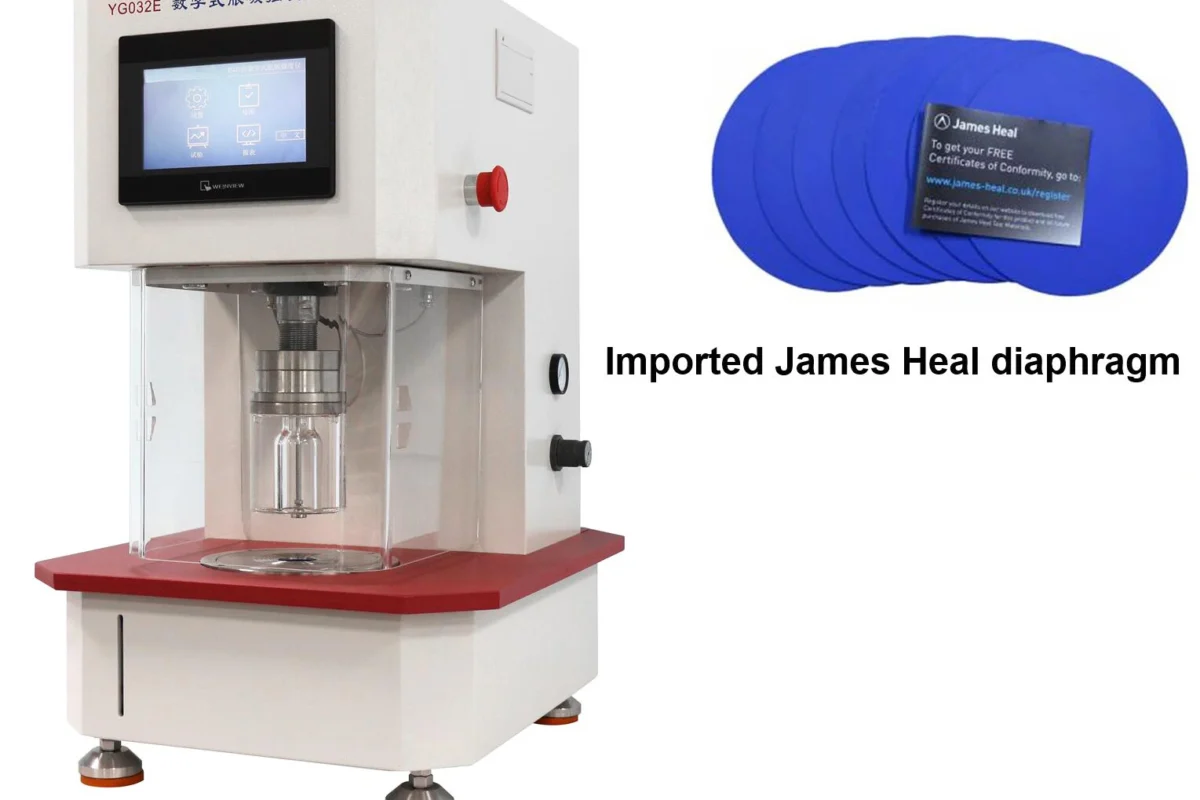
Knit fabrics don’t tear the way wovens do — they burst under pressure, which is why the Bursting Strength Tester exists as a separate category of testing equipment. The Q-Test Bursting Strength Tester applies increasing pressure to a fabric sample until it ruptures, recording the pressure at failure. It’s the standard test for hosiery, knitwear, and stretch fabrics, following methods like ASTM D3786, and is a routine check for factories producing t-shirts, innerwear, and athleisure garments.

Q-Test Washing Fastness Tester

Buyers expect garments to survive repeated home laundering without significant colour loss or shrinkage, and the Washing Fastness Tester is how labs verify that before shipment. The Q-Test Washing Fastness Tester simulates multiple wash cycles under controlled temperature and agitation, following AATCC 61 or ISO 105-C06 methods. It’s especially important for dyed and printed garments, denim, and children’s wear, where colour fastness after washing is often a mandatory buyer checkpoint.

Q-Test Colour Matching Cabinet

Colour disputes between a factory and a buyer are almost always a lighting problem, not a dyeing one — the same fabric can look different under sunlight, fluorescent light, and store lighting. The Q-Test Colour Matching Cabinet uses standardised light sources, including D65 and TL84, to let quality teams and merchandisers evaluate colour consistency under the same conditions the buyer will use. It’s a core tool for approving lab dips, bulk fabric, and trims before cutting begins.

Q-Test Light Booth

Closely related to the colour matching cabinet, the Q-Test Light Booth is used for side-by-side shade comparison between a fabric sample and an approved standard, again under multiple controlled light sources. It’s a routine part of daily quality checks in dyeing units, garment finishing lines, and buying house labs, helping teams catch shade variation between dye lots before it becomes a bulk production problem.

Q-Test Fabric Inspection Machine

Before fabric ever reaches the cutting table, it needs to be inspected for weaving defects, holes, stains, and shade bands. The Q-Test Fabric Inspection Machine unwinds fabric rolls over a lit, tensioned table so inspectors can spot and mark defects using a four-point or ten-point grading system. It’s used across weaving mills, garment factories, and buying house labs to grade incoming fabric rolls and decide whether a roll is fit for cutting or needs to be downgraded or rejected.


Comparison Table: Q-Test Textile Testing Machines at a Glance

Machine Key Parameter Tested Common Standard(s)
Tensile Strength Tester Breaking force & elongation ASTM D5034, ISO 13934
Fabric Tear Strength Tester Tear resistance ASTM D1424
Crock Meter Colour fastness to rubbing AATCC 8, ISO 105-X12
GSM Testing Machine Fabric weight (g/m²) ASTM D3776, ISO 3801
Fabric Thickness Tester Thickness under load ASTM D1777, ISO 5084
Bursting Strength Tester Rupture pressure (knits) ASTM D3786
Washing Fastness Tester Colour fastness to washing AATCC 61, ISO 105-C06
Colour Matching Cabinet Shade consistency under light ISO 105-A02 (visual)
Light Booth Shade comparison ISO 105-A02 (visual)
Fabric Inspection Machine Visual defect grading 4-point / 10-point system


How Q-Test Textile Testing Machines Improve Textile Quality Control

Used together, these machines turn quality control into a documented process rather than a visual judgement call. A typical textile testing laboratory workflow might involve inspecting incoming fabric rolls, pulling GSM and thickness samples, running tensile and tear strength checks on a representative batch, then verifying colour fastness before approving the lot for cutting. Because Q-Test Textile Testing Machines are calibrated and standards-referenced, the resulting data holds up during buyer audits and third-party lab verification — which matters enormously for garment exporters shipping to international apparel brands.

Benefits of Investing in Modern Textile Testing Equipment

Investing in reliable textile testing equipment pays for itself well before the first rejected shipment is avoided. For manufacturers and exporters working with global apparel brands, in-house testing capability shortens the approval cycle, catches defects while they’re still cheap to fix, and gives quality managers hard data to bring to a difficult conversation with a buyer’s auditor.

  •     Fewer rejections and returns from overseas buyers
  •     Faster approval cycles for fabric and garment lots
  •     Stronger negotiating position with buying houses and auditors
  •     Reduced rework and material waste on the production floor
  •     Better long-term brand reputation with export clients


How to Choose the Right Q-Test Instruments for Your Factory

The right starting point depends on your fabric type and buyer base. A knitwear exporter will lean more heavily on a bursting strength tester and GSM testing machine, while a denim or workwear manufacturer will prioritise tear strength and washing fastness testing. Factories supplying multiple buyers often need the full range, since different apparel brands specify different standards — some reference ASTM, others ISO or AATCC. It’s worth talking to a supplier who can walk through your buyer’s technical specification sheet and recommend Q-Test Instruments that match, rather than buying machines based on a generic checklist.

Why Choose Amith Garment Services

Amith Garment Services has supplied fabric and garment testing equipment to manufacturers, exporters, and testing laboratories across India since 1999, working out of Bangalore with clients extending to Tiruppur and other textile hubs. Every Q-Test Textile Testing Machine supplied comes with a calibration certificate, detailed user manual, and access to installation, operator training, and after-sales calibration support. Rather than simply shipping a machine and moving on, the team offers consultation on which instruments actually fit a factory’s buyer requirements, along with genuine AATCC, SDC, James Heal, and Test Fabrics consumables to keep testing accurate over the long run.

Conclusion

Reliable fabric testing isn’t a back-office formality — it’s what stands between a garment factory and a costly buyer rejection. Q-Test Textile Testing Machines give quality teams the tools to check tensile strength, colour fastness, GSM, and more, using methods that buyers and international standards bodies actually recognise. Whether you’re setting up a new textile testing lab or upgrading an existing one, choosing the right combination of Q-Test Instruments — and a supplier who supports them long after installation — is one of the more practical investments a garment factory can make.

Frequently Asked Questions:

What is the average cost of setting up a basic textile testing lab with Q-Test Textile Testing Machines?

The cost depends on which Q-Test Textile Testing Machines a factory chooses to start with. A basic lab covering GSM testing, tensile strength, and colour fastness typically costs less than a fully equipped lab that also includes bursting strength testers, washing fastness testers, and fabric inspection equipment. Many factories begin with the core machines that match their most common buyer requirements and expand the lab over time as new testing needs arise.

Are Q-Test Textile Testing Machines suitable for small and mid-sized garment units?

Yes. Q-Test Textile Testing Machines are available in configurations suitable for both small in-house labs and large testing facilities. Many garment units start with a GSM testing machine, tensile strength tester, and crock meter, then add more Q-Test Instruments as buyer requirements grow.

Which international standards do Q-Test Instruments support?

Q-Test Instruments support internationally recognised testing methods, including ISO, ASTM, and AATCC standards. These are widely accepted by buying houses, third-party testing agencies, and export compliance teams when the correct test procedure and calibration are followed.

How long does it take to install and start using Q-Test Textile Testing Machines?

Most Q-Test Textile Testing Machines can be installed, calibrated, and ready for use within a few days of delivery. Installation support and operator training are typically provided, allowing laboratories to begin testing quickly and accurately.

What are Q-Test Textile Testing Machines?

They are a range of textile testing instruments used to measure fabric strength, GSM, colour fastness, and other quality parameters. These machines help manufacturers verify that fabrics meet buyer specifications before production and shipment.

Which Q-Test machine is best for garment factories?

The Tensile Strength Tester is often considered the most essential because fabric strength is checked in most buyer specifications. However, many factories also require GSM testing machines, crock meters, and other Q-Test Instruments for complete quality control.

Why is a Crock Meter important?

A Crock Meter checks whether dye transfers from a fabric onto another surface during rubbing. It is especially important for denim, dyed fabrics, and printed garments where colour transfer is a common quality concern.

What does a GSM Testing Machine measure?

A GSM Testing Machine measures fabric weight in grams per square metre (GSM), ensuring the fabric matches the approved specification before cutting and garment production begins.

How much does a textile testing lab setup cost for a small garment factory?

Costs vary depending on the machines selected. A basic setup covering GSM, tensile strength, and colour fastness testing is far more affordable than a complete laboratory equipped with bursting strength, washing fastness, and inspection equipment.

Can one machine test both fabric and garments?

Some Q-Test Instruments, such as tensile strength testers, can test both fabric and garment seams. However, most textile testing machines are designed for a specific quality parameter, so a complete testing laboratory typically includes several specialised instruments.

What standards do buying houses usually require?

Most international buyers require testing according to ISO, ASTM, or AATCC standards, along with any additional buyer-specific testing protocols. Equipment should support these recognised standards for globally accepted results.

How often should textile testing instruments be calibrated?

Most laboratories calibrate tensile, GSM, thickness, and other testing instruments annually, while high-volume labs may perform calibration more frequently to maintain accuracy and meet buyer audit requirements.

Do these machines require specialised training to operate?

Basic operation is straightforward, but training on sample preparation, standard selection, machine settings, and result interpretation greatly improves testing accuracy. Most suppliers provide operator training during installation.

Crock meter test being performed on dyed fabric sample in a textile testing lab

What Is a Crock Meter Test? Rubbing Fastness Explained

If you have ever pulled a new pair of jeans out of the wash and found blue dye on your white sofa, you have seen a rubbing fastness failure in real life. In a testing lab, this exact problem is measured using a crock meter test — one of the most routine yet most important checks in a textile quality control programme. For manufacturers, exporters, and buying houses across India’s garment hubs, a crock meter test is often the first line of defence against colour-related customer complaints and shipment rejections.

This article walks through what the test actually measures, how the equipment works, the difference between dry and wet crocking, the standards labs follow, and how to improve a fabric’s rubbing fastness rating before it ever reaches a buyer’s inspection table.

A crock meter test measures how much colour transfers from a dyed or printed fabric onto another surface when rubbed under controlled pressure. It is used worldwide to check a fabric’s rubbing fastness, which affects both appearance retention and consumer safety.

What Is a Crock Meter Test?

A crock meter test is a standardised method for evaluating colour fastness to rubbing — in other words, how well a dyed, printed, or finished fabric resists transferring its colour onto another material through friction. The instrument used for this, called a crock meter, rubs a piece of white testing cloth against the fabric sample in a fixed back-and-forth motion, under a specified weight and number of strokes.

Once the rubbing cycle is complete, the white cloth is examined and rated against a grey scale, which runs from 1 (severe staining) to 5 (no staining at all). This rating tells a quality manager, merchandiser, or buyer exactly how stable the fabric’s colour is under everyday friction — the kind that happens when a shirt rubs against skin, a car seat, or another garment in a wardrobe.

In practical terms, this test answers a very simple question: will this fabric’s colour rub off onto something else? It is a question every garment exporter needs answered before a shipment leaves the factory.

Why Is the Crock Meter Test Important?

Colour transfer is not just a cosmetic issue. It can lead to returned shipments, damaged brand reputation, and in some cases, safety concerns if unfixed dyes come into contact with skin repeatedly.

Rubbing fastness testing matters because it predicts whether a fabric’s dye will stain other surfaces or garments during normal wear, washing, or storage — a common cause of buyer rejections and customer complaints in the garment industry.

For buying houses and quality managers, the crock meter test is usually a mandatory checkpoint before bulk production is approved. A few reasons it carries so much weight:

  • Buyer compliance: Most international retailers specify a minimum crock rating (commonly 3.5–4) before accepting a shipment.
  • Consumer safety: Excess dye transfer onto skin, especially for children’s wear, is flagged in several compliance audits.
  • Brand reputation: Colour bleeding onto other clothes during storage or transit is one of the most visible and complained-about defects in retail.
  • Cost control: Catching poor rubbing fastness at the fabric stage is far cheaper than a full shipment rejection after cutting and stitching.

This is why fabric colour testing is built into pre-production, in-process, and final inspection stages at most reputable garment units.

How Does a Crock Meter Work?

A crock meter is a fairly simple mechanical instrument, but its precision lies in consistency. The core components include a flat testing base where the fabric sample is clamped, a weighted finger or peg fitted with a piece of standard crocking cloth, and a crank or motor mechanism that moves the finger back and forth over a fixed 100 mm stroke length.

How the test typically runs:

  1. The fabric sample is mounted flat and taut on the base plate.
  2. A square of standard white crocking cloth is attached to the rubbing finger.
  3. The finger applies a fixed downward force (usually around 9 N, per standard specification).
  4. The machine performs a set number of rub cycles — 10 strokes for dry testing is common under AATCC methods.
  5. The crocking cloth is removed and assessed for staining using a grey scale or, in some labs, an instrumental colour transfer test with a spectrophotometer.

Manual crock meters are still widely used in smaller labs, while larger textile testing equipment setups increasingly use motorised, programmable units for repeatability across large sample volumes.

Dry Crock Test vs Wet Crock Test

One of the most common questions from students and new quality executives is how dry and wet crocking differ. The mechanics of the machine are identical — what changes is the condition of the crocking cloth.

The difference between dry and wet crock testing is simple: dry crocking uses a completely dry testing cloth, while wet crocking uses a cloth moistened to a specified water content. Wet crocking is generally more demanding and tends to produce lower fastness ratings than dry crocking.

Parameter Dry Crock Test Wet Crock Test
Cloth condition Completely dry Moistened to standard water pickup
Severity Less severe More severe, exposes weaker dye fixation
Typical use General fabric checks Simulates sweat, rain, damp storage
Common pass rating 4–5 3.5–4
Relevance All fabrics Especially activewear, denim, dark shades

Wet crock testing is particularly important for dark, heavily dyed fabrics such as indigo denim, where moisture can loosen unfixed dye particles that a dry rub would not disturb. Many fabric testing labs run both tests together as a standard pair, since a fabric can pass dry crocking comfortably and still fail wet crocking.

International Testing Standards (ISO 105 X12 & AATCC 8)

Crock meter testing is not an arbitrary in-house procedure — it follows internationally recognised protocols so that results from a lab in Tiruppur, Bangalore, or anywhere else in the world are comparable to a buyer’s own lab.

The two most widely used standards for crock meter testing are ISO 105-X12, common in European and global buyer specifications, and the AATCC 8 test method, widely used in the United States. Both measure colour fastness to rubbing but differ slightly in stroke count and cloth handling.

  • ISO 105-X12: Specifies rubbing cloth type, stroke length, applied force, and evaluation using the grey scale for staining. It is the reference method for most European and multinational buyer requirements.
  • AATCC 8 Test Method: The American counterpart, widely referenced by US retailers, with its own defined stroke count and crocking cloth specifications.

Labs serving export-oriented clients typically run both standards side by side, since a single shipment may be destined for buyers who reference either specification in their technical packs. Understanding which standard a buyer expects is one of the first things a merchandiser should confirm before samples are sent for testing.

Industries That Use Crock Meter Testing

While garments are the most visible application, rubbing fastness testing extends well beyond apparel.

  • Apparel and garment manufacturing — shirts, trousers, denim, kidswear
  • Home textiles — bedsheets, curtains, upholstery fabric
  • Automotive textiles — car seat covers and interior trims
  • Footwear and leather goods — dyed uppers and linings
  • Technical and industrial textiles — where colour transfer onto adjoining materials must be controlled

India’s textile industry, with major garment manufacturing and export clusters in cities like Tiruppur and Bangalore, relies heavily on this kind of in-house textile quality control to meet the specifications of international buyers before goods are even shipped for third-party inspection.

Factors Affecting Rubbing Fastness

A fabric’s crock rating is influenced by more than just the dye colour. Several production-stage variables come into play:

  • Dye class and fixation — reactive, direct, sulphur, and pigment dyes all behave differently under friction
  • Dyeing and finishing process — inadequate washing-off after dyeing leaves loose surface dye
  • Fabric construction — tightly woven or knitted fabrics tend to hold dye more securely
  • Finishing chemicals — some softeners and coatings can improve or worsen rubbing fastness
  • Colour depth — darker, heavier shades are statistically more prone to poor crock ratings
  • Humidity and moisture exposure — directly affects wet crock performance

A quality manager reviewing a failed crock meter test should look upstream at the dyeing process rather than treating the test result as an isolated data point.

How to Improve Fabric Rubbing Fastness

Improving rubbing fastness is largely a dyeing and finishing exercise rather than a testing exercise, but there are proven, practical steps manufacturers commonly apply:

  • Thorough soaping and washing-off after dyeing to remove unfixed surface dye
  • Correct dye selection for the fibre type and end use
  • Use of fixing agents appropriate to the dye class, applied at the correct dosage
  • Controlled dyeing temperature and time to ensure proper dye penetration, not just surface adhesion
  • Regular in-process crock checks, rather than testing only at the final stage
  • Avoiding over-application of pigment finishes, which sit on the surface and rub off easily

Consistent, early-stage testing using a reliable colour fastness tester helps catch issues before they become expensive end-of-line rejections.

Choosing the Right Crock Meter

Not every fabric testing lab needs the same rubbing fastness machine. The right choice depends on sample volume, standards followed, and budget.

Points worth evaluating before purchase:

  • Manual vs motorised operation — motorised units offer better repeatability for high sample volumes
  • Standards compliance — confirm the unit supports both ISO 105-X12 and AATCC 8 requirements
  • Build quality and calibration support — accurate stroke length and applied force are critical to valid results
  • Ease of clamping and cloth mounting — reduces operator error across shifts
  • After-sales calibration and service support — especially important for export-focused labs running continuous testing

A crock meter is a long-term lab investment, and getting the specification right the first time avoids costly recalibration or replacement later.

Why Choose Amith Garment Services

Amith Garment Services supplies textile testing equipment and garment testing instruments to manufacturers, exporters, and testing labs, with a focus on equipment that holds up to daily production-floor use. From crock meters to light booths, colour matching cabinets, washing fastness testers, GSM cutters, fabric inspection machines, bursting strength testers, and fabric rolling machines, the equipment range is built around the practical needs of Indian textile and garment quality control teams — not just laboratory showpieces.

For manufacturers and exporters who need dependable rubbing fastness machines that meet ISO 105-X12 and AATCC 8 requirements, Amith Garment Services provides equipment suited to both small quality labs and high-volume export units.

Conclusion

A crock meter test may look like a small, routine check, but it plays an outsized role in preventing colour-related complaints, returns, and compliance failures across the textile and garment supply chain. Understanding how dry and wet crock testing differ, which standards apply, and what affects rubbing fastness gives manufacturers, merchandisers, and quality teams a real head start in avoiding costly surprises. Whether you are setting up a new fabric testing lab or upgrading existing textile testing equipment, investing in a reliable crock meter test process pays for itself many times over in avoided rejections and stronger buyer trust.

Frequently Asked Questions:

1. What is a crock meter test used for in the textile industry?

A crock meter test measures a fabric's colour fastness to rubbing, determining whether dye transfers from the fabric to another surface through friction. It is an essential quality control test performed before production approval and shipment to prevent colour bleeding complaints and buyer rejections.

2. What is the difference between dry crock and wet crock testing?

Dry crock testing uses a completely dry rubbing cloth, while wet crock testing uses a cloth moistened to the specified water pickup level. Wet crock testing is generally more demanding because moisture can release unfixed dyes that may not transfer during dry rubbing.

3. Which standards are followed for crock meter testing?

The most widely accepted standards are ISO 105-X12 and AATCC 8. Both evaluate colour fastness to rubbing using controlled rubbing cycles followed by grey-scale staining assessment, ensuring results are accepted by international buyers and testing laboratories.

4. Can a fabric pass dry crock testing but fail wet crock testing?

Yes. This commonly occurs with dark shades such as indigo denim and heavily dyed fabrics. While the fabric may perform well under dry rubbing, moisture can loosen unfixed dye, resulting in lower wet crock fastness ratings. That's why both tests are recommended.

5. What is a crock meter test used for?

A crock meter test checks whether a fabric's dye transfers onto another surface when rubbed. It helps textile manufacturers identify colour transfer issues before garments reach buyers or consumers.

6. How do you perform a crock meter test?

A standard white rubbing cloth is mounted on the crock meter finger and rubbed against the fabric under a specified pressure and number of strokes. The rubbing cloth is then evaluated using a Grey Scale for Staining to determine the colour fastness rating.

7. What's the difference between dry and wet crocking?

Dry crocking uses a dry rubbing cloth, while wet crocking uses a dampened cloth. Wet crocking is generally more challenging because moisture increases the likelihood of dye transfer from the fabric.

8. Is crock meter testing mandatory for garment exporters?

Yes. Most international buyers require minimum rubbing fastness ratings based on ISO 105-X12 or AATCC 8, making crock meter testing a standard quality assurance requirement before export shipments.

5 Common Bursting Strength Tester Uses in Textile Quality Control

If you work in a textile mill, garment export house, or testing lab, you already know that fabric strength can make or break a shipment. This is exactly where the different bursting strength tester uses come into play. A single weak batch of fabric can lead to customer complaints, failed audits, or rejected export consignments — problems that are entirely avoidable with the right testing routine.

A bursting strength tester measures how much pressure a fabric can withstand before it ruptures. It’s one of the most trusted instruments in textile quality control, used daily by knitwear manufacturers, technical textile producers, and QC teams who need dependable, repeatable results. Understanding where and how this instrument is used helps manufacturers reduce rejections, meet international standards, and deliver fabric that performs the way it’s supposed to.

In this guide, we’ll walk through what a bursting strength tester does, why it matters, and the five most common ways it’s used across the textile industry.

What is a Bursting Strength Tester?

A bursting strength tester is a laboratory instrument that measures the maximum pressure a fabric can bear before it tears or bursts.

The test works by clamping a fabric sample over a flexible diaphragm. Hydraulic or pneumatic pressure is then applied from beneath the sample until it ruptures. The tester records the exact pressure at the point of failure, giving QC teams a precise, repeatable measurement of fabric strength.

This method is especially useful for knitted fabrics, non-woven materials, and other fabrics that don’t have a clear straight-line direction — which makes conventional tensile testing less reliable for them. Instead of pulling the fabric in one direction, bursting strength testing applies pressure uniformly, mimicking real-world stress like stretching, pressing, or impact.

Modern digital bursting strength testers used in Indian textile labs typically include:

  • A pressure sensor and digital display
  • Interchangeable diaphragms for different fabric types
  • Software for data logging and report generation
  • Safety enclosures for operator protection

These instruments are used across spinning mills, weaving units, knitting factories, garment production lines, and independent testing laboratories that serve exporters and brands.

Why is Bursting Strength Important in Textile Quality Control?

Bursting strength testing matters because it directly predicts how a fabric will perform under real-world pressure — protecting both product quality and brand reputation.

Here’s why manufacturers and QC managers treat this test as non-negotiable:

  • Quality assurance: It confirms that fabric meets the strength specifications agreed upon with the buyer before it leaves the factory.
  • Customer satisfaction: Garments that don’t tear or rupture during normal use build trust and reduce returns.
  • International standards compliance: Buyers in the US, Europe, and Middle East often require test reports aligned with ISO or ASTM standards before accepting a shipment.
  • Fabric durability: Products like sportswear, hosiery, and medical textiles need to withstand repeated stretching and pressure without failing.
  • Product safety: For applications like medical dressings, seatbelts, or protective wear, fabric failure isn’t just inconvenient — it can be dangerous.

Skipping this test, or relying on inconsistent manual methods, often leads to inconsistent quality between batches — a problem that shows up only after the goods have reached the customer.

5 Common Uses of a Bursting Strength Tester in Textile QC

Below are the five most common and practical bursting strength tester uses found across textile manufacturing and testing facilities in India.

1. Testing Knitted Fabrics

Knitted fabrics — used in t-shirts, hosiery, innerwear, and sportswear — don’t have a straight warp and weft structure like woven fabric, which makes tensile testing less accurate for them. Bursting strength testing is the preferred method here because it applies even pressure across the entire fabric surface, closely simulating how the fabric stretches during actual wear.

For example, a hosiery manufacturer supplying t-shirts to a European buyer would run bursting strength tests on every fabric batch to confirm it meets the buyer’s minimum kPa requirement before cutting and stitching begins. This single test can prevent an entire production run from being rejected later.

2. Testing Woven Fabrics

While woven fabrics are commonly tested for tensile strength, bursting strength testing is still used for specific woven materials — particularly those used in technical or industrial applications, such as tarpaulins, filter fabrics, and coated textiles. These fabrics are exposed to multi-directional stress in real use, and bursting strength gives a more realistic picture of their true performance than a single-direction pull test.

3. Quality Control During Garment Manufacturing

On the production floor, bursting strength testers are used at multiple checkpoints — from incoming fabric inspection to pre-shipment quality audits. QC inspectors pull random samples from each fabric lot and test them before approving the lot for cutting. This step catches weak or defective fabric rolls early, saving the cost of wasted stitching, labeling, and packaging on garments that would otherwise fail later.

4. Technical Textile Testing

Technical textiles — including medical textiles, automotive interiors, geotextiles, and protective fabrics — often have strict performance requirements that go beyond appearance. Bursting strength testing helps manufacturers verify that these specialized fabrics can handle the pressure and stress specific to their end use, whether that’s a surgical drape or an airbag liner.

5. Research and Product Development

Textile R&D teams use bursting strength testers when developing new fabric blends, finishes, or constructions. By comparing bursting strength data across different yarn counts, knit structures, or finishing treatments, developers can fine-tune a fabric to hit a target strength before it goes into commercial production — reducing costly trial-and-error on the factory floor.

Industries That Use Bursting Strength Testers

Bursting strength testers are used well beyond a single sector. Common industries include:

Industry Typical Application
Garment industry T-shirts, innerwear, activewear fabric checks
Home textiles Bedsheets, upholstery, curtain fabrics
Medical textiles Surgical drapes, dressings, protective wear
Automotive textiles Seat covers, airbags, interior linings
Technical textiles Geotextiles, filter fabrics, industrial coatings
Export houses Pre-shipment fabric compliance testing
Textile laboratories Third-party testing and certification

Benefits of Using a Digital Bursting Strength Tester

A digital bursting strength tester improves accuracy, saves time, and reduces fabric rejections compared to older manual or analog machines.

Key benefits include:

  • Accuracy: Digital sensors reduce human reading errors common with dial-based machines.
  • Repeatability: Consistent results across operators and shifts.
  • Compliance: Easier alignment with ISO and ASTM test parameters.
  • Time-saving: Faster sample processing with automated pressure application.
  • Automation: Built-in software handles calculations and report generation.
  • Reduced rejection: Early detection of weak fabric prevents downstream losses.
  • Cost savings: Fewer returns, fewer disputes, and less wasted production.

Standards Followed

Bursting strength testing is guided by internationally recognized standards, which ensures test results are accepted by buyers and auditors worldwide.

  • ISO 13938 – Covers hydraulic and pneumatic bursting strength test methods for textiles.
  • ASTM D3786 – The widely used American standard for diaphragm bursting strength testing.
  • BS EN standards – Applied in several European buyer specifications.

Following these standards ensures test reports are recognized by international buyers, certification bodies, and export compliance teams.

How to Choose the Right Bursting Strength Tester

Choosing the right machine depends on your production volume, fabric type, and compliance needs. Consider the following factors:

  • Capacity: Choose a pressure range suitable for your heaviest fabric type.
  • Accuracy: Look for sensors with proven calibration consistency.
  • Digital display: Easier readability and fewer manual errors.
  • Software: Data logging and report export save time during audits.
  • Compliance: Confirm the machine supports ISO and ASTM test methods.
  • Maintenance: Simple diaphragm replacement and upkeep.
  • Calibration: Regular calibration support ensures long-term accuracy.
  • After-sales support: Reliable service reduces machine downtime.

Why Choose Amith Garment Services

Amith Garment Services supplies textile testing equipment, including bursting strength testers, to manufacturers, export houses, and testing laboratories across India. The team brings hands-on experience in textile QC equipment, helping buyers choose instruments suited to their fabric types and compliance requirements.

Beyond the equipment itself, Amith Garment Services offers technical guidance, calibration support, and after-sales service — the kind of support that matters when a testing lab can’t afford downtime during a shipment deadline.

Conclusion

Understanding the different bursting strength tester uses helps textile manufacturers, exporters, and QC teams catch fabric weaknesses before they become costly problems. From knitted fabric checks to technical textile development, this instrument plays a role at nearly every stage of textile production — protecting not just the fabric, but the reputation of everyone involved in getting it to the customer.

Whether you’re running a knitting unit, managing QC for a garment export house, or setting up a new textile testing lab, investing time in proper bursting strength testing pays off in fewer rejections, smoother audits, and stronger buyer relationships. It’s a small step in the production process that carries a real impact on the final product.

If you’re looking to upgrade your testing lab or need guidance choosing the right bursting strength tester for your fabric type, reach out to Amith Garment Services for expert support.

Frequently Asked Questions:

1. What is a bursting strength tester used for?

A bursting strength tester measures the pressure a fabric can withstand before it ruptures. It is widely used for knitted fabrics, technical textiles, nonwovens, and other materials where multi-directional strength evaluation is required. Textile mills, garment manufacturers, and testing laboratories use it to verify fabric quality before production or shipment.

2. Why is bursting strength testing important for knitted fabrics?

Knitted fabrics stretch in multiple directions, making conventional tensile testing less representative of actual performance. Bursting strength testing applies uniform pressure across the fabric surface, providing a realistic assessment of durability during wear, washing, and repeated stretching.

3. What standards apply to bursting strength testing?

The most widely recognized standards are ISO 13938 and ASTM D3786. These standards define the testing procedures for hydraulic and pneumatic bursting strength methods, ensuring reliable and internationally accepted test results.

4. What is the difference between hydraulic and pneumatic bursting strength testers?

Hydraulic bursting strength testers use liquid pressure and are generally preferred for heavier or industrial fabrics, while pneumatic bursting strength testers use compressed air and are commonly used for lighter fabrics. Both accurately measure bursting strength, with the choice depending on the material and testing requirements.

5. Which industries commonly use bursting strength testers?

These testers are widely used in the garment, textile, home furnishing, medical textile, automotive textile, technical textile, export, and quality testing laboratory sectors to evaluate fabric durability and ensure compliance with quality standards.

6. How often should fabric be tested for bursting strength?

Testing frequency depends on production requirements and buyer specifications. Most manufacturers test every incoming fabric lot, perform in-process quality checks, and conduct final inspections before shipment to minimize the risk of product rejection.

7. Can bursting strength testers be used for woven fabrics too?

Yes. Although primarily used for knitted fabrics, bursting strength testers are also suitable for woven materials such as tarpaulins, coated fabrics, filter fabrics, and other textiles subjected to multi-directional stress during use.

8. What should I look for when buying a bursting strength tester?

Consider factors such as pressure range, sensor accuracy, compliance with ISO and ASTM standards, digital display, software features, ease of maintenance, calibration support, and reliable after-sales service. Selecting the right model ensures accurate and consistent testing for your specific fabric types.